
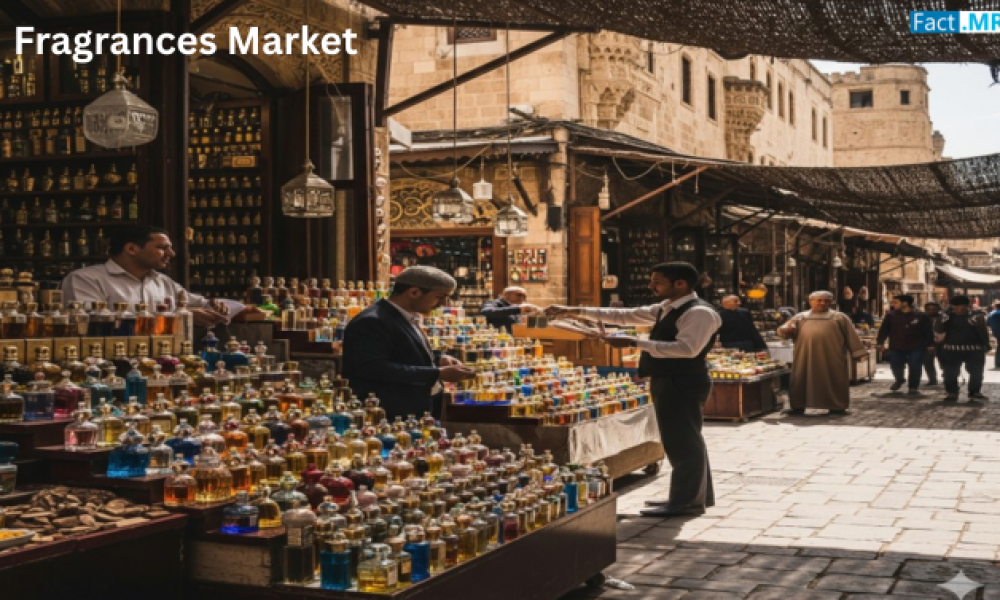
Driven by a definitive global shift toward high-concentration formulations and a surging demand for “functional fragrances” that promote emotional well-being, the global fragrance market is entering a pivotal era of premiumization. Industry data released today estimates the market value at $55.83 billion in 2026, up from $53.04 billion in 2025. This specialized luxury sector is projected to reach $87.17 billion by 2034, expanding at a steady compound annual growth rate (CAGR) of 5.73%.
The market’s acceleration is anchored in the “scent as self-care” movement. As consumers move away from generic mass-market options, the demand for niche and artisanal perfumes—growing at an impressive 13.2% CAGR—is reshaping the competitive landscape. This shift is led by a new generation of shoppers who view fragrance not merely as a grooming product, but as a medium for identity and mental clarity.
Request for Sample Report | Customize Report | Purchase Full Report – https://www.factmr.com/connectus/sample?flag=S&rep_id=66
Engineering the Modern Scent: The Who, What, and Why
The 2026 fragrance landscape reflects a fundamental pivot in how consumers interact with scent. The “how” of this expansion is rooted in three core industry catalysts:
- The Dominance of High-Concentration Types: In 2026, Parfum and Eau de Parfum hold a commanding 33.98% market share. Consumers are increasingly prioritizing longevity and sillage, favoring essential oil-rich formulations that last 6 to 8 hours over lighter colognes.
- The “Clean & Sustainable” Mandate: A primary growth driver this year is the rise of natural and water-based fragrances. In Germany alone, 52.9% of women now view natural scents as healthier alternatives. Brands are responding with biodegradable packaging and alcohol-free formulas that cater to skin-conscious “wellness” enthusiasts.
- The Rise of the “Scent Wardrobe”: Moving away from the “signature scent” of previous decades, 2026 consumers are curating collections. This has fueled a 13.95% annual growth in online sales, supported by AI-driven discovery tools and subscription sampling services that allow for low-risk experimentation.
Market Dynamics: Regional Leadership and Demographic Shifts
The 2026 landscape is defined by the heritage-led consumption of Europe and a rapid technological leap in the Asia-Pacific region.
- Europe & North America: Maintaining a combined majority share, these regions lead in “high-value” consumption. North America’s dominance is fueled by a $23.23 billion valuation in the U.S. alone, driven by a deep-seated preference for premium niche houses.
- Asia-Pacific: Recognized as the fastest-growing region, APAC—led by China and India—is seeing a 9.54% CAGR. Rising disposable incomes and a burgeoning middle class have transformed fragrances from occasional luxuries into daily essentials.
- The Gender Fluidity Trend: While women continue to hold 53.52% of the market, the unisex segment is the fastest-growing category at a 6.81% CAGR. This reflects a broader cultural shift toward fluid expressions of identity, where scent notes like sandalwood, musk, and iris are no longer strictly gendered.
Technological Frontiers: AI Scent Profiling and “Skinification”
The technological narrative of 2026 is defined by the integration of digital intelligence and advanced botanical extraction.
- AI-Powered Personalization: 2026 marks the mainstreaming of bespoke perfumery. AI algorithms now analyze individual lifestyle and mood data to curate tailored recommendations, a trend that accounts for 68% of the growth in the niche segment.
- Water-Based Innovation: To align with the “clean beauty” movement, manufacturers are deploying next-generation micro-encapsulation. This allows water-based, alcohol-free perfumes to deliver the same potency and stay-power as traditional sprays without the skin-drying side effects.
- Sustainable Sourcing: Leading firms are utilizing supercritical fluid extraction to produce higher-concentration scents from rare ingredients like New Caledonian sandalwood and Bulgarian rose, ensuring both olfactive purity and ethical traceability.
Competitive Landscape and Strategic Leadership
The competitive environment is characterized by intense R&D and a dual-market strategy targeting both mass and luxury tiers. Key players currently defining the market include:
- LVMH & Chanel: Maintaining dominance in the ultra-luxury tier through heritage storytelling and exclusive retail experiences.
- Coty Inc. & L’Oréal S.A.: Capitalizing on “prestige” licensing deals with global fashion houses like Gucci, Burberry, and Yves Saint Laurent.
- Estée Lauder Companies: Leading the niche movement with a portfolio of high-growth brands like Le Labo and Frédéric Malle.
- Niche Disruptors (Maison Francis Kurkdjian, Creed): Capturing high-income buyers who prioritize artisanal craftsmanship over mass branding.
The Path Toward 2034: A Predictive Horizon
As the industry moves toward 2034, the fragrance market is expected to evolve from “scent” to “functional olfaction.” Analysts anticipate the rise of neuro-fragrances, which are scientifically proven to lower cortisol or improve focus through specific molecular triggers. For investors and industry leaders, the opportunity lies in the intersection of traditional luxury and biotechnology—where the perfume doesn’t just smell exceptional but serves a cognitive purpose.
About Fact.MR
Fact.MR is a global market research and consulting firm, trusted by Fortune 500 companies and emerging businesses for reliable insights and strategic intelligence. With a presence across the U.S., UK, India, and Dubai, we deliver data-driven research and tailored consulting solutions across 30+ industries and 1,000+ markets. Backed by deep expertise and advanced analytics, Fact.MR helps organizations uncover opportunities, reduce risks, and make informed decisions for sustainable growth.



