
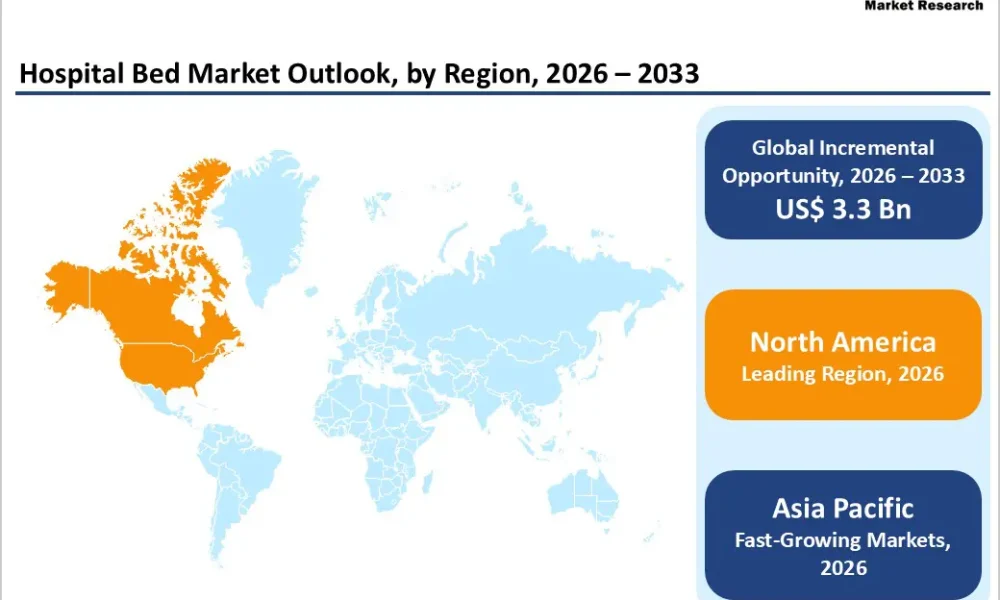
The hospital bed market is experiencing significant growth, driven by a variety of factors including an aging population, increasing healthcare needs, and technological advancements in patient care. As of 2026, the global hospital bed market size is estimated at US$ 5.2 billion and is projected to grow to US$ 8.5 billion by 2033, at a compound annual growth rate (CAGR) of 7.2%. The demand for hospital beds is rising steadily due to the increasing hospitalization rates, a growing prevalence of chronic diseases, and an aging population globally. These factors, combined with the rapid expansion of healthcare infrastructure, are propelling the growth of the market.
Several factors are contributing to the market’s rapid expansion. First, aging populations worldwide are experiencing higher rates of chronic diseases, mobility impairments, and other age-related conditions, which require extended hospital stays and long-term care. This is driving the need for acute care, long-term care, and specialized hospital beds. Additionally, technological advancements in hospital bed design, such as electric and semi-electric beds, are becoming increasingly popular due to their comfort, automated positioning, and safety features. These innovations are improving both clinical efficiency and caregiver productivity, which further strengthens the demand for modern hospital beds. Furthermore, an increase in home healthcare models and hospital-at-home programs is creating new avenues for market growth, as patients prefer receiving care at home through specialized equipment like hospital beds.
Download Your Free Sample & Explore Key Insights: https://www.persistencemarketresearch.com/samples/2815
Key Highlights from the Report
• The global hospital bed market is expected to grow from US$ 5.2 billion in 2026 to US$ 8.5 billion by 2033.
• North America is the leading region in terms of market share, accounting for 47.8% in 2026.
• Asia Pacific is the fastest-growing region due to expanding healthcare infrastructure and rising healthcare expenditure.
• Electric beds are the leading product segment, representing a substantial share of the market.
• Acute care remains the largest application segment due to increasing hospital admissions and surgical volumes.
• Hospitals are the largest end-user segment, accounting for 53.6% of the market share in 2026.
Market Segmentation
The hospital bed market can be segmented into several categories, including product type, end-user, and application. Each segment is driven by specific factors, and understanding these divisions is essential for stakeholders in the healthcare industry.
By Product Type
The product segment is primarily divided into electric, semi-electric, and manual hospital beds. Electric beds lead the market due to their advanced features such as automated positioning, height adjustment, pressure injury prevention, and better patient comfort. These features are crucial for intensive care settings, surgical recovery, and long-term care. Electric beds are particularly popular in modern healthcare facilities that prioritize patient safety and caregiver convenience.
Semi-electric beds are gaining traction as the fastest-growing segment. These beds offer a balance of automation and manual functions, making them cost-effective for healthcare providers. Semi-electric beds are increasingly popular in secondary care facilities and hospitals in emerging markets where budget constraints are a concern. Manual beds, while still used in some healthcare facilities, are gradually being replaced by more advanced models as they lack the ergonomic and automation features required for complex care.
By End-User
The hospital bed market is also segmented by end-users, with hospitals accounting for the largest share of the market. Hospitals require a variety of beds across multiple departments, including surgical wards, emergency departments, intensive care units (ICUs), and general wards. Hospitals also tend to replace older beds more frequently, ensuring consistent demand for newer models that incorporate advanced patient safety features and digital integration.
Other end-users include long-term care facilities, rehabilitation centers, and home healthcare services. The demand from long-term care facilities is expected to grow steadily, particularly in aging populations in developed countries. The home healthcare segment is expanding due to the increasing shift toward home-based care models for patients with chronic conditions, elderly patients, and those recovering from surgeries.
By Application
The hospital bed market can also be segmented by application. Acute care holds the largest share in this segment. Acute care beds are used for short-term, intensive care needs such as surgery recovery, trauma cases, and critical illnesses. The increasing number of surgeries, emergency admissions, and trauma cases globally is driving the demand for acute care beds.
Long-term care beds are another important application segment that is experiencing rapid growth. This growth is driven by the aging population, increasing chronic disease management needs, and extended recovery periods. As people live longer and face chronic health conditions, long-term care services are in higher demand. These beds are specifically designed to accommodate the unique needs of long-term patients, including mobility support and enhanced comfort.
Get Custom Insights Designed for Your Business: https://www.persistencemarketresearch.com/request-customization/2815
Regional Insights
The global hospital bed market is geographically diverse, with distinct trends emerging in different regions. The leading regions for hospital bed demand include North America, Europe, and Asia Pacific.
North America
North America is the dominant region in the hospital bed market, with the U.S. accounting for the majority of the market share. The market is supported by advanced healthcare infrastructure, a high hospital bed density, and significant capital investments by healthcare providers. The region also benefits from high healthcare spending, which enables hospitals to frequently upgrade to the latest hospital bed models. The aging population in North America, along with an increasing number of surgeries and critical care admissions, further supports growth in this region. Additionally, the adoption of smart hospital beds, which incorporate IoT technologies and advanced patient monitoring systems, is driving demand.
Europe
Europe’s hospital bed market is growing steadily, with countries like Germany, France, and the UK contributing to market demand. Europe is facing a growing elderly population, leading to increased demand for both acute care and long-term care beds. Government initiatives aimed at upgrading healthcare infrastructure are also supporting growth in the region. The increasing adoption of electric beds and the expansion of long-term care facilities are further contributing to market expansion. Additionally, European countries are placing greater emphasis on patient comfort, safety, and infection control, leading to higher adoption of advanced hospital beds.
Asia Pacific
The Asia Pacific region is the fastest-growing market for hospital beds, with a high projected CAGR of 9.7% from 2026 to 2033. Rapid healthcare infrastructure development, rising healthcare expenditure, and an increasing elderly population are all contributing to this growth. Countries like China, India, Japan, and South Korea are key drivers of demand for hospital beds. Additionally, the region is experiencing rising surgical volumes and higher incidences of chronic diseases, both of which increase the need for hospital beds. Government investments in healthcare facilities, particularly in emerging markets, are driving the adoption of electric and semi-electric beds. The growth of private hospitals and medical tourism in select countries, such as India and Thailand, is also fueling demand for hospital beds.
Market Drivers
Several factors are driving the growth of the hospital bed market. The most significant of these is the expansion of healthcare infrastructure globally. As more hospitals are constructed, particularly in developing regions, the demand for hospital beds rises. Additionally, the rising incidence of chronic diseases such as cardiovascular diseases, diabetes, and respiratory disorders is contributing to the increased need for hospital beds, as these conditions often require prolonged hospital stays or intensive care.
Technological advancements are another key driver. The development of electric, semi-electric, and smart hospital beds, equipped with advanced features like automated positioning, fall detection, and pressure injury prevention, is transforming patient care. These beds improve clinical outcomes by enhancing comfort and reducing the risk of complications, such as bedsores, while also reducing caregiver workload.
Finally, the rising trend of home healthcare and hospital-at-home models is driving demand for hospital beds in non-hospital settings. With more patients opting for care at home, especially the elderly and those with chronic conditions, the need for specialized hospital beds is expanding beyond traditional hospital settings.
Market Restraints
Despite the positive market outlook, there are several challenges that could hinder the growth of the hospital bed market. One of the primary restraints is the high capital cost associated with advanced hospital beds, particularly electric and smart models. These beds require significant upfront investment in terms of automation, electronic components, and sensors. Many smaller healthcare providers, particularly in developing countries, may struggle to afford such high-cost equipment.
Additionally, ongoing maintenance and operational expenses add to the overall cost of ownership for hospitals. These include regular repairs, upgrades, and the cost of training staff to operate complex hospital bed systems. Another significant restraint is the regulatory and compliance requirements for medical devices. Meeting the certification standards for hospital beds can be time-consuming and expensive, particularly for manufacturers seeking to expand into new markets.
Market Opportunities
The hospital bed market presents substantial opportunities for growth, particularly in the home healthcare and long-term care sectors. The rising preference for home-based care is opening up new revenue streams for hospital bed manufacturers. Electric and semi-electric beds that cater to home healthcare needs are expected to see increased demand as more elderly patients and those with chronic conditions prefer receiving care at home.
Additionally, the integration of smart technologies into hospital beds represents a major opportunity for innovation. Smart hospital beds equipped with IoT capabilities, remote monitoring, and predictive analytics can help improve patient outcomes and optimize healthcare workflows. As the demand for connected healthcare devices increases, hospital beds will play a key role in enhancing the quality of care provided to patients.
Checkout Now & Download Complete Market Report: https://www.persistencemarketresearch.com/checkout/2815
Company Insights
Several key players dominate the global hospital bed market, leveraging their technological innovations and global distribution networks. These companies include:
• Medline Industries Inc.
• Antano Group S.R.L.
• Invacare Corporation
• Savaria Corporation
• Linet SPOL S.R.O.
• Med-Mizer Inc.
• Stryker
• Amico Corporation
• Burke Bariatric Inc.
• Midmark Corporation
• Graham Field
• Novum Medical Products
• Baxter Corporation
• Getinge AB
Global Hospital Bed Market Segmentation
By Product
- Electric Beds
- Semi Electric Beds
- Manual Beds
By Application
- Acute Care
- Psychiatric Care
- Long-term Care
- Others
By End User
- Hospitals
- Specialty Clinics
- Ambulatory Surgical Centers
- Home Care Settings
- Others
By Region
- North America
- Europe
- East Asia
- South Asia and Oceania
- Latin America
- Middle East and Africa
Recent Developments
Max Healthcare Institute Limited announced plans to add over 8,300 beds to its network by 2028, expanding its presence in key markets such as Mumbai, Delhi, Gurugram, and Mohali.
Aster DM Healthcare revealed plans to establish a 500-bed hospital in India, backed by a significant INR 580 crore investment.
Conclusion
The hospital bed market is set to grow significantly over the next several years, driven by an aging population, increasing healthcare demand, and technological innovations in patient care. While challenges such as high capital costs and regulatory hurdles exist, opportunities in home healthcare, long-term care, and smart bed integration are expected to shape the market’s future. With key players focusing on product innovation and expanding their market reach, the hospital bed market offers a promising landscape for growth in the coming decade.




