
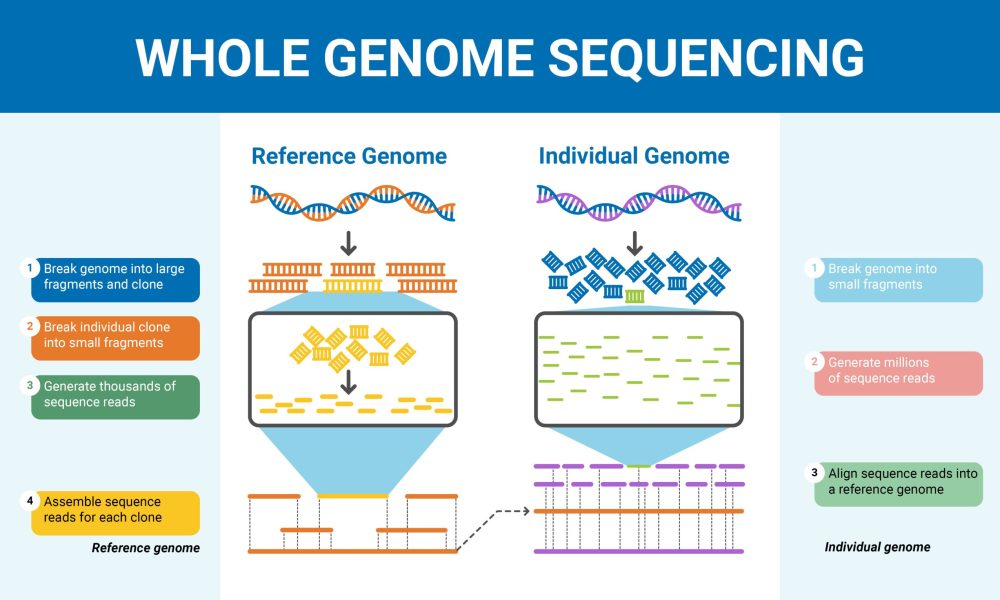
The whole genome sequencing (WGS) market is experiencing substantial growth, driven by advancements in sequencing technologies, increasing applications in clinical diagnostics, and a growing emphasis on precision medicine. The market size is projected to soar to US$6.7 billion by 2031, up from US$1.5 billion in 2024, with a robust compound annual growth rate (CAGR) of 20.3% from 2024 to 2031.
Key Drivers of Market Growth
1. Rising Prevalence of Genetic Disorders and Cancer Mutations
A key factor fueling the market’s growth is the increasing prevalence of genetic disorders, including cancer mutations. Whole genome sequencing plays a vital role in the early detection and management of these conditions. By identifying genetic mutations at an early stage, WGS enables more effective treatment options and personalized care, reducing the burden of genetic diseases and improving patient outcomes.
2. Advancements in Early Detection and Personalized Treatment
Whole genome sequencing is not just revolutionizing our understanding of genetic disorders, but it is also enhancing clinical diagnostics. WGS is used to detect rare genetic conditions, congenital diseases, and prenatal screening, empowering healthcare providers to create targeted, individualized treatment plans.
3. Application in Precision Medicine
The growing role of WGS in precision medicine is another significant market driver. By analyzing an individual’s genetic profile, healthcare professionals can develop tailored therapies that are more effective than conventional treatments. WGS also supports pharmacogenomics, which helps in identifying how a person’s genes affect their response to specific medications.
Product Segment Insights
The whole genome sequencing market can be categorized into three primary segments: instruments, consumables, and services. In 2023, the consumables category held a dominant market share of 57%. This segment includes reagents, assay kits, and other essential materials used in sequencing procedures. As the sequencing process evolves, the demand for specialized consumables, especially those that are compatible with advanced sequencing techniques, is on the rise.
Download Your Free Sample & Explore Key Insights
Large Whole Genome Sequencing Dominates the Market
Whole genome sequencing is further divided into large and small genome sequencing. The large whole genome sequencing segment held a market share of 77% in 2023. The detailed analysis offered by large-scale sequencing allows for the detection of disease-causing alleles in extensive genomes, which smaller-scale sequencing methods might miss. Large-scale sequencing is widely used for detecting genetic differences in populations, analyzing tumors, and improving agricultural breeding.
Regional Dynamics
1. North America: Market Leader
North America continues to dominate the whole genome sequencing market, holding a significant 51% share in 2023. The region benefits from a well-established research and development infrastructure, with many universities, research institutions, and biotech companies pushing the boundaries of genomic research. This is complemented by substantial government funding, which supports genomic projects like the U.S. National Institutes of Health’s All of Us Research Program. Moreover, the high prevalence of genetic disorders in North America, such as Down syndrome, further underscores the importance of WGS for early detection and personalized treatments.
2. Asia Pacific: High Growth Prospects
The Asia Pacific region is projected to exhibit a high growth rate during the forecast period. Increased investment in research and development, coupled with government initiatives to promote genomics, is driving the demand for whole genome sequencing in this region. For example, India has authorized several laboratories to conduct genome sequencing for SARS-CoV-2, reflecting the growing interest and capability in genomic research. As the region invests in healthcare infrastructure, the demand for genomic sequencing services is expected to rise significantly.
Technological Advancements
1. Next-Generation Sequencing (NGS)
Advancements in next-generation sequencing (NGS) technologies have drastically reduced the cost and time involved in sequencing a genome. The cost of sequencing a human genome has dropped from nearly $100 million in the early 2000s to below $1,000 today. This reduction has made whole genome sequencing more accessible, both in research and clinical diagnostics, thereby expanding its adoption across various sectors.
2. Artificial Intelligence (AI) and Machine Learning (ML)
The integration of AI and ML with whole genome sequencing represents a transformative trend in the industry. These technologies can improve the analysis of genomic data by automating data processing, reducing errors, and uncovering genetic patterns that may be overlooked by traditional methods. AI-driven analytics can also enhance personalized treatment strategies by predicting disease risks and drug responses, which are crucial for precision medicine.
Get Custom Insights Designed for Your Business
Market Challenges
Despite the rapid advancements, there are a few challenges that could slow down the growth of the whole genome sequencing market.
1. High Costs and Accessibility Issues
Despite the significant drop in sequencing costs, whole genome sequencing remains expensive compared to other diagnostic methods. The upfront costs of sequencing equipment, along with the need for specialized bioinformatics tools and trained personnel, create financial barriers, particularly for smaller institutions and healthcare providers in low- and middle-income countries. These financial constraints could slow the widespread adoption of WGS, particularly in resource-limited settings.
2. Ethical and Data Privacy Concerns
Whole genome sequencing raises significant data privacy and ethical concerns. The vast amount of genetic data generated by sequencing, if mishandled, could lead to privacy breaches and potential misuse. The fear of genetic discrimination by employers or insurance companies is a growing concern, which may deter individuals from undergoing genetic testing. Ensuring robust data protection measures and clear ethical guidelines will be critical in addressing these concerns.
Market Opportunities
1. Expanding Applications in Precision Medicine
Whole genome sequencing is expected to see expanded applications in precision medicine, which tailors treatments based on an individual’s genetic makeup. As the healthcare industry continues to embrace genomics, the demand for personalized therapies and targeted treatments is set to increase, providing significant growth opportunities for WGS market players.
2. Integration with AI and ML
The continued integration of AI and ML with whole genome sequencing technologies is poised to accelerate market growth. These technologies enable faster and more accurate data analysis, which is crucial for clinical applications where precision is paramount. AI and ML can help in the development of predictive models for disease risk, improving patient care and reducing healthcare costs.
Whole Genome Sequencing Market Segmentation
By Product
- Instruments
- Consumables
- Services
By Type
- Large Whole Genome Sequencing
- Small Whole Genome Sequencing
By Workflow
- Pre-sequencing
- Sequencing
- Data Analysis
By Region
- North America
- Latin America
- Europe
- South Asia & Oceania
- East Asia
- The Middle East & Africa
Checkout Now & Download Complete Market Report
Competitive Landscape
The whole genome sequencing market is highly competitive, with major players including Thermo Fisher Scientific, Illumina, QIAGEN, and Merck KGaA, among others. These companies are investing heavily in research and development to enhance their sequencing platforms and expand the range of applications for WGS. Partnerships, acquisitions, and collaborations are common strategies used to strengthen their market position.
Recent Industry Developments
In September 2023, Illumina launched the NovaSeq X, a high-throughput sequencing system that has seen rapid adoption. Meanwhile, QIAGEN N.V. and Sysmex Corporation partnered in July 2022 to develop cancer companion diagnostics using next-generation sequencing technologies, further underscoring the increasing importance of WGS in clinical settings.
Conclusion
The whole genome sequencing market is poised for substantial growth over the next several years, driven by technological advancements, increasing applications in personalized medicine, and growing awareness of the importance of genetic research. While challenges such as high costs and data privacy concerns persist, the integration of AI and ML technologies and the increasing adoption of WGS in clinical settings will likely accelerate the market’s expansion. As the demand for precision medicine and genetic testing continues to rise, the WGS market offers immense opportunities for innovation and growth.




