

Why Your Choice of Paper Bowls Matters More Than You Think
When a customer opens their takeout salad, they’re not just evaluating your food—they’re judging your entire operation through the container holding it. A sturdy, well-designed paper bowl signals professionalism and care, while a flimsy one that buckles under the weight of grilled chicken and dressing broadcasts carelessness before the first bite. This packaging becomes your silent ambassador, maintaining food temperature during transport, preventing textural degradation from condensation, and ensuring that vibrant ingredients arrive looking as appetizing as they did when leaving your window. The consequences of poor choices extend far beyond the immediate transaction. A leaking bowl doesn’t just create a mess; it generates negative online reviews that persist for years, erodes customer trust you’ve worked months to build, and forces you to comp meals that eat directly into already thin margins. Meanwhile, soggy containers that collapse mid-meal transform what should be a satisfying experience into a frustrating one, virtually guarantees that customer won’t return, and often prompts them to share their disappointment with friends or on social media. Your packaging isn’t an afterthought or a line item to minimize—it’s an operational asset that either reinforces your brand’s quality promise or undermines everything else you’re doing right. The right paper bowls protect your investment in premium ingredients, support efficient service during rush periods, and create the reliable, positive experience that turns first-time buyers into loyal regulars.
Key Factors in Selecting the Right Bulk Packaging Solutions
Durability & Functionality: Beyond Just Holding Food
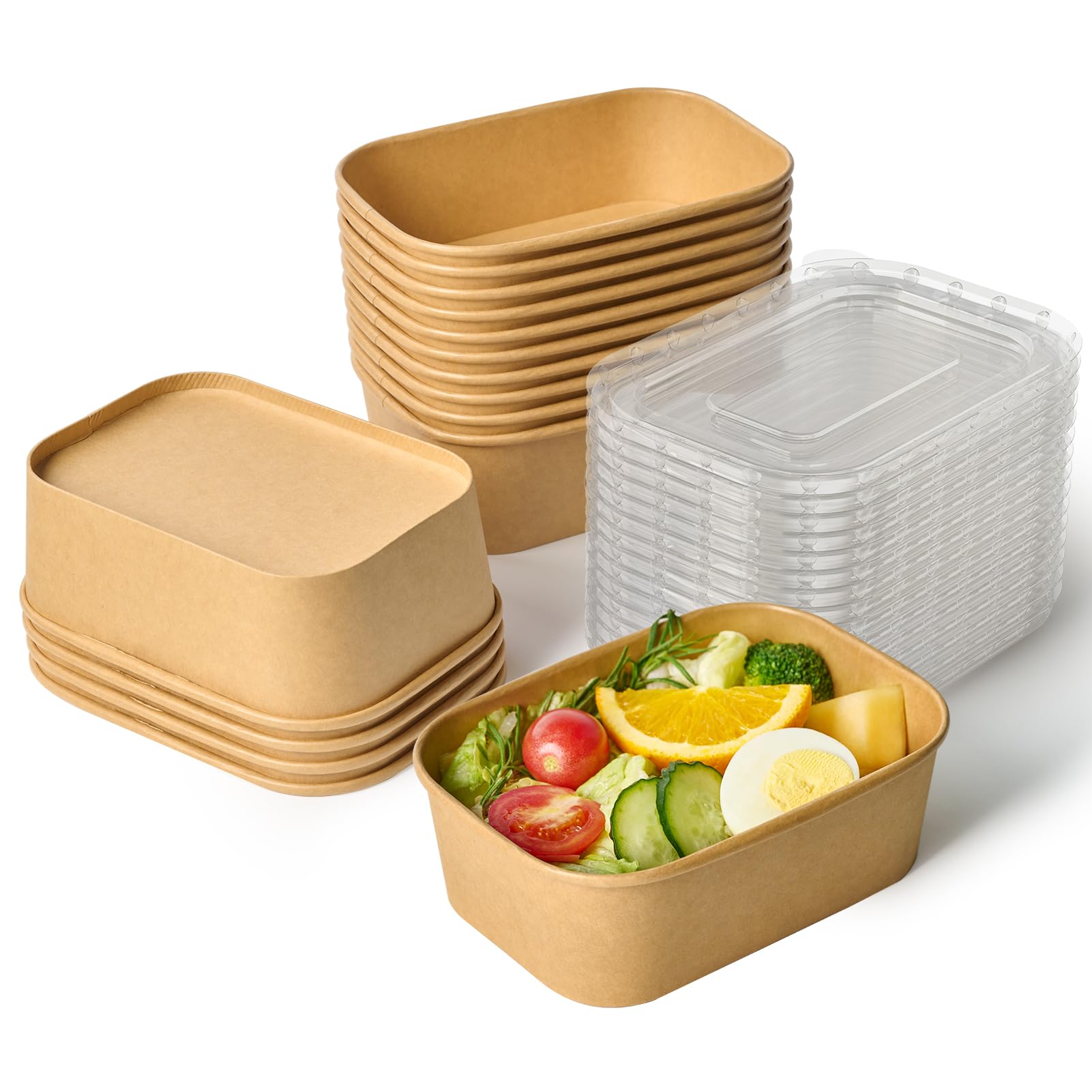
The baseline requirement for any food container seems obvious—it should hold food without falling apart—but the reality demands much more nuanced performance. A paper bowl serving a grain salad with tahini dressing must resist oil penetration for at least 45 minutes, the typical duration from handoff to consumption. Look for containers with a polyethylene or aqueous coating that creates a moisture barrier without compromising recyclability. Material weight matters significantly; bowls under 300 GSM (grams per square meter) typically collapse when holding proteins and wet ingredients, while those in the 350-400 GSM range maintain structural integrity even when customers carry them across parking lots or up office building stairs. Microwave safety becomes critical if your customers reheat meals, requiring containers that won’t warp or release chemicals when exposed to heat. The lid seal deserves equal scrutiny—a secure closure prevents the catastrophic spills that occur when bags tip during transport, while a poorly designed rim allows air exchange that accelerates food degradation and creates the soggy, unappetizing presentation that undermines premium pricing.
Cost-Effectiveness: Calculating True Value, Not Just Price
A supplier quoting $0.42 per bowl isn’t necessarily cheaper than one charging $0.58 if the less expensive option generates waste that costs you $0.25 per failed container in comped meals and lost ingredients. Calculate your true cost by multiplying the unit price by your projected monthly volume, then adding storage expenses for the space those bulk boxes occupy in your commissary or truck. Minimum order quantities create a hidden trap—a fantastic per-unit price means nothing if the MOQ forces you to tie up $3,000 in inventory for six months when that capital could address more immediate operational needs. Factor in your waste rate by testing samples under real service conditions; if three out of every hundred containers fail during normal use, that 3% failure rate directly impacts your effective cost per usable unit. Smart buyers also consider the opportunity cost of dealing with packaging problems during service—the five minutes you spend managing a leaking container crisis during lunch rush represents lost revenue from customers you couldn’t serve. The most affordable option balances acceptable per-unit pricing with minimal waste, reasonable MOQs that match your actual consumption rate, and reliability that keeps your operation running smoothly without constant firefighting.
Portability & Storage: Essential for Mobile Operations
Food truck operators face spatial constraints that brick-and-mortar restaurants never consider, making packaging efficiency a competitive advantage rather than a minor convenience. Nestable bowls that stack inside each other can reduce storage volume by 60% compared to non-nesting designs, transforming a space-consuming pallet into a manageable inventory that fits in overhead compartments or under prep counters. Weight directly impacts your operational costs in ways that accumulate quickly—a difference of just two ounces per container multiplied across 500 weekly servings adds 62 pounds to your supply shipments, increasing freight costs and making restocking physically exhausting when you’re hauling boxes from vehicle to truck. Stackability during service determines how efficiently you can set up your serving line; containers that nest securely when empty but stack stably when filled allow you to prep multiple orders simultaneously without toppling towers of salads during the rush. Consider packaging dimensions against your specific storage configuration—containers that fit perfectly in standard milk crates or cambro boxes integrate seamlessly into existing workflows, while oddly sized options create frustrating gaps and wasted space that force you to carry fewer backup supplies than you actually need.
Common Bulk Packaging Pitfalls and How to Avoid Them
Mistake 1: Prioritizing Lowest Price Over Quality
The temptation to chase rock-bottom pricing becomes overwhelming when you’re managing tight margins, but containers priced at $0.35 instead of $0.52 become expensive the moment they fail during service. Flimsy bowls that collapse under the weight of your signature quinoa bowl or leak dressing onto customer laps generate immediate costs—comped meals averaging $12-15 each, plus the intangible damage of negative reviews that influence dozens of potential customers. To source quality within budget constraints, request sample packs from three competing suppliers and test them under actual service conditions, filling them with your heaviest, wettest menu items and letting them sit for an hour to simulate real delivery scenarios. Check for supplier certifications like FDA compliance and BPI compostability standards, which indicate manufacturers following rigorous quality protocols rather than cutting corners. Compare the failure rate between your cheapest and mid-range options; if budget containers fail 8% of the time versus 1% for premium ones, the seventeen cents you save gets wiped out by waste and customer service issues. The solution isn’t always buying the most expensive option—it’s identifying the threshold where quality becomes reliable enough to eliminate operational problems while still respecting your budget realities.
Mistake 2: Incorrect Sizing and Volume Estimation
Ordering six months of inventory based on a gut feeling rather than data leaves you either scrambling for emergency supplies at premium prices or stuck warehousing 4,000 unusable containers that don’t fit your actual menu applications. Running out of 32-ounce bowls during your busiest season forces you into panic purchases from local restaurant supply stores at markups reaching 40% above bulk pricing, while overestimating leaves capital trapped in packaging that could have upgraded your refrigeration or marketing. Start by analyzing three months of sales data, calculating your average daily container usage for each size, then multiply by your desired inventory period—typically 45-60 days for most food truck operations. Account for seasonal fluctuations; if summer festival bookings triple your normal volume, factor that spike into your calculations rather than ordering based on winter averages. Build a 15-20% buffer for unexpected demand surges, but resist the temptation to dramatically overorder just because bulk pricing improves at higher quantities. Create a simple tracking system noting your container usage weekly, which reveals patterns like Monday lunch requiring 30% fewer bowls than Friday, allowing you to refine future orders. Test new sizes with small trial orders before committing to bulk quantities—introduce a 24-ounce option by purchasing 100 units to validate customer response before locking in a 2,000-unit order.
Mistake 3: Overlooking Logistics and Lead Times
Discovering your supplier needs three weeks to fulfill your order becomes catastrophic when you’re down to a five-day supply, forcing desperate measures like borrowing containers from neighboring food trucks or suspending menu items that require specific packaging. Supply chain disruptions—port delays, manufacturing backlogs, freight capacity shortages—have transformed from rare anomalies into regular occurrences that can strand your operation without critical supplies. Build a minimum buffer stock covering 30 days of normal operations, stored in climate-controlled space that protects containers from moisture and crushing. Vet supplier reliability before committing to large orders by asking pointed questions: What’s their average fulfillment time? Do they manufacture domestically or import, which affects lead time predictability? Can they provide references from similar food service operations? Request a small initial order to evaluate their shipping accuracy, packaging protection during transit, and communication quality when issues arise. Understand shipping terms explicitly—FOB (freight on board) pricing means you’re responsible for shipping costs and transit risk, while delivered pricing includes freight but may hide those costs in inflated per-unit rates. Establish reorder triggers based on lead times; if your supplier needs 14 days, place new orders when inventory drops to a 21-day supply, providing cushion for unexpected delays. Develop a backup supplier relationship even if you don’t regularly order from them, maintaining contact so you have an emergency option when your primary source faces disruptions.
Strategic Sourcing: Building a Relationship with Your Supplier
Transitioning from one-off bulk purchases to a genuine supplier partnership transforms packaging from a recurring headache into a competitive advantage that strengthens over time. A transactional approach—simply chasing the lowest quote each quarter—leaves you constantly vetting new vendors, dealing with inconsistent quality, and missing opportunities for customization that could differentiate your brand. When you establish a relationship with a reliable supplier, they learn your specific operational needs, anticipate your seasonal volume fluctuations, and proactively alert you to supply chain issues before they disrupt your service. This familiarity often unlocks volume discounts beyond published pricing tiers, as suppliers reward loyal customers who provide predictable revenue streams. Suppliers like Jolly Chef and others in the tableware industry often provide regular communication that creates mutual investment in your success—share your growth plans so they can ensure adequate inventory, provide feedback on product performance so they can address issues, and ask about new innovations like improved coatings or sustainable materials before they hit the broader market. Negotiate terms that support your cash flow, such as net-30 payment schedules or flexible delivery dates that align with your storage capacity. The strongest partnerships include quarterly business reviews where you analyze usage patterns together, identify cost-saving opportunities, and discuss upcoming menu changes that might require different packaging solutions. This collaborative approach means you’re not just buying containers—you’re gaining a strategic partner invested in helping your food service operation thrive.
Making Smart Packaging Decisions for Long-Term Success
Smart bulk food packaging decisions represent far more than a procurement task—they’re strategic investments that directly determine your profitability, operational efficiency, and customer loyalty. The right approach integrates all the critical pillars we’ve explored: selecting functional materials like reliable paper bowls that withstand real-world service conditions, calculating true cost that accounts for waste and operational disruption rather than just sticker price, systematically avoiding the common pitfalls that trap inexperienced buyers in expensive cycles of emergency purchases and customer complaints, and cultivating supplier partnerships that provide consistent quality and support your growth trajectory. The packaging holding your carefully crafted meals carries your brand promise in every transaction, making it too important to treat as an afterthought or a line item to minimize without strategic consideration. Take time this week to audit your current packaging approach with fresh eyes—test your containers under actual service stress, calculate your real cost including waste and comps, evaluate your supplier’s reliability and communication quality, and identify where small improvements could yield significant returns. The food service operators who thrive long-term aren’t necessarily those with the lowest packaging costs, but those who’ve optimized the balance between affordability, functionality, and reliability that transforms packaging from a recurring expense into a competitive advantage that strengthens their business with every satisfied customer.




