
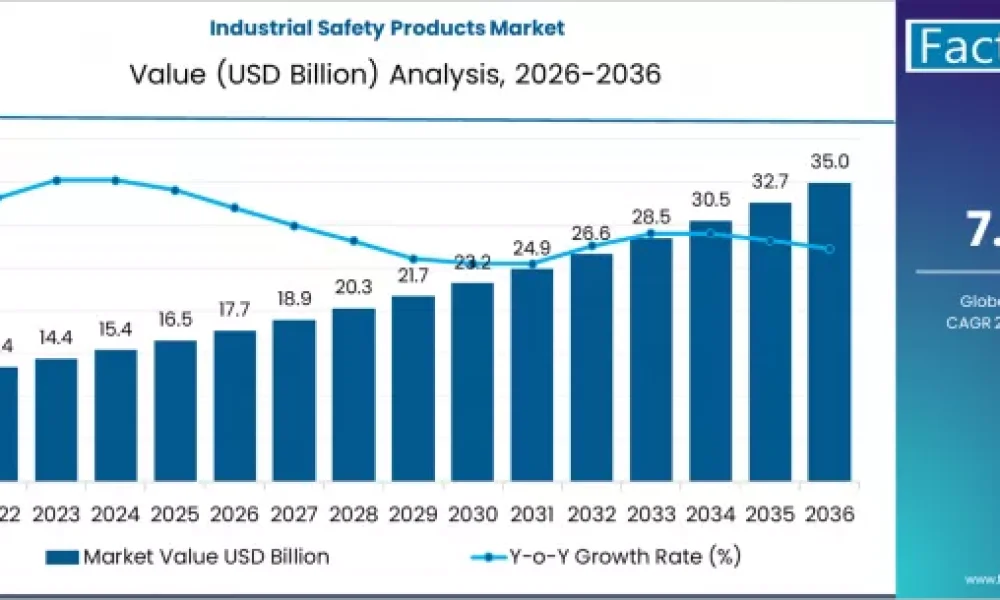
The global industrial safety products market is poised for significant growth over the next decade, driven by increasing industrialization, stringent occupational safety regulations, and growing awareness among organizations regarding workplace safety. In 2026, the market is projected to be valued at approximately USD 17.67 billion, with a forecasted expansion to nearly USD 34.96 billion by 2036. This represents a compound annual growth rate (CAGR) of around 7.1 percent over the period, reflecting steady and sustained demand across multiple sectors.
Industrial safety products encompass a wide range of solutions designed to protect workers from occupational hazards, including personal protective equipment (PPE), safety storage, spill response tools, and technologically advanced devices such as sensors and monitoring systems. The growth of this market is closely linked to regulatory frameworks in developed and emerging economies that mandate the implementation of safety measures across industrial environments. Compliance with safety standards is no longer optional; it has become a critical component of operational strategy for organizations aiming to reduce accidents, avoid legal liabilities, and maintain employee well-being.
To access the complete data tables and in-depth insights, request a Discount On The Report here: https://www.factmr.com/connectus/sample?flag=S&rep_id=13541
Market Segmentation by End-Use
Among the various end-use industries, the manufacturing sector holds the largest market share. This is primarily due to the high concentration of industrial workers exposed to mechanical, chemical, and physical hazards. The adoption of industrial safety products in manufacturing facilities ranges from standard protective gear, such as helmets, gloves, and safety footwear, to advanced monitoring devices that track worker exposure to harmful substances or detect unsafe conditions in real time.
The oil and gas sector also represents a substantial segment within the market. Employees in this industry operate in high-risk environments involving flammable materials, heavy machinery, and extreme working conditions. The critical nature of safety in oil and gas operations drives the demand for specialized safety products, including flame-resistant clothing, gas detectors, and advanced respiratory protection equipment. Other industrial sectors, such as construction, chemicals, and logistics, are also contributing to market expansion, albeit at a slightly lower pace due to smaller workforces or more localized regulatory enforcement.
Product Category Trends
Personal protective equipment remains the leading product category within the industrial safety products market. PPE is essential across all industries and includes items such as helmets, gloves, goggles, safety shoes, hearing protection, and respiratory devices. These products not only serve as the first line of defense against injuries but also represent an ongoing revenue stream due to regular replacement requirements and advancements in ergonomic design.
Safety storage and spill response solutions have emerged as fast-growing segments, driven by industrial processes that handle hazardous chemicals or flammable materials. Proper storage systems minimize the risk of accidents, while spill containment products reduce environmental impact and comply with legal requirements. In addition, technological innovations such as sensor-integrated storage and automated spill detection systems are enhancing safety protocols, further fueling market growth.
The materials used in industrial safety products also play a critical role in market dynamics. High-performance polymers, steel, and composite materials dominate the market due to their durability, strength, and resistance to environmental hazards. Ergonomic designs and lightweight alternatives are gaining popularity, as they improve worker compliance and reduce fatigue without compromising safety. Companies are also increasingly incorporating smart technologies into safety products, enabling real-time monitoring, data collection, and predictive maintenance of equipment.
Regional Growth Outlook
Asia Pacific is projected to exhibit the highest growth rates in the industrial safety products market over the forecast period. Rapid industrialization, expanding manufacturing infrastructure, and increased regulatory enforcement in countries such as India and China are key drivers. India, in particular, is expected to register the highest CAGR, fueled by government initiatives to formalize industrial operations and implement stringent workplace safety standards.
North America remains a mature market, characterized by high adoption of technologically advanced safety solutions and strong regulatory compliance. The United States continues to witness steady growth due to consistent investment in worker safety programs and ongoing modernization of industrial facilities. Europe, led by Germany and other industrialized nations, maintains moderate growth, supported by well-established regulations, high worker safety awareness, and integration of digital safety technologies in industrial processes.
Other regions, including Latin America and the Middle East, are experiencing gradual growth as industries expand operations and adopt safety standards in alignment with global best practices. These regions are also witnessing investments in infrastructure and energy sectors, creating new opportunities for industrial safety product deployment.
Market Drivers
The primary factors driving growth in the industrial safety products market include stringent occupational safety regulations, growing industrial output, and increasing corporate focus on employee well-being. Regulatory compliance remains a critical motivator for organizations to invest in safety solutions, as failure to adhere to standards can result in severe legal and financial consequences. Moreover, the rise of smart manufacturing and Industry 4.0 initiatives has highlighted the importance of integrated safety systems that can monitor and prevent workplace accidents in real time.
Another significant driver is the increasing adoption of ergonomic and technologically advanced safety products. Wearable safety devices, sensor-equipped PPE, and real-time monitoring systems provide organizations with actionable data to prevent accidents and maintain compliance. Additionally, the growing emphasis on sustainability and corporate social responsibility encourages companies to implement safety practices that protect both workers and the environment.
Challenges
Despite strong growth prospects, the market faces challenges. Price sensitivity among small and medium-sized enterprises, particularly in emerging economies, can limit the adoption of high-end safety products. The initial investment costs for technologically advanced safety solutions may be perceived as high, delaying implementation. Furthermore, varying regulatory standards across countries can create inconsistencies in safety practices, posing difficulties for multinational organizations seeking uniform solutions.
Competitive Landscape
The industrial safety products market is highly competitive, with key players focusing on product innovation, technological integration, and global expansion. Major companies maintain broad portfolios that cater to diverse industrial needs, from basic protective gear to sophisticated smart safety systems. Competition is further fueled by mergers, acquisitions, and strategic partnerships aimed at expanding geographic presence and enhancing product offerings.
To differentiate themselves, companies are increasingly investing in research and development to improve product ergonomics, introduce sensor-based monitoring solutions, and develop sustainable materials. Customer education and after-sales services also play a vital role in gaining market share, as organizations look for reliable solutions that ensure long-term workplace safety.
Future Outlook
Over the next decade, the industrial safety products market is expected to continue its steady upward trajectory. The combination of regulatory enforcement, growing industrial activity, and technological innovation will sustain demand for safety products across sectors. Smart and connected safety devices, ergonomic designs, and sustainability-focused solutions are anticipated to be the most significant growth drivers, offering opportunities for both established players and new entrants.
The market is expected to remain highly dynamic, with Asia Pacific leading in growth, followed by steady expansion in North America and Europe. Industrial sectors such as manufacturing, oil and gas, and chemicals will continue to dominate demand, while emerging industries adopt safety solutions as part of broader occupational health initiatives. Organizations that integrate advanced safety technologies into their operations will benefit from reduced workplace incidents, improved compliance, and enhanced productivity.
In summary, the industrial safety products market is set for robust growth over the 2026–2036 period, with revenues expected to nearly double. The evolving landscape of regulatory compliance, technological advancement, and heightened safety awareness will continue to drive innovation and adoption, establishing workplace safety as a central priority for industries worldwide.
Have a specific Requirements and Need Assistant on Report Pricing or Limited Budget please contact us – [email protected]
To View Related Report :
Industrial Waste Incinerator Market https://www.factmr.com/report/industrial-waste-incinerator-market
Industrial CO2-to-Fuels Direct Air Capture Market https://www.factmr.com/report/industrial-co2-to-fuels-direct-air-capture-market
Industrial Vision Gateways Market https://www.factmr.com/report/industrial-vision-gateways-market
Industrial Vending Machine Market https://www.factmr.com/report/industrial-vending-machine-market



