
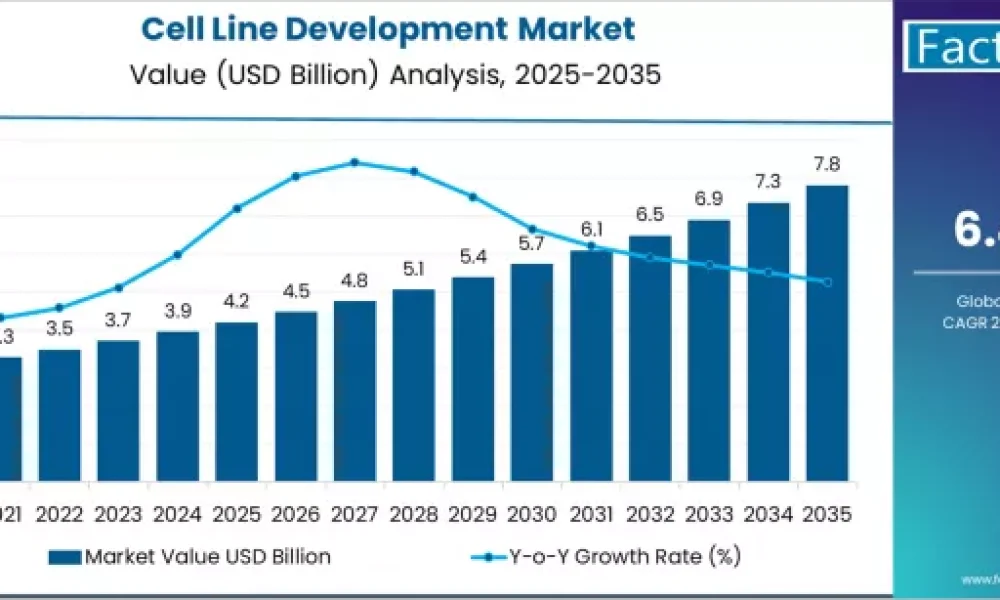
The global cell line development market is witnessing robust expansion as biopharmaceutical innovation accelerates worldwide. From 2026 to 2036, demand for high-quality, stable, and regulatory-compliant cell lines is expected to rise steadily, driven by the growing pipeline of biologics, biosimilars, vaccines, and cell- and gene-based therapies. Cell line development forms the backbone of modern biologics manufacturing, enabling efficient production of monoclonal antibodies, recombinant proteins, viral vectors, and advanced therapeutics.
This press release provides a comprehensive overview of market size, growth drivers, technology evolution, regional demand trends, competitive dynamics, and long-term opportunities shaping the global cell line development market through 2036.
To access the complete data tables and in-depth insights, request a Discount On The Report here: https://www.factmr.com/connectus/sample?flag=S&rep_id=180
Market Overview and Growth Outlook
Cell line development involves the creation, optimization, and characterization of mammalian and microbial cell lines to ensure high productivity, genetic stability, and regulatory compliance. The market is projected to experience strong and sustained growth through 2036, supported by rising biologics approvals, increasing outsourcing by pharmaceutical companies, and the expansion of contract development and manufacturing organizations (CDMOs).
As biologics continue to outperform small-molecule drugs in terms of clinical efficacy and revenue generation, biopharma companies are prioritizing advanced cell line platforms to reduce development timelines and improve yield efficiency. The shift toward platform-based development models is further strengthening market momentum.
Key Growth Drivers
The rapid expansion of the global biologics and biosimilars pipeline is a primary growth driver. Monoclonal antibodies, recombinant proteins, and fusion proteins rely heavily on robust mammalian cell lines, particularly CHO (Chinese hamster ovary) cells, which remain the industry gold standard.
Rising adoption of cell and gene therapies is also fueling demand for specialized cell line development services. Viral vector production, including AAV and lentiviral vectors, requires highly optimized and scalable cell lines to meet clinical and commercial manufacturing needs.
Increased outsourcing to CDMOs is another critical factor. Pharmaceutical and biotechnology companies are increasingly partnering with specialized service providers to reduce capital expenditure, access advanced technologies, and accelerate time-to-market.
Technology Evolution and Innovation Trends
Technological advancements are reshaping the cell line development landscape. Innovations in genome editing tools such as CRISPR/Cas9, TALENs, and ZFNs are enabling precise genetic modifications, leading to higher expression levels and improved product quality.
High-throughput screening, automation, and AI-driven clone selection are significantly reducing development timelines while enhancing reproducibility. Single-cell cloning technologies and advanced analytical tools are improving monoclonality assurance, a key regulatory requirement.
Additionally, the adoption of serum-free and chemically defined media is enhancing process consistency and regulatory compliance. Platform cell line technologies are allowing developers to standardize workflows across multiple products, reducing development risk and cost.
Regional Demand Dynamics
North America dominates the global cell line development market, supported by a strong biopharmaceutical ecosystem, high R&D spending, and the presence of leading biotech firms and CDMOs. The United States remains a hub for biologics innovation and early adoption of advanced cell line technologies.
Europe represents a mature and stable market, driven by biosimilar development, academic-industry collaborations, and supportive regulatory frameworks. Countries such as Germany, the UK, and Switzerland are key contributors to regional demand.
Asia-Pacific is expected to witness the fastest growth through 2036. Expanding biomanufacturing capacity, increasing government support, and rising investments in China, India, South Korea, and Singapore are positioning the region as a major growth engine.
Competitive Landscape
The market is highly competitive, with a mix of global CDMOs, specialized service providers, and technology-driven biotech firms. Companies are focusing on expanding service portfolios, investing in automation, and forming strategic partnerships to strengthen market presence.
Intellectual property protection, speed of development, regulatory expertise, and scalability are key differentiators in this space.
Challenges and Constraints
Despite strong growth prospects, the market faces challenges such as high development costs, stringent regulatory requirements, and the need for specialized technical expertise. Data integrity, cell line stability, and reproducibility remain critical concerns, particularly for late-stage and commercial manufacturing.
Strategic Implications and Outlook
- Biopharma Companies: Prioritize platform cell line strategies to accelerate pipelines.
- CDMOs: Invest in automation, genome editing, and scalable technologies.
- Investors: The market offers long-term, innovation-driven returns.
- Regulators and Stakeholders: Continued focus on quality and compliance will shape adoption.
Outlook Summary
Through 2036, the global cell line development market is set to remain a cornerstone of biopharmaceutical innovation. Driven by biologics growth, technological breakthroughs, and expanding regional demand, the sector presents significant opportunities for companies committed to advancing efficient, scalable, and high-quality therapeutic development.
Have a specific Requirements and Need Assistant on Report Pricing or Limited Budget please contact us – [email protected]
About Fact.MR
Fact.MR is a global market research and consulting firm, trusted by Fortune 500 companies and emerging businesses for reliable insights and strategic intelligence. With a presence across the U.S., UK, India, and Dubai, we deliver data-driven research and tailored consulting solutions across 30+ industries and 1,000+ markets. Backed by deep expertise and advanced analytics, Fact.MR helps organizations uncover opportunities, reduce risks, and make informed decisions for sustainable growth.



