
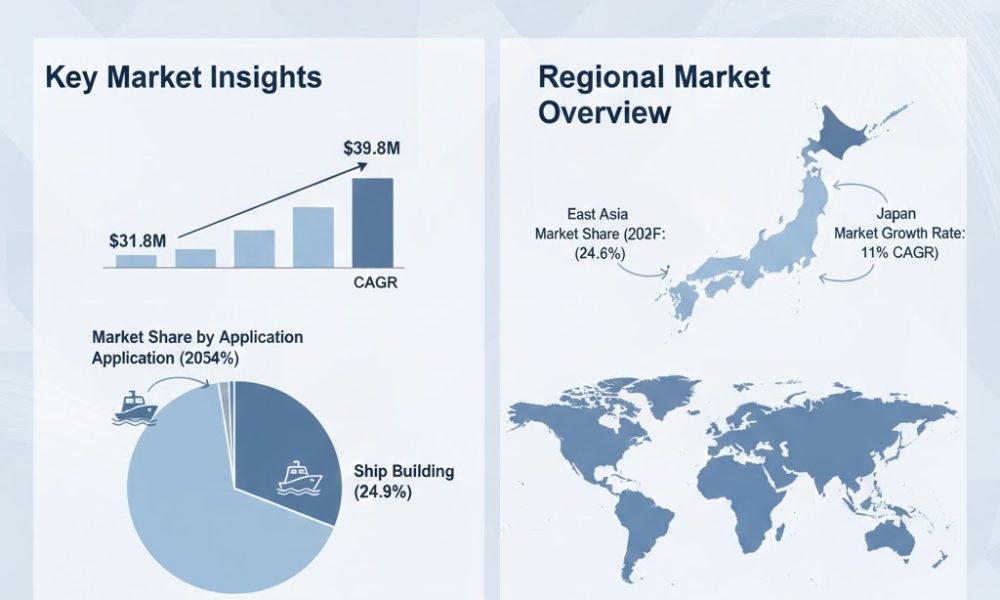
The global basalt fiber market is emerging as a high-growth segment within the industrial composites industry, valued at approximately USD 121.8 million in 2024. With exceptional tensile strength (up to 4840 MPa), thermal stability (up to 800°C), and corrosion resistance, basalt fiber is increasingly adopted across construction, automotive, aerospace, and renewable energy sectors. The market is projected to grow at a CAGR of 12.4% from 2024 to 2034, reaching USD 392.1 million, and is expected to surpass USD 460–500 million by 2036, reflecting accelerated adoption and technological advancements.
Market Growth Trajectory
2024: USD 121.8 million
2030 forecast: USD 280 million
2034 forecast: USD 392.1 million
2036 projection: USD 460–500 million
Key growth drivers include:
Construction demand: 37% of total market share by 2034, driven by reinforced concrete and rebar applications.
Automotive sector: Projected CAGR of 13.5% from 2024–2036, fueled by electric vehicles (EVs) and lightweight composites.
Renewable energy: Wind and solar applications expected to account for 22% of demand by 2036.
Geographical expansion: China and Eastern Europe dominate 65% of production, while North America and Southeast Asia lead future adoption.
To access the complete data tables and in-depth insights, request a Discount On The Report here: https://www.factmr.com/connectus/sample?flag=S&rep_id=1312
End-Use Industry Insights
Construction & Infrastructure – Basalt fiber reinforced concrete reduces steel usage by up to 30%, enhancing durability and lowering lifecycle costs. CAGR 11.8%, projected USD 165 million by 2036, with adoption highest in regions with green building certifications.
Automotive & Transportation – Fiber composites reduce vehicle weight by 10–15%, improving EV range by 5–7%. Global adoption expected to reach USD 112 million by 2036; Asia-Pacific leads growth at 14% CAGR. Hybrid basalt-carbon composites offer up to 20% cost savings over pure carbon fiber.
Aerospace & Defense – Niche segment (~5% of revenue) projected to grow 10% CAGR, reaching USD 23 million by 2036; applications include vibration damping panels and thermal insulation.
Renewable Energy – Offshore wind turbines and tower reinforcements drive 22% of projected demand by 2036; basalt fiber extends turbine lifespan by 5–7 years versus glass fiber. CAGR 12.7%.
Marine & Shipbuilding – Fire-resistant, lightweight panels projected to contribute USD 58 million by 2036 (12% of total market), adoption driven by safety and corrosion resistance.
Portfolio Priorities for Market Players
Diversified Product Portfolio: Hybrid basalt-glass and basalt-carbon composites expected to capture 25% market share; offering multiple fiber formats can expand adoption.
Quality & Standardization: Standardization can increase adoption by 15–20% in regulated industries.
Innovation & Smart Manufacturing: AI-driven production reduces defects by 10–12% and shortens lead times, supporting high-volume orders.
Sustainability Positioning: Basalt fiber emits up to 70% less CO₂ than glass fiber; lifecycle certifications can boost market share by 10–12% in green sectors.
Market Challenges
Limited basalt rock reserves causing ±15% cost volatility.
High capital costs (USD 8–12 million per production line).
Competitive pressure from cheaper glass fiber (~USD 1.5/kg vs. basalt ~USD 3–3.5/kg).
Regional Demand Dynamics
| Region | 2024 Market (USD M) | 2036 Projection (USD M) | CAGR (%) |
|---|---|---|---|
| North America | 22 | 78 | 11.5 |
| Europe | 28 | 110 | 12.2 |
| East Asia | 58 | 200 | 12.8 |
| South Asia | 9 | 35 | 13.0 |
| Rest of World | 4 | 37 | 14.5 |
China and Eastern Europe dominate production, while North America and Southeast Asia are key growth regions due to renewable energy and EV adoption.
Strategic Outlook: 2036
The global basalt fiber market is expected to exceed USD 460–500 million, driven by construction (36%), automotive (24%), and renewable energy (22%), with aerospace and marine contributing the remainder. Strategic initiatives for market players include:
Expanding hybrid fiber offerings
Investing in AI-based smart manufacturing
Standardizing quality for regulated industries
Emphasizing sustainability metrics for green-building and EV sectors
By 2036, basalt fiber is poised to transition from niche to mainstream in composite applications, driven by its cost-performance balance, environmental benefits, and high-strength properties.
Have a specific Requirements and Need Assistant on Report Pricing or Limited Budget please contact us – [email protected]
What Challenges are Expected to Limit Demand Growth for Basalt Fiber?
“Limited Availability of Resources and Higher Initial Setup Cost”
There are certain obstacles that are encountered by manufacturers of basalt fiber. The quality and appropriate chemical composition of basalt rock required for its development are available in certain areas in Eastern Europe. Therefore, manufacturers present in other regional areas need to import these fibers, which is somewhere having an adverse impact on market growth.
To View Related Report :
Basalt Rock Market https://www.factmr.com/report/basalt-rock-market
Fiberglass Yarn Market https://www.factmr.com/report/4259/fiberglass-yarn-market
Fiberglass Fabric Market https://www.factmr.com/report/878/fiberglass-fabric-market
Fiber Reinforced Concrete Market https://www.factmr.com/report/fiber-reinforced-concrete-market



