
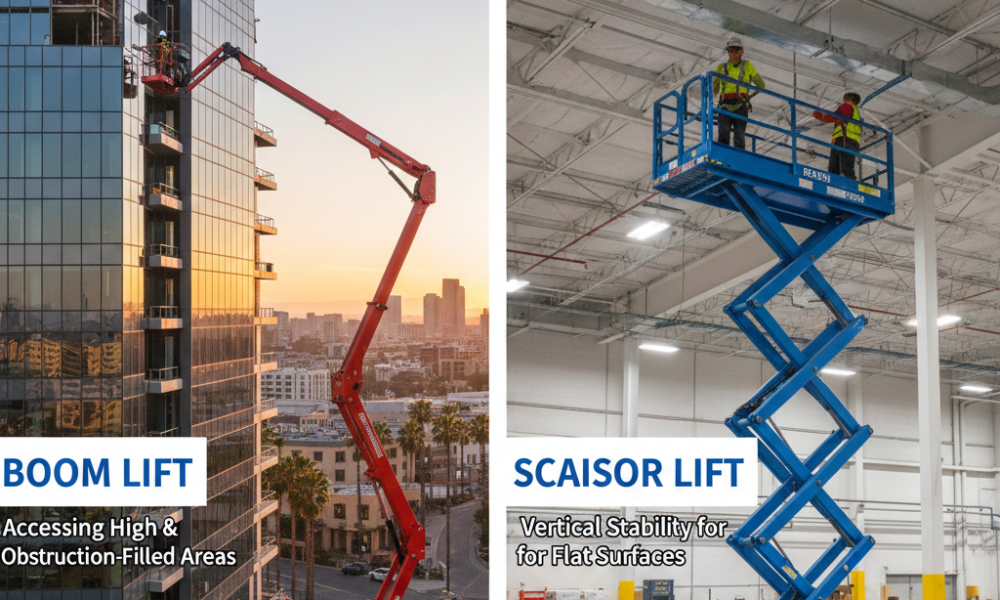
Choosing the right lift matters for construction teams, warehouse crews, and maintenance workers. Many projects require safe height access, and the correct machine helps workers reach different levels with control. A lift boom offers extended reach with flexible movement, while scissor lifts provide straight vertical access for stable tasks. Understanding how each type works supports safer planning and helps teams complete projects faster with less confusion. This guide explains the key differences and helps you select the right option for your project needs.
How Each Lift Moves at Height
A lift boom moves with an arm that reaches upward and outward through controlled extension. This design helps workers approach tough angles during repairs or high structure inspections. In contrast, scissor lifts travel only upward through crossed supports that expand in a straight vertical line. Each lift works well in different places since movement styles suit separate tasks across job sites.
Height Reach and Horizontal Access Differences
A lift boom reaches higher levels and covers sideways distance easily, making outdoor tasks simpler when height shifts happen often. Crews use booms for tree trimming, pole repair, or building care that needs wide-reaching support. Scissor lifts reach lower maximum heights but offer strong stability in indoor warehouses or open floors. Their straight movement helps workers stay steady while stacking materials or handling ceiling tasks.
Stability and Platform Space during Use
Scissor lifts offer stable platforms designed for workers carrying tools, supplies, or light equipment. Their wide standing area helps teams handle routine work without losing balance on elevated floors. A lift boom, on the other hand, often has a smaller basket that suits single tasks rather than heavy loads. It remains strong in the air but does not match the wide workspace offered by many scissor lifts during indoor tasks.
Safety Features and Operation Controls
A lift boom uses advanced controls that manage angle changes, basket rotation, and extended arm reach. Operators need training to handle shifting positions while staying balanced in changing weather. Scissor lifts use simpler controls with steady rising and lowering functions, making them easier for basic indoor work. Safety rails, harness points, and automatic locks appear on both types to support safe movement at height.
Suitability for Indoor or Outdoor Projects
A lift boom is often the choice for an outdoor project, as its design is meant to handle uneven terrain, wide gaps, or open construction ground. It is also suitable for a windy area because the arm positions can adjust to the wind direction and limited space. Scissor lifts are most efficient in an indoor setting where the floors are flat and even, with no bumps or holes. Several warehouses have them in use for the purposes of inventory through the shelves, conducting the routine checks, or carrying out repair works in the spaces that are under control.
Cost, Maintenance, and Project Planning Factors
A lift boom may require higher rental or maintenance cost due to complex parts like joints, pumps, and rotating sections. Crews must inspect hydraulic lines, controls, and stability systems to keep the machine safe. Scissor lifts often carry lower maintenance cost since their lift systems use fewer moving sections. They remain easier to store and fit in narrow aisles where heavy machines cannot move safely. Both lift types demand clear planning so teams understand height limits, platform needs, and total usage time before starting any project.
Final Words
Choosing between a lift boom and scissor lifts depends on project location, height demands, and workspace needs. A lift boom works well for outdoor jobs or tasks needing long horizontal reach. Scissor lifts serve indoor areas where stable platforms and straight vertical travel matter most. Careful planning helps teams stay safe, reduce project delays, and maintain control at different heights. Understanding features, safety rules, and movement differences helps every team choose the right lift for each task.




