
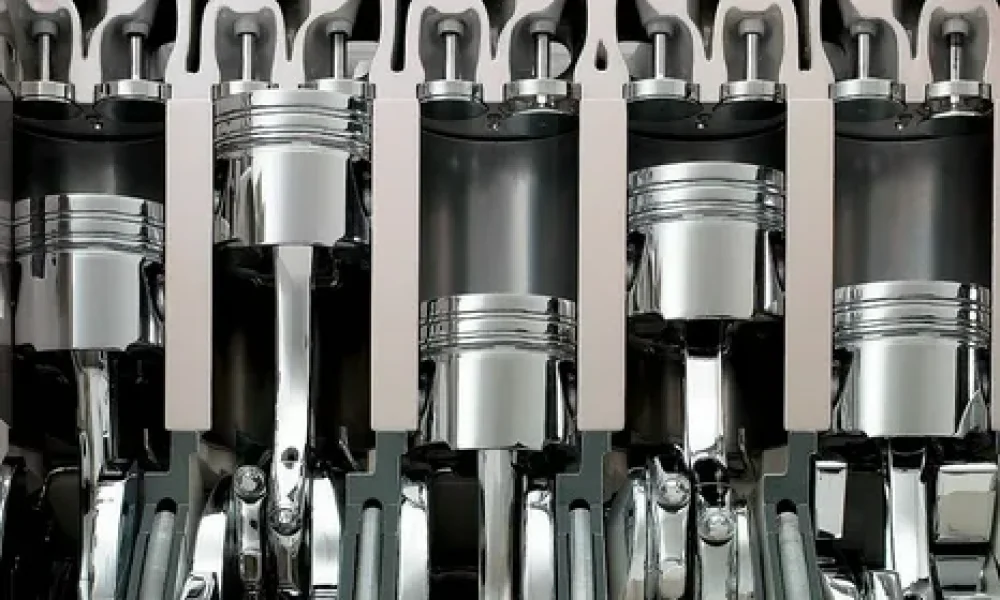
The global automotive piston system market is set for steady long-term growth, expanding from USD 2,300 million in 2025 to USD 3,430 million by 2035, at a CAGR of 4.1%. This positive outlook is underpinned by persistent production of internal combustion engine (ICE) vehicles, a resilient aftermarket ecosystem, and rapid advancements in lightweight materials engineered to boost thermal efficiency and engine durability.
Despite accelerated electrification trends, the internal combustion engine remains central to global mobility—particularly in hybrid configurations and commercial fleets. This sustained relevance is driving continued investments in high-performance piston technologies.
OEM Capacity Expansion and Technological Investments Reinforce Industry Momentum
In 2024, Piston Automotive solidified its North American manufacturing footprint by selecting Avon, Ohio for a new production and distribution facility. The strategic location strengthens the company’s ability to serve both OEM and aftermarket clients with precision-engineered pistons and powertrain components. According to the Northeast Ohio Region Development Alliance, the facility underscores growing demand for advanced combustion solutions near major Midwest automotive hubs.
Material innovation is also accelerating. In an interview with EngineLabs (2024), CP-Carrillo emphasized the rising adoption of forged aluminum and hybrid steel–aluminum pistons for high-performance and heavy-duty applications. The company highlighted breakthroughs in low-friction coatings, variable crown geometries, and high-temperature durability—improvements that are essential for downsized, turbocharged, and hybrid engines.
Subscribe for Year-Round Insights → Stay ahead with quarterly and annual data updates
https://www.futuremarketinsights.com/reports/sample/rep-gb-532
Aftermarket Demand Climbs as Precision Engineering and Customization Gain Traction
The global aftermarket is undergoing a transformation shaped by performance tuning, modularity, and customization. A 2024 ATRAC Parts analysis revealed surging demand for CNC-machined pistons featuring optimized ring lands and custom dome profiles. Rebuilders, retrofitters, and motorsport teams are increasingly specifying high-performance pistons to balance emissions compliance with power gains.
This shift aligns with rising average vehicle age worldwide and a greater consumer emphasis on long-term engine reliability, fueling opportunities for piston manufacturers with advanced machining and coating capabilities.
Semi-Annual Market Insights Highlight Strengthening Growth Outlook
A detailed half-year comparison shows steady upward momentum:
| Period | Value CAGR |
| H1 (2024–2034) | 3.7% |
| H2 (2024–2034) | 3.9% |
| H1 (2025–2035) | 4.0% |
| H2 (2025–2035) | 4.1% |
From H1 to H2 2025, the growth rate is projected to rise from 4.0% to 4.2%, fueled by stronger demand for hybrid-ICE powertrains and increased replacement cycles, especially in commercial fleets. H1 showed a 30 basis point increase, while H2 recorded 20 BPS of additional expansion.
Investment Hotspots: Gasoline Engines Lead with 48% Share in 2025
Gasoline Engines (48% Share in 2025 | CAGR 4.3%)
Gasoline-powered engines remain the largest revenue-generating segment, supported by:
- High passenger car production volumes
- Compatibility with technology enhancements such as turbocharging and variable valve timing
- Lower NVH relative to diesel engines
- Growing integration with mild hybrid systems
Gasoline engines remain especially dominant in Asia-Pacific and North America, where ethanol-blended fuels and cost-efficient vehicle ownership continue to drive adoption.
Dish Pistons Maintain Market Leadership With 45% Share
Dish piston designs held 45% of the piston head market in 2025, expected to grow at 4.2% CAGR through 2035. Their concave geometry enhances:
- Air–fuel mixing
- Combustion stability
- Knock resistance
- Durability under high-pressure turbocharged conditions
Manufactured using forged aluminum alloys and coated for wear resistance, dish pistons are widely deployed in both ICE and hybrid applications, including multi-valve and downsized engines.
Aluminum Piston Adoption Strengthens as Lightweighting Becomes Essential
Aluminum alloys—particularly those with 12% silicon—remain the preferred material for modern pistons, offering excellent thermal conductivity and castability. Hypereutectic alloys exceeding 12% silicon content further enhance:
- High-temperature strength
- Wear resistance
- Dimensional stability
As engine downsizing and turbocharging intensify, demand for aluminum and hybrid aluminum–steel piston systems continues to strengthen.
Global Market Drivers: Performance Demands, Turbocharging, and Rising Vehicle Production
Turbocharging Boosts High-Performance Piston Demand
Turbocharged engines—operating at temperatures up to 900°C—require piston geometries and materials engineered for extreme thermal and mechanical loads. With the turbocharged engine market projected to grow at 5.4% CAGR, manufacturers are developing pistons with enhanced coatings, reinforced crowns, and advanced cooling galleries.
Vehicle Production Growth Fuels Core Demand
Global vehicle production reached 80 million units in 2024, creating consistent demand for durable, high-performance piston systems. With automotive production expected to grow 2–3% annually, piston suppliers are expanding capabilities across forging, casting, and surface treatment processes.
Country-Level Insights: Asia Leads Global Demand
| Country | CAGR (2025–2035) |
| India | 5.5% |
| China | 5.0% |
| USA | 4.0% |
| Germany | 3.8% |
| Japan | 3.7% |
China continues to dominate global production, exceeding 30 million vehicles in 2023, reinforcing its role as a key consumer of advanced piston systems.
India leads in growth rate, driven by rising two-wheeler and passenger vehicle manufacturing.
Germany’s precision engineering ecosystem and emerging e-fuel initiatives are boosting demand for advanced pistons designed for high-efficiency engines.
In the United States, aftermarket demand is intensifying as vehicle lifespans exceed 12 years.
Personalize Your Experience: Ask for Customization to Meet Your Requirements
https://www.futuremarketinsights.com/customization-available/rep-gb-532
Competitive Landscape: Tier-1 Suppliers Hold 50–55% Market Share
Tier-1 manufacturers including MAHLE GmbH, Rheinmetall Automotive, Tenneco, Aisin Seiki, and Hitachi Automotive Systems dominate the market through sustained investment in materials science, coatings, and hybrid-ICE technologies.
Tier-2 players such as Shriram Pistons & Rings, India Pistons Limited, and Federal-Mogul continue to gain traction through cost-effective manufacturing and regional aftermarket strength.
Recent advancements include:
- MAHLE (2020): high-performance pistons for next-gen turbo engines
- Federal-Mogul (2023): lightweight thermal-optimized pistons for fuel-efficient vehicles
Outlook
As OEMs continue enhancing ICE-hybrid systems and global production scales upward, demand for precision-engineered pistons will remain strong. With ongoing advancements in materials, coatings, and manufacturing, the automotive piston system market is positioned for sustained growth through 2035.
Why Choose FMI: Empowering Decisions that Drive Real-World Outcomes: https://www.futuremarketinsights.com/why-fmi
About Future Market Insights (FMI)
Future Market Insights, Inc. (FMI) is an ESOMAR-certified, ISO 9001:2015 market research and consulting organization, trusted by Fortune 500 clients and global enterprises. With operations in the U.S., UK, India, and Dubai, FMI provides data-backed insights and strategic intelligence across 30+ industries and 1200 markets worldwide.



