
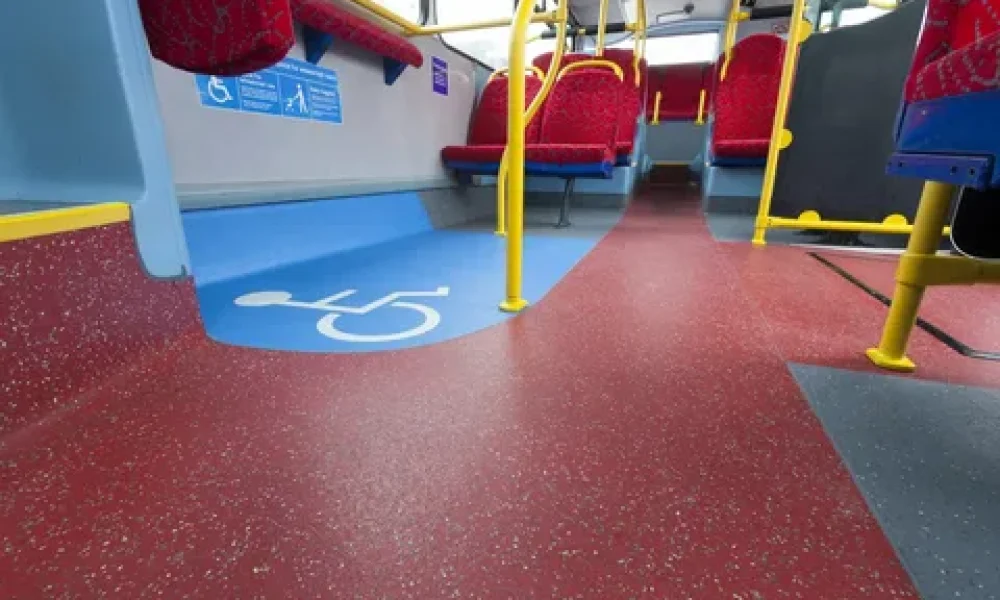
The global bus flooring market is projected to expand from USD 365.2 million in 2025 to USD 540.7 million by 2035, reflecting a robust compound annual growth rate (CAGR) of 4.0%. This growth is being driven by rising bus fleet electrification, the need for lightweight yet durable materials, and heightened expectations for hygiene, acoustic performance, and passenger comfort in public and private transport interiors.
Innovations in bus flooring materials are reshaping the sector. In April 2024, Altro introduced its Transflor Artis, Metris, and Sonis flooring ranges designed specifically for zero-emission electric buses. According to Serge Townsend, Global Commercial Manager for Transport at Altro, these products were engineered to balance insulation, weight, recyclability, and ease of maintenance, addressing the unique operational demands of electric-vehicle fleets. Vinyl-based resilient safety floors were described as “highly durable, non-porous, non-shedding, and stain resistant,” supporting rapid cleaning cycles in city buses while achieving up to 20% weight reduction in heavy-duty models compared to traditional designs.
Tarkett also expanded its product portfolio in 2024 with the Trend Oak Natural and Smart Walnut lines, emphasizing durability, high abrasion resistance, slip-resistance, and recyclability for coach and urban bus interiors. Lightweight flooring solutions with acoustic insulation, such as Altro’s Transflor Metris Custom, achieved up to 15 dB of airborne sound reduction while maintaining a layer thickness under 3 mm, meeting ISO 717-2 standards for urban transport.
Material Segmentation: Rubber Flooring Leads
Rubber flooring is projected to hold the largest market share in 2025, accounting for approximately 44% of global demand, and is expected to grow at a CAGR of 4.2% through 2035. Its dominance is driven by key attributes such as slip resistance, thermal comfort, noise insulation, and ease of maintenance, making it the preferred choice for urban and intercity transit fleets. Rubber flooring’s resilience under high foot traffic, chemical resistance, and compatibility with anti-bacterial coatings also support its widespread adoption in both standard and low-floor bus designs. Customizable textures, color options, and surface patterns further enable operators to meet regulatory and branding requirements.
Other flooring materials, including aluminum, plastic, plywood, and bamboo, are gaining traction for specialized applications, such as lightweight electric buses or eco-conscious transit initiatives, contributing to diversification in the sector.
Subscribe for Year-Round Insights → Stay ahead with quarterly and annual data updates
https://www.futuremarketinsights.com/reports/sample/rep-gb-10534
OEM Sales Channel Dominates Market Growth
Original Equipment Manufacturer (OEM) channels are expected to capture nearly 61% of the market in 2025 and grow at a CAGR of 4.1% through 2035. OEM procurement ensures compliance with fire safety, slip resistance, and durability specifications while integrating flooring during vehicle assembly. With increasing electrification, OEMs are prioritizing lightweight and recyclable materials like rubber and aluminum composites to improve bus performance and energy efficiency. This trend strengthens the alignment between flooring suppliers and bus manufacturers across Asia-Pacific, Europe, and North America.
Key Drivers and Market Opportunities
Growth in the bus flooring market is fueled by regulatory and operational factors, including weight control for EV range maximization, compliance with accessibility and slip-resistance standards, and interior hygiene requirements. Pre-cut, self-adhesive, and reverse-welded installation systems have reduced fleet downtime during maintenance, while sustainability initiatives, including recyclable vinyl compositions, have become central to manufacturer strategies.
Emerging opportunities exist in eco-friendly and smart flooring solutions, with innovations such as embedded sensors for passenger counting, heated floors, modular panels for rapid repair, and antimicrobial surfaces gaining attention. These advancements position manufacturers to capitalize on transit modernization programs worldwide.
Regional Insights
- United States (CAGR 4.4%): Market expansion is supported by federal and state investments in sustainable mobility and electric bus fleets. The demand for ADA-compliant, lightweight, and slip-resistant flooring is increasing alongside awareness of composite and vinyl advantages in fleet operations.
- United Kingdom (CAGR 3.8%): Electrification initiatives, urban fleet modernization, and net-zero emission targets are driving demand for durable, easy-to-clean, and safe flooring systems. Public-private collaborations in urban transit further accelerate market growth.
- Europe (CAGR 4.1%): Countries such as Germany, France, and the Netherlands are investing in regional and intercity electric bus services. EU Green Deal initiatives emphasize lightweight, fire-resistant, and eco-certified flooring solutions, supporting comfort, hygiene, and regulatory compliance.
- Japan (CAGR 3.6%): Steady growth is driven by sustainable transport infrastructure, aging-friendly public transit, and adoption of antimicrobial and vibration-damping flooring solutions. Recyclable materials and smart mobility programs contribute to market expansion.
- South Korea (CAGR 4.2%): Government-led electrification and urban transit modernization programs stimulate demand for resilient, noise-reducing, and flame-retardant flooring systems. R&D in sustainable, high-performance materials supports domestic supply chain competitiveness.
Personalize Your Experience: Ask for Customization to Meet Your Requirements
https://www.futuremarketinsights.com/customization-available/rep-gb-10534
Competitive Landscape
The bus flooring market is highly competitive, with manufacturers focusing on durability, aesthetics, lightweight design, and eco-friendliness. Key players include Altro, Tarkett, Wonder Floor, TKflor, Ergis, JiangyinXinkete Composite Material Technology Co., Ltd, and Responsive Industries Ltd. Companies are leveraging advanced composites, vinyl, thermoplastics, and rubber-based solutions to improve passenger safety, reduce maintenance costs, and meet global sustainability standards. Market leaders are also innovating to accommodate electric and hybrid bus interiors, offering modular, antimicrobial, and fire-resistant flooring for enhanced operational efficiency.
Competitive Landscape
With ongoing fleet electrification, rising passenger expectations, and regulatory pressure for sustainable public transport, the global bus flooring market is poised for sustained growth. Advancements in lightweight, eco-friendly, and smart flooring technologies, combined with OEM-led integration strategies, will remain central to market development through 2035, enabling operators and manufacturers to optimize vehicle performance, passenger safety, and operational efficiency.
Why Choose FMI: Empowering Decisions that Drive Real-World Outcomes: https://www.futuremarketinsights.com/why-fmi
About Future Market Insights (FMI)
Future Market Insights, Inc. (FMI) is an ESOMAR-certified, ISO 9001:2015 market research and consulting organization, trusted by Fortune 500 clients and global enterprises. With operations in the U.S., UK, India, and Dubai, FMI provides data-backed insights and strategic intelligence across 30+ industries and 1200 markets worldwide.



