
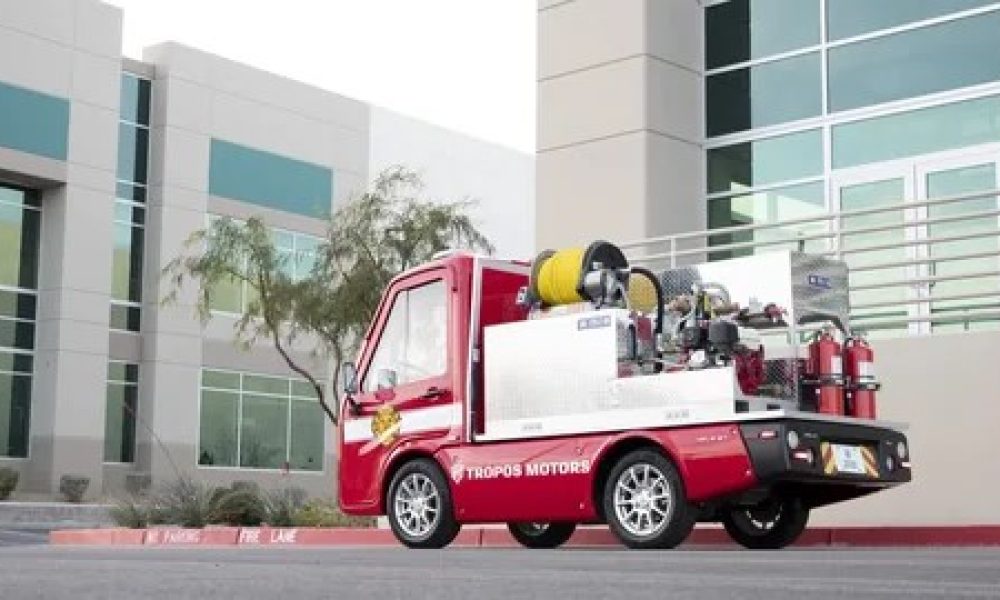
The global compact utility vehicles (CUVs) market is poised for robust expansion, projected to grow from USD 38.3 billion in 2025 to USD 62.5 billion by 2035, reflecting a steady CAGR of 5%. The market’s upward trajectory is powered by rapid urban development, rising mechanization across agriculture and civic infrastructure, and a decisive shift toward electrified and multifunctional construction equipment.
Compact utility vehicles—including skid steer loaders, mini excavators, and compact track loaders—have become indispensable across construction, agriculture, landscaping, and municipal applications. Their compact design, enhanced maneuverability, and compatibility with advanced smart attachments continue to position them as essential assets for contractors and fleet operators navigating productivity, sustainability, and efficiency requirements.
OEM Innovation Accelerates Adoption of Advanced Compact Equipment
The industry is witnessing a wave of strategic product introductions as leading OEMs strengthen portfolios in the compact segment. Hyundai Construction Equipment, for example, is expected to unveil a new line of skid steers and a compact track loader at Bauma 2025. Designed for heavy-duty performance in confined worksites, Hyundai’s upcoming equipment lineup features upgraded operator ergonomics and aligns with the company’s long-term expansion strategy confirmed via Compact Equip.
Electrification remains a defining theme in product development. In 2024, top OEMs introduced a new range of battery-powered mini excavators, equipped with extended runtime capability and zero-emission operation. These models are increasingly being adopted for indoor demolition, municipal services, and noise-restricted environments across Europe and North America. As per Compact Equip, electric variants are rapidly gaining traction in city-level procurement programs focused on greener construction methods.
Subscribe for Year-Round Insights → Stay ahead with quarterly and annual data updates
https://www.futuremarketinsights.com/reports/sample/rep-gb-12907
Industry Value Snapshot
| Attributes | Key Insights |
| Industry Size (2025E) | USD 38.3 billion |
| Industry Value (2035F) | USD 62.5 billion |
| CAGR (2025–2035) | 5% |
Alongside OEM innovation, the emphasis on equipment versatility is driving growth in smart attachments. In 2024, Bobcat introduced nine new attachment options—including grapples, angle brooms, and stump grinders—significantly expanding operator productivity across seasonal and task-specific operations. According to Equipment Journal, such modular attachment systems are influencing a broader industry shift toward equipment customization and utilization maximization.
Growing Market Presence Across Construction and Urban Infrastructure
Construction applications accounted for 44% of global CUV demand in 2025, with the sector expected to maintain a 5.3% CAGR through 2035. Increasing public and private investment in transportation networks, utility infrastructure, and urban redevelopment across Asia-Pacific, the Middle East, and Africa is driving substantial equipment consumption.
Compact machinery continues to be deployed extensively in earthmoving, grading, site preparation, and roadwork, with contractors prioritizing reliability, fuel efficiency, and cost-per-hour performance. In Europe and North America, compliance with stringent emission regulations—including EN standards and EPA Tier IV norms—has led OEMs to prioritize low-emission and hybrid powertrain offerings.
Electric-Powered Compact Vehicles Gain Momentum
Electric CUVs represented 32% of global sales in 2025 and are projected to grow at a 6.2% CAGR through 2035—outpacing the industry average. Municipal mandates, low-emission zones, and rising cost-of-ownership advantages have accelerated demand for electric and hybrid platforms.
Battery-powered systems are increasingly integrated into compact tools for indoor demolition, city maintenance, and light-duty industrial tasks. European municipalities were particularly instrumental in 2025, implementing procurement mandates for electric models across civic utility operations.
Diesel remains the preferred choice for high-load applications. However, enhancements in energy density and charging infrastructure continue to expand the addressable market for electric CUVs across construction and landscaping.
Market Challenges and Growth Opportunities
Key Challenge – Rising Production Costs Amid Supply Chain Disruptions
High raw material prices, semiconductor shortages, and transport bottlenecks continue to push production expenses upward. The integration of advanced drivetrains, battery systems, and telematics also elevates manufacturing complexity. Localizing supply chains and optimizing production efficiency are becoming essential strategies for OEMs seeking margin protection and pricing competitiveness.
Strategic Opportunity – Growing Preference for Fuel-Efficient and Electric CUVs
With fuel prices escalating and global environmental awareness rising, demand for lightweight, energy-efficient, and electrified compact vehicles is growing rapidly. Government incentives for EV adoption, coupled with advancements in range and charging infrastructure, are creating strong market opportunities for manufacturers that prioritize battery innovation, digital integration, and ergonomic design.
Country-Level Market Dynamics Highlight Regional Growth Variability
- United States (CAGR: 5.3%) – Strong demand across construction, agriculture, and municipal sectors, supported by adoption of electric and hybrid CUVs and integration of telematics-based fleet management.
- United Kingdom (CAGR: 4.8%) – Expansion driven by landscaping, agriculture, and urban maintenance services, with rising adoption of agile, fuel-efficient models.
- European Union (CAGR: 5.0%) – Growth supported by sustainability mandates, autonomous utility solutions, and widespread electrification.
- Japan (CAGR: 4.7%) – Increasing use of AI-assisted and autonomous compact utility vehicles, supported by smart agriculture initiatives.
- South Korea (CAGR: 5.2%) – Advancements in battery technology and strong push toward electric and hydrogen-powered compact vehicles.
Personalize Your Experience: Ask for Customization to Meet Your Requirements
https://www.futuremarketinsights.com/customization-available/rep-gb-12907
Competitive Landscape Remains Moderately Fragmented
Leading players are focusing on durability, electrification, smart integration, and advanced load-handling capabilities. Key companies include:
- John Deere (18–22%)
- Kubota Corporation (15–19%)
- Bobcat Company (12–16%)
- Caterpillar Inc. (9–13%)
- Mahindra & Mahindra Ltd. (7–11%)
- Others (30–40%), including Polaris, Yanmar, Kioti, Hustler Turf Equipment, and JCB.
Future Outlook
From 2025 to 2035, the compact utility vehicles market will continue to be shaped by electrification, technological integration, and rising investment in urban modernization. As OEMs innovate with intelligent control interfaces, remote monitoring, and next-generation battery systems, the CUV segment is set to achieve sustained global expansion.
Why Choose FMI: Empowering Decisions that Drive Real-World Outcomes:
https://www.futuremarketinsights.com/why-fmi
About Future Market Insights (FMI)
Future Market Insights, Inc. (FMI) is an ESOMAR-certified, ISO 9001:2015 market research and consulting organization, trusted by Fortune 500 clients and global enterprises. With operations in the U.S., UK, India, and Dubai, FMI provides data-backed insights and strategic intelligence across 30+ industries and 1200 markets worldwide.



