
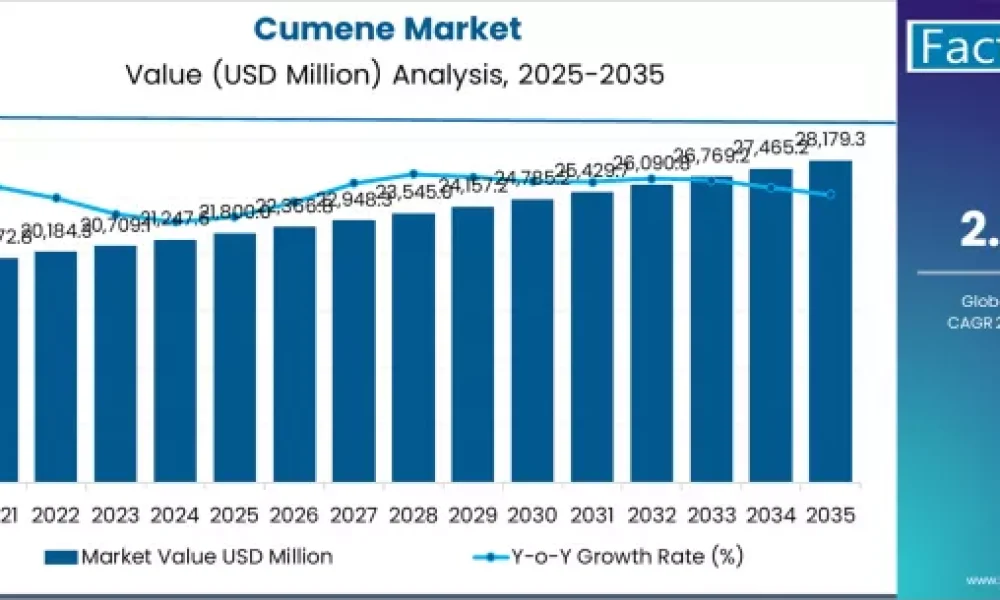
The global cumene market is set for steady expansion between 2025 and 2035, supported by rising demand for phenol and acetone, expanding applications in chemical intermediates, and continued industrial development across Asia, Europe, and North America. Cumene—an essential precursor in phenol–acetone production—remains a critical component for downstream industries such as paints and coatings, pharmaceuticals, automotive, and construction. This PR highlights market size, growth drivers, regional dynamics, technology trends, and strategic implications for industry stakeholders.
Market Size and Growth
According to the latest analysis, the global cumene market is projected to expand from USD 21,800.0 million in 2025 to USD 28,200.0 million by 2035. This reflects an absolute increase of USD 6,400.0 million, translating to a total growth of 29.4% over the decade. The market is forecast to grow at a CAGR of 2.6% during 2025–2035, signaling stable momentum despite fluctuating raw material prices and regulatory challenges.
To access the complete data tables and in-depth insights, request a Discount On The Report here: https://www.factmr.com/connectus/sample?flag=S&rep_id=8743
Key Growth Drivers
Rising Phenol and Acetone Production
Phenol and acetone account for the majority of global cumene consumption. Growth in bisphenol-A (BPA), epoxy resins, polycarbonates, and pharmaceutical solvents is directly increasing demand for high-quality cumene, particularly in Asia and Europe.
Industrial Expansion Across High-Growth Sectors
Sectors such as construction, automotive manufacturing, advanced electronics, and chemical processing continue to rely on phenolic derivatives—boosting long-term stability for cumene producers.
Technological Advancements in Production Processes
Refining improvements, energy-efficient cumene production, and adoption of Zeolite-based catalysts are enhancing output, operational efficiency, and environmental performance. These innovations are helping manufacturers meet tightening emission and sustainability standards.
Shift Toward High-Purity Cumene for Specialty Applications
Growing adoption of high-purity cumene grades is supporting specialty chemical segments, including pharmaceuticals and engineered materials.
Regional Market Insights
Asia-Pacific: The Growth Engine
Asia-Pacific remains the largest and fastest-growing region, driven by:
- Expanding chemical manufacturing capacity
- Strong BPA and polycarbonate production
- Investments in refinery and petrochemical infrastructure
China and India remain significant contributors to volume growth.
Europe: Technology-Driven and Regulation-Focused
Europe represents a mature but innovation-oriented market. Demand is supported by:
- High consumption of specialty phenolic derivatives
- Strict regulatory frameworks driving cleaner production technologies
- A strong automotive and electronics base requiring advanced resins
However, sustainability pressure and energy costs influence long-term margins.
North America: Stable and Strategically Important
North America remains a key region due to:
- Strong industrial base
- High demand for acetone applications
- Adoption of catalyst-based processes that reduce operational risks
The U.S. leads with an extensive downstream chemical ecosystem.
Technology Trends and Competitive Landscape
The competitive landscape is shaped by global petrochemical giants and specialty chemical players. Key trends include:
- Catalyst advancements improving yields and reducing environmental impact
- Integration of digital monitoring in refinery operations
- Backward and forward integration strategies among major producers
- Investments in phenol–acetone expansion projects to secure long-term cumene demand
- Shift toward bio-based chemicals, indirectly influencing cumene diversification strategies
Companies are increasingly focusing on energy efficiency, sustainability, and cost optimization to remain competitive.
Challenges
Despite strong fundamentals, the market faces several constraints:
- Price volatility of benzene and propylene
- Environmental regulations impacting petrochemical production
- Competition from emerging alternative materials, particularly in plastics
- Supply chain disruptions affecting raw material availability
- High capital intensity of refinery and petrochemical operations
Manufacturers must navigate these forces to maintain profitability.
Strategic Implications
For Manufacturers and Refiners
- Expand capacity through catalyst upgrades and energy-efficient processes
- Adopt sustainability-led production methods to meet global compliance norms
- Strengthen supply chain resilience through balanced sourcing strategies
- Focus on high-purity cumene grades for specialty chemical applications
For Downstream Chemical Companies
- Optimize procurement strategies to manage raw material price volatility
- Leverage technological advancements to improve product quality and consistency
- Enhance integration across phenol and acetone derivatives for value-chain security
For Investors
- The cumene market offers stable, long-term growth aligned with industrial expansion
- Opportunities exist in Asia-Pacific capacity expansion and European modernization
- Innovations in cleaner production and catalyst technologies present attractive investment avenues
Outlook Summary
From 2025 to 2035, the global cumene market is expected to witness steady growth supported by rising demand for phenol–acetone derivatives, technological advancements, and strong industrial applications. While the market faces regulatory and raw-material challenges, long-term prospects remain resilient. Manufacturers, refiners, and chemical processors that prioritize efficiency, sustainability, and innovation are well-positioned to capitalize on emerging opportunities and strengthen their competitive presence in the global cumene landscape.



