
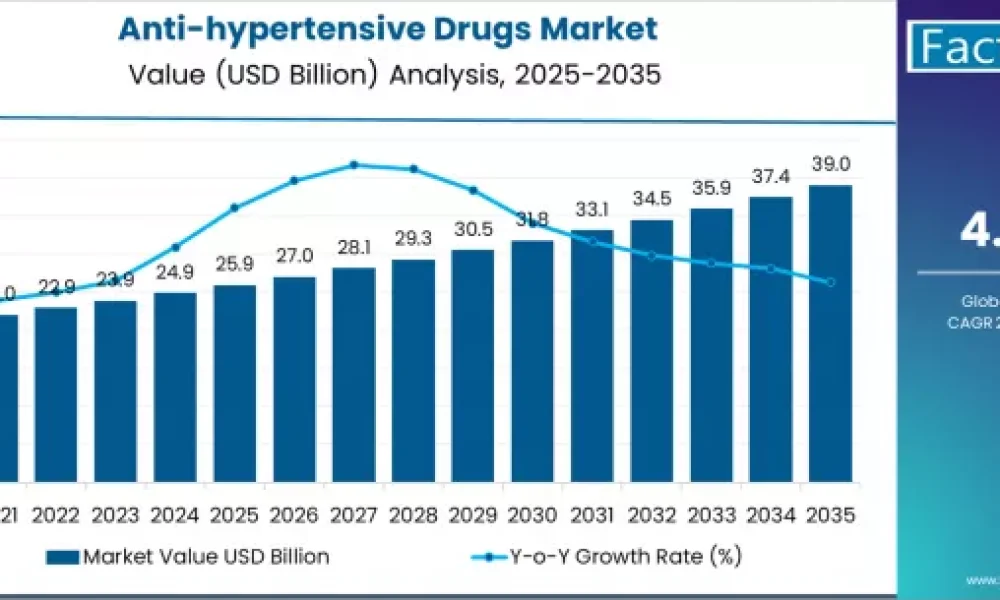
The global anti-hypertensive drugs market is poised to witness steady, long-term expansion from 2025 to 2035, driven by the rising global burden of hypertension, increased screening and diagnosis rates, and a strong shift toward combination therapies and personalized cardiovascular care. Anti-hypertensive medications—including ACE inhibitors, ARBs, beta-blockers, calcium channel blockers, diuretics, and emerging combination formulations—remain essential in preventing cardiovascular complications such as stroke, heart failure, and coronary artery disease.
Market Size and Growth
The global anti-hypertensive drugs market is projected to expand from USD 25.9 billion in 2025 to approximately USD 39.0 billion by 2035, marking an absolute increase of USD 13.1 billion. This reflects total growth of 50.6%, with the market expected to record a CAGR of 4.2% during 2025–2035.
This moderate yet sustained growth reflects the persistent global need for effective blood pressure management, increasing cardiovascular risks in middle-aged and elderly populations, and the ongoing shift from monotherapy to advanced drug combinations.
To access the complete data tables and in-depth insights, request a Discount On The Report here: https://www.factmr.com/connectus/sample?flag=S&rep_id=11672
Key Growth Drivers
Rising prevalence of hypertension worldwide
Hypertension continues to be one of the world’s most common chronic diseases, significantly amplifying demand for lifelong drug therapy. Increased incidence in young adults, linked to sedentary lifestyles, obesity, and stress, is expanding the long-term patient pool.
Advancement in drug formulations and combination therapies
Pharmaceutical companies are introducing improved fixed-dose combinations, extended-release formulations, and personalized drug regimens. These innovations enhance patient adherence and clinical outcomes, strengthening long-term market sustainability.
Expansion of cardiovascular screening and early diagnosis
Greater public awareness, improved healthcare access, and digital screening tools are enabling earlier detection of hypertension, especially in emerging economies.
Rising geriatric population
A rapidly aging global population is driving long-term therapeutic demand, as hypertension prevalence is disproportionately high among individuals aged 60 and above.
Regional Insights – Europe’s Strategic Contribution
Europe represents a major growth hub for the anti-hypertensive drugs market due to high disease prevalence, mature healthcare systems, and strong clinical adoption of advanced cardiovascular therapies.
Key markets such as Germany, France, Italy, the UK, and Spain continue to invest in population-based screening and preventive care programs.
Eastern Europe and Nordic regions offer additional potential due to rising lifestyle-related hypertension and improving treatment accessibility.
Challenges remain, however, including pricing pressures under universal healthcare systems, generics-driven competition, and inconsistent reimbursement levels across countries.
Technology & Innovation Trends
The anti-hypertensive drugs market is witnessing a wave of therapeutic and digital innovations:
- Fixed-dose combination drugs designed to reduce pill burden and improve adherence
- Precision medicine tailored to genetic, metabolic, and demographic patient profiles
- Long-acting formulations enabling consistent blood pressure control with fewer side effects
- Integration of digital health platforms, including smart BP monitors and AI-based adherence tools
- Greater uptake of generics, providing cost-effective care solutions for large patient populations
These advancements are improving patient outcomes, increasing therapy compliance, and reducing overall cardiovascular risk.
Challenges
Despite strong fundamentals, the market faces notable constraints:
- High competition from generic manufacturers, pressuring margins for branded drugs
- Treatment inertia, especially in low-resource settings where diagnosis is delayed
- Side-effect profiles of older drug classes impacting long-term adherence
- Increasing regulatory scrutiny for cardiovascular safety and post-marketing surveillance
Addressing these barriers will be crucial for maximizing market penetration and patient retention.
Strategic Implications
For pharmaceutical manufacturers:
Prioritize R&D in fixed-dose combinations, long-acting therapies, and next-generation molecules while expanding affordable generics for high-volume markets. Strengthen partnerships with digital health providers to improve patient monitoring and engagement.
For healthcare providers:
Adopt integrated hypertension management protocols combining medication adherence support, digital monitoring solutions, and personalized treatment strategies to reduce complications and hospitalizations.
For investors:
The market presents a stable, long-term opportunity backed by chronic disease prevalence, strong generics demand, and consistent annual growth. Companies with diversified portfolios and strong digital integration capabilities will be best positioned.
Outlook Summary
From 2025 to 2035, the global anti-hypertensive drugs market is set for sustained expansion, propelled by growing hypertension prevalence, therapeutic innovation, digital health integration, and strong demand from aging populations.
Although pricing pressures and adherence challenges persist, the sector offers resilient and compelling opportunities for pharmaceutical manufacturers, healthcare systems, and investors focused on improving global cardiovascular health.
Have a specific Requirements and Need Assistant on Report Pricing or Limited Budget please contact us – [email protected]
About Fact.MR
Fact.MR is a global market research and consulting firm, trusted by Fortune 500 companies and emerging businesses for reliable insights and strategic intelligence. With a presence across the U.S., UK, India, and Dubai, we deliver data-driven research and tailored consulting solutions across 30+ industries and 1,000+ markets. Backed by deep expertise and advanced analytics, Fact.MR helps organizations uncover opportunities, reduce risks, and make informed decisions for sustainable growth.



