
It has been learned that on Tuesday local time, Alphabet’s Google (GOOG) released its new generation large-scale language model, Gemini 3, and deployed it to core products such as Google Search’s AI mode, Gemini applications, APIs, and VertexAI from the day of release.

The latest generation model, Gemini 3, was released approximately eight months after the launch of Gemini 2.5 and eleven months after Gemini 2.0. Meanwhile, OpenAI, which ignited the generative AI boom at the end of 2022 with the public release of ChatGPT, released its GPT-5 model in August of this year.
Google DeepMind CEO Demis Hassabis stated that the company has long been pushing to create a “general-purpose assistant” capable of performing complex tasks, internally codenamed AlphaAssist. Gemini 3’s proxy capabilities represent the first time this direction has been publicly showcased in a mature product form.

Analysts believe that as artificial intelligence enters the commercial competition phase, the capital market’s reaction to “model upgrades” themselves has gradually weakened. The rapid iterations of competitors like OpenAI and Anthropic are seen as exacerbating this pressure, and Gemini 3’s strategy, to some extent, reflects Google’s attempt to accelerate its shift from technological investment to actual monetization.
The competition for large-scale models continues to intensify.
In fact, as search engine giant Google accelerates its pace to keep up with ChatGPT developer OpenAI, it has officially launched its latest AI model, Gemini 3. Other companies, including Amazon, Microsoft, and private companies, have also set new records for AI-related capital expenditures, covering chips, data center construction, and huge salaries offered to attract top AI research and engineering talent.
Industry-specific models are carving out their own niche markets. Companies considering the specific needs of various industries and developing models in a low-cost, efficient manner are expected to become frequently used everyday tools, gradually proving that their differentiated approaches have attracted capital. The continued hot investment in AI further signifies that we are on the eve of the real-world application of “edge AI” or “AI agents.”
A New Era in the AI Race
Amazon (AMZN)
Amazon founder and billionaire Jeff Bezos has reportedly entered the AI race, launching an artificial intelligence startup called “Prometheus,” which aims to apply AI to tasks in the physical world.
Prometheus has already hired nearly 100 employees, including researchers poached from top AI companies such as OpenAI, DeepMind, and Meta. Entering the increasingly crowded AI market, the new company will develop systems that can learn from the physical world, unlike AI models used to build chatbots.

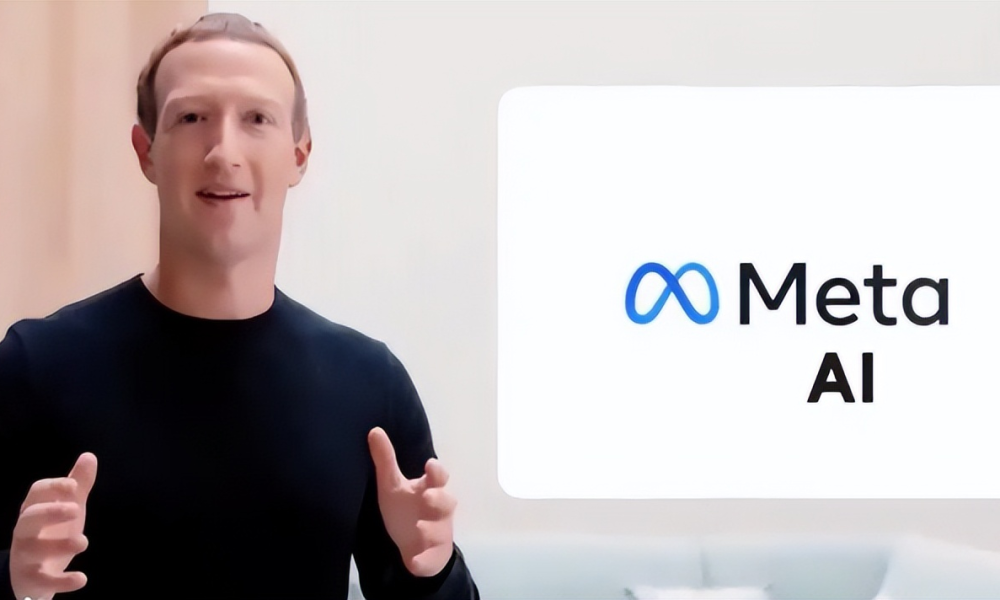
Meta (META) Recent investments in artificial intelligence (AI) infrastructure have seen explosive growth. At the Web Summit, Meta announced plans to spend $72 billion on AI infrastructure this year, with further increases expected next year.
Meta’s AI investments have already translated into billions of dollars in revenue: AI technology has significantly optimized its advertising tools and content recommendation algorithms. The company projects full-year revenue of approximately $200 billion in 2025, with a current market capitalization of approximately $1.5 trillion.

Apple (AAPL) Technology journalist Mark Gurman revealed that Apple will launch its fully in-house developed Apple Intelligence model as early as next year. With over 2 billion active devices, Apple, once equipped with its self-developed AI, will instantly become the world’s largest AI application ecosystem.
Apple has always been known for its combination of hardware and software. Its self-developed AI model, combined with its hardware advantages, is likely to deliver a disruptive user experience. More importantly, Apple’s entry signifies a new phase in AI competition, evolving from a technology race to an ecosystem race—a major shift for the entire industry.
Alibaba (BABA) Recently, Alibaba officially announced the “Qianwen” project, based on the world’s highest-performing open-source model, Qwen3. Leveraging its free availability and integration with various life scenarios, it aims to compete fully with ChatGPT.
The confidence of the Qianwen app stems from the powerful performance and widespread influence of Alibaba’s Qwen series of open-source models. Since its full open-source release in 2023, the Qwen model has been downloaded over 600 million times globally. The recently released flagship model, Qwen3-Max, outperforms top international models such as GPT-4 and Claude 3 Opus in terms of performance.
Furthermore, Alibaba’s core management considers the “Qianwen” project a “battle for the future in the AI era.” It has been revealed that Alibaba plans to integrate various aspects of daily life, including maps, food delivery, ticketing, office work, learning, shopping, and health, into the Qianwen app, giving it enhanced capabilities.
WiMi (WIMI) According to available information, Wimi Hologram Cloud Inc. continues to focus on multimodal AI models that natively fuse text, images, audio, and video. Its core technology lies in combining large-scale pre-training with multimodal algorithm optimization to improve the coherence and physical plausibility of generated content. In the future, it will deepen basic research, accelerate computing development, and focus on leveraging native AI-level cross-modal fusion capabilities.
Currently, WiMi adopts a dual-track approach of self-developed and open-source models at the model layer, integrating large open-source models such as DeepSeek to enhance the technology’s accessibility. At the application layer, it covers scenarios such as text-to-video and image-to-video generation, supporting story creation and short video generation. It optimizes for vertical models and provides customized and professional AI models to solve industry problems.
In summary, the AI wave is driving effective strategic deployments across all sectors of society. In the next 3-5 years, large language models will become the mainstream AI architecture. Therefore, by joining the large model race, companies are currently betting all their resources on large language models that can rapidly improve product experience, fully transforming their R&D capabilities into powerful AI development and research tools, and actively seizing the enormous opportunities of the future.
Google’s most powerful AI model, Gemini 3, has made its debut, ushering in a new era of “AGI” (Automatic Generative Intelligence) in the global AI competition among the top five!




