
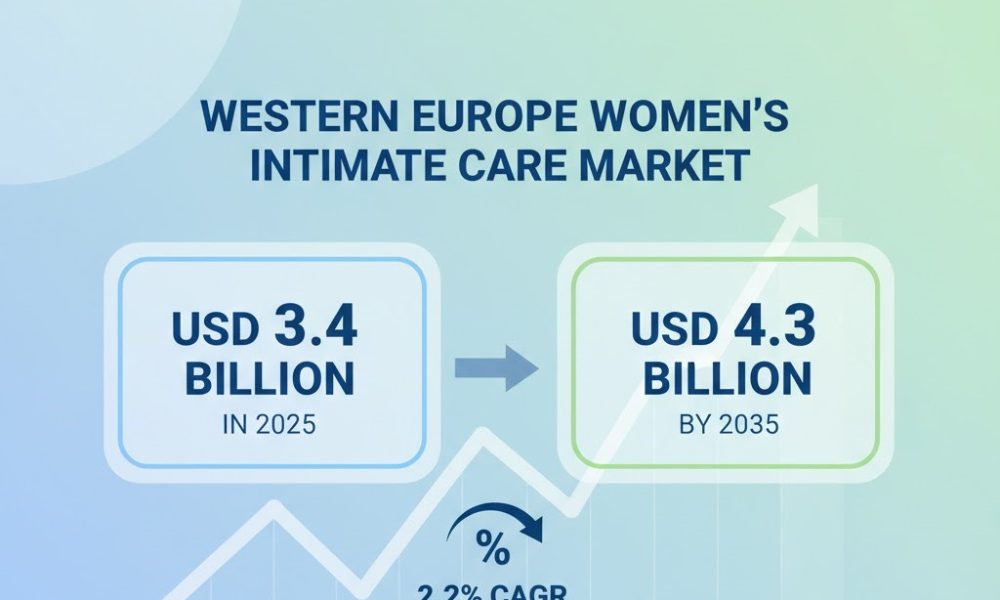
The Western Europe Women’s Intimate Care Market is projected to achieve a valuation of USD 3.4 billion in 2025, expanding at a steady 2.2% CAGR between 2025 and 2035 to reach USD 4.3 billion by 2035, according to recent industry analysis. The region’s evolving attitudes toward feminine hygiene, sustainability, and holistic wellness are transforming intimate care from a niche segment into a core part of women’s daily self-care routines.
Gain access to detailed segment-wise analysis and forecast statistics: https://www.futuremarketinsights.com/reports/sample/rep-gb-18618
Market Dynamics: From Hygiene to Holistic Well-being
The market’s steady growth is driven by increasing awareness of women’s hygiene, lifestyle modernization, and cultural openness surrounding intimate health. Once considered a taboo, intimate care discussions are now mainstream, led by influencers, healthcare experts, and digital education campaigns.
Consumers in Western Europe increasingly view intimate hygiene as part of total body care, demanding pH-balanced, dermatologically tested, and chemical-free products that ensure both comfort and safety. Clean beauty principles are shaping purchase decisions, as women increasingly seek paraben-free, sulfate-free, and fragrance-free formulations.
Key Growth Drivers (2025–2035)
- Shift to Wellness-Oriented Lifestyles: Women are embracing wellness as a lifestyle, integrating intimate hygiene into their broader self-care regimes.
- Influencer and Digital Awareness: Social media has made discussions about vaginal health, hormone changes, and menopausal care more normalized.
- Sustainability and Eco-Friendly Solutions: Growing environmental consciousness has led to higher demand for biodegradable wipes, reusable period products, and eco-conscious packaging.
- Demographic Expansion: Rising awareness around menopause, postpartum care, and hormonal balance is broadening the target audience beyond reproductive-age women.
- Technological Innovation: Future products will integrate AI-driven personalization, microbiome-compatible formulations, and biotechnological actives to address life-stage-specific needs.
Evolving Consumer Preferences by Age Segment
- Ages 18–30: Driven by social media and lifestyle alignment, this group prefers vegan, cruelty-free, and sustainable brands with modern branding.
- Ages 30–50: Focused on functionality, they favor clinically validated, physician-endorsed products for sensitivity, postpartum care, and hormonal balance.
- Ages 50+: Seek moisturizing, soothing, and menopause-focused products emphasizing comfort and clinical reliability.
No matter the age group, transparency and sustainability are cross-generational priorities influencing purchase decisions across both online and offline channels.
Market Segmentation
By Product:
Intimate washes, panty liners, wipes, oils, creams, gels, foams, sprays, exfoliates, and mists.
By Age Group:
12–19 years, 20–25 years, 26–40 years, 41–50 years, and 51+.
By User:
Women with children and women without children.
By Sales Channel:
Online retail and offline retail (pharmacies, supermarkets, specialty stores).
By Country:
United Kingdom, Germany, France, Italy, Spain, and Rest of Western Europe.
Competitive Landscape: Innovation Meets Purpose
The Western European market is highly competitive, blending legacy powerhouses and innovative startups.
Key industry players include:
- Procter & Gamble (12–15%) – Leading with Always, Tampax, and Femfresh; prioritizing sustainability and clean innovation.
- Johnson & Johnson (8–10%) – With Carefree and o.b., the brand remains synonymous with safety and reliability.
- Hindustan Unilever Limited (6–8%) – Strengthening its presence through VWash, addressing sensitive skin and pH-balance needs.
- WooWoo, SANFE.IN, and Joylux Inc. (1–4%) – Emerging disruptors focusing on organic, inclusive, and tech-enhanced solutions.
Innovations include vegan formulations, app-based product recommendations, and smart pelvic wellness devices. These brands are tapping into the broader European preference for transparency, eco-consciousness, and authenticity.
Checkout Now to Access Industry Insights: https://www.futuremarketinsights.com/checkout/18618
Outlook: Toward a More Conscious and Connected Future
Between 2025 and 2035, Western Europe’s women’s intimate care market will evolve into a data-driven, wellness-integrated, and sustainable sector. With the merging of technology, education, and eco-innovation, intimate care is set to become a key frontier in women’s health and lifestyle products.
In essence, the Western Europe women’s intimate care market is no longer about hygiene alone — it is about empowerment, self-awareness, and sustainability-driven well-being.
Have a specific Requirements and Need Assistant on Report Pricing or Limited Budget please contact us – [email protected]
About Future Market Insights (FMI)
Future Market Insights, Inc. (FMI) is an ESOMAR-certified, ISO 9001:2015 market research and consulting organization, trusted by Fortune 500 clients and global enterprises. With operations in the U.S., UK, India, and Dubai, FMI provides data-backed insights and strategic intelligence across 30+ industries and 1200 markets worldwide.



