
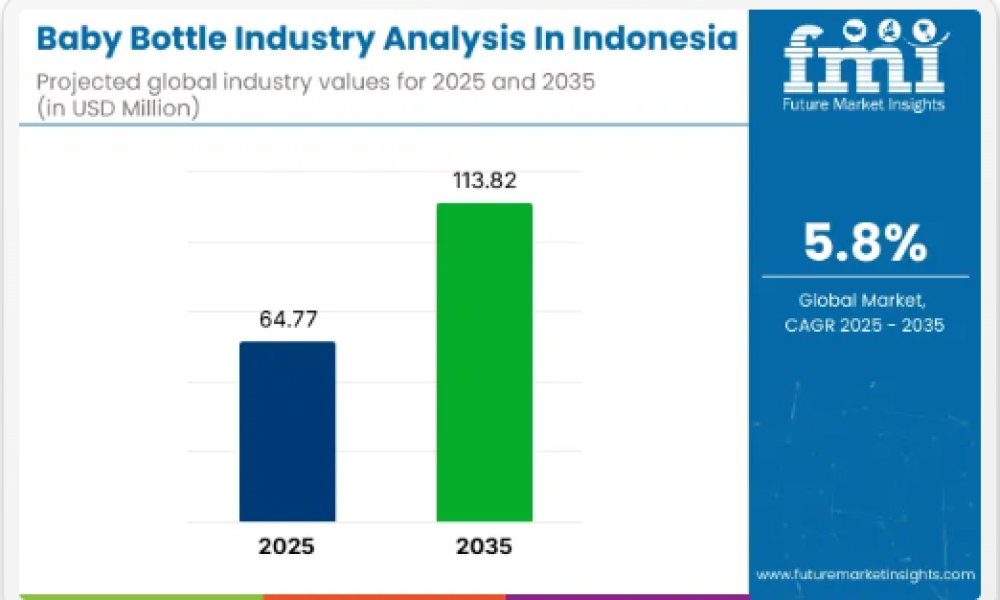
Indonesia’s baby bottle market is entering a transformative decade, projected to surge from USD 64.77 million in 2025 to USD 113.82 million by 2035, growing at a steady CAGR of 5.8%. This growth reflects a rising demand for premium, multifunctional, and eco-conscious feeding solutions as Indonesian parents prioritize infant health, safety, and sustainability.
Key Market Insights at a Glance
- Market Size: USD 64.77M (2025) → USD 113.82M (2035)
- Growth Rate: CAGR of 5.8%
- Top Material: Silicone bottles to dominate with 38.5% market share in 2025
- Price Preference: High-end bottles to capture 38.6% of market share
- Drivers: Rising birth rates, urbanization, and health-conscious parenting
Segment Overview
The market is segmented by material, price range, and distribution channel. Silicone bottles lead due to their durability, flexibility, and safety profile, followed by glass and BPA-free plastic. The premium segment is gaining traction, with high-end bottles offering anti-colic features, temperature indicators, and ergonomic designs. E-commerce and specialty baby stores are emerging as dominant distribution channels, reflecting a shift toward informed and digital-first purchasing behavior.
Regional Overview
Urban centers like Jakarta, Surabaya, and Bandung are driving demand, fueled by higher disposable incomes and access to global parenting trends. The Java region accounts for over 60% of total sales, with rural penetration gradually increasing through mobile commerce and government-led maternal health initiatives. Regional players are tailoring products to local preferences, such as wide-neck bottles for traditional feeding styles and heat-resistant materials suited to tropical climates.
Competitive Landscape
Indonesia’s baby bottle market is highly fragmented, with a mix of global brands, regional manufacturers, and emerging startups. Key players are investing in sustainable packaging, smart bottle technology, and localized marketing. Competitive strategies include:
- Eco-material innovation: Shift toward biodegradable and recyclable components
- Smart features: Bottles with temperature sensors and feeding trackers
- Brand localization: Culturally resonant campaigns and Bahasa-first packaging
Market Outlook: Powering the Next Decade
The next decade will be defined by premiumization, sustainability, and digital retail expansion. As millennial and Gen Z parents dominate the consumer base, demand for stylish, safe, and smart baby bottles will intensify. Government support for maternal and child health, coupled with rising awareness of BPA risks, will further accelerate market evolution. By 2030, Indonesia is expected to be one of Southeast Asia’s top three baby care markets, with baby bottles playing a central role in the hygiene and nutrition ecosystem.
Key Players of Sustainable Label Industry
While the baby bottle market is distinct, its packaging overlaps with the sustainable label industry, which is increasingly influencing consumer choices. Key players shaping this space include:
- Avery Dennison Indonesia: Innovating with compostable and tamper-evident labels
- UPM Raflatac: Offering recyclable label solutions for baby care packaging
- Sustainable Print Indonesia: Partnering with baby brands for eco-labeling and traceability
These companies are enabling baby bottle manufacturers to meet ESG goals, enhance shelf appeal, and build trust with eco-conscious consumers.
Recent Strategic Developments
- Local Expansion: Leading brands are setting up regional manufacturing hubs to reduce import dependency and improve supply chain agility.
- Product Innovation: Launch of dual-function bottles that serve as feeders and milk storage units.
- Collaborations: Partnerships between baby bottle brands and pediatric associations to promote safe feeding practices.
- Digital Push: AI-powered recommendation engines on e-commerce platforms to guide parents toward optimal bottle choices based on age, feeding style, and health needs.
As Indonesia’s baby bottle market matures, the convergence of technology, sustainability, and cultural relevance will define its trajectory. Brands that align with parental values and deliver data-backed innovation are poised to lead in this dynamic landscape.
To access the complete data tables and in-depth insights, request a sample report here: https://www.futuremarketinsights.com/reports/sample/rep-gb-18033
Subscribe for Year-Round Insights → Stay ahead with quarterly and annual data updates : https://www.futuremarketinsights.com/checkout/18033
Have a specific Requirements and Need Assistant on Report Pricing or Limited Budget please contact us – [email protected]
About Future Market Insights (FMI)
Future Market Insights, Inc. (FMI) is an ESOMAR-certified, ISO 9001:2015 market research and consulting organization, trusted by Fortune 500 clients and global enterprises. With operations in the U.S., UK, India, and Dubai, FMI provides data-backed insights and strategic intelligence across 30+ industries and 1200 markets worldwide.



