
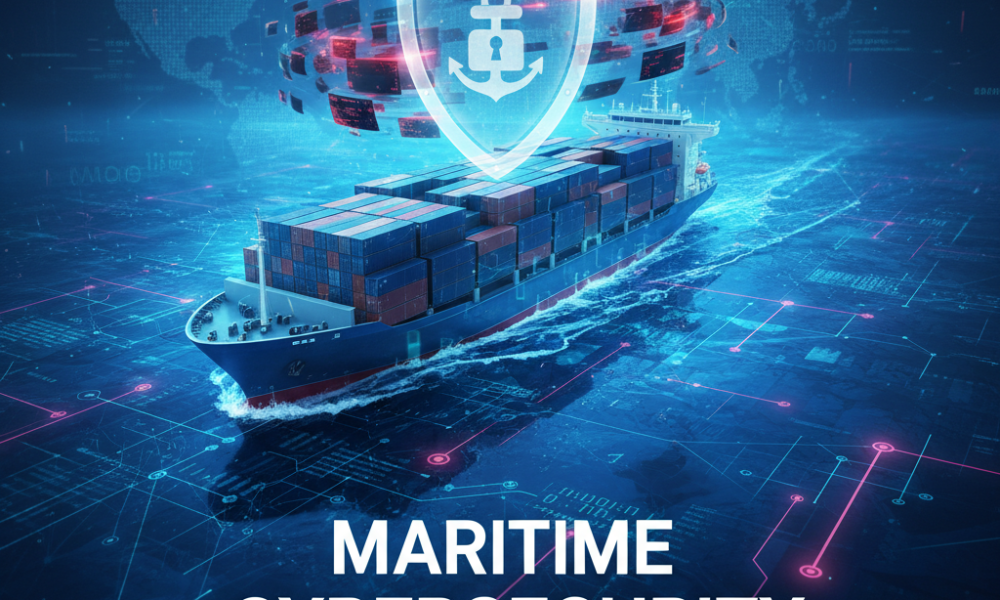
The global maritime cybersecurity market is navigating toward unprecedented growth, with projections indicating an increase from USD 3.5 billion in 2025 to approximately USD 11.4 billion by 2035. This remarkable expansion—an absolute growth of USD 7.9 billion—translates to a 225.7% increase over the decade, driven by a rising tide of digital adoption in maritime operations and the mounting need to safeguard shipping infrastructure against increasingly sophisticated cyber threats. The market is expected to maintain a strong compound annual growth rate (CAGR) of 12.5%, effectively tripling in size as maritime stakeholders prioritize cybersecurity resilience.
Get the Comprehensive Report – Available on Request: https://www.futuremarketinsights.com/reports/sample/rep-gb-26135
Digitalization and Early Growth Spurts (2025–2030)
The first half of the forecast period, from 2025 to 2030, is anticipated to see the market expand from USD 3.5 billion to USD 6.3 billion, contributing approximately 35.4% of the total growth. This phase is largely propelled by the digital transformation of shipping and port operations, where vessels and facilities are now relying on interconnected technologies for navigation, cargo handling, and communication. Escalating cyber threats targeting critical maritime systems, coupled with tighter regulatory compliance mandates, are driving organizations to invest in robust cybersecurity platforms designed to protect operational technology (OT) and essential navigation infrastructure.
Technological Leap and Advanced Solutions (2030–2035)
Between 2030 and 2035, the maritime cybersecurity market is poised for an even more pronounced expansion, rising from USD 6.3 billion to USD 11.4 billion. This stage, representing 64.6% of the decade-long growth, is expected to be dominated by artificial intelligence (AI) and machine learning-powered threat detection systems, advanced analytics for operational security, and specialized solutions tailored for autonomous vessels and smart port operations. As the complexity of maritime digital ecosystems grows, stakeholders are seeking comprehensive managed security services and next-generation platforms capable of addressing evolving risks in the global supply chain.
Driving Forces Behind Market Growth
The surge in maritime cybersecurity demand stems from multiple converging factors. Modern vessels and port facilities are increasingly interconnected, creating vulnerabilities that cybercriminals can exploit. The rise of Internet of Things (IoT) devices and autonomous systems has introduced new attack vectors, while international maritime organizations and regulatory bodies are establishing stringent cybersecurity requirements for operational and cargo safety. Consequently, maritime organizations are implementing integrated security frameworks encompassing network security, endpoint protection, and OT security to counteract diverse threats.
Segment Insights
Among components, solutions dominate with a 68.7% share in 2025, reflecting widespread adoption of integrated cybersecurity platforms tailored for maritime environments. Network security is the leading security type, accounting for 33.2% of the market, highlighting the critical importance of safeguarding interconnected systems across vessels and ports. On-premise deployment is preferred, comprising 65% of the market, due to the need for autonomous, rapid threat response during long sea voyages. Large enterprises hold 70.8% of the market, reflecting their complex infrastructure and heightened risk exposure. Among end-users, commercial shipping leads with a 42.1% share, underscoring the critical need to protect container shipping, bulk carriers, and tanker operations against cyberattacks.
Regional Outlook
Asia Pacific is set to emerge as a leading growth region, with China and India demonstrating the highest CAGRs at 16.9% and 15.6%, respectively. China’s rapid port modernization and smart port initiatives, alongside India’s Sagarmala program, are driving the adoption of integrated cybersecurity platforms. In Europe, Germany, France, and the UK are bolstering maritime technology integration and operational security, with growth supported by regulatory compliance and Industry 4.0 initiatives. North America and Brazil are witnessing steady growth through investments in port modernization, offshore security, and naval cybersecurity programs.
Emerging Technologies and Innovation
The market’s evolution is being fueled by the integration of AI and machine learning for predictive threat detection and real-time security monitoring. Specialized maritime cybersecurity solutions are being developed to address unique vessel and port requirements, from ballast and engine control systems to automated cargo handling technologies. Additionally, industry standards and certification programs are enhancing professional expertise, enabling organizations to maintain continuous security monitoring and regulatory compliance across complex maritime operations.
Competitive Landscape
The maritime cybersecurity market features a dynamic mix of established global players and emerging innovators. Leading companies such as Marlink SAS, Fortinet Inc., Naval Dome Ltd., and Cydome Security Ltd. provide integrated cybersecurity platforms and OT security solutions. Specialists like CyberOwl Ltd. and Waterfall Security Solutions Ltd. focus on threat intelligence and industrial control systems, while multinational corporations including Kongsberg Gruppen ASA, Northrop Grumman, Thales Group, BAE Systems, Honeywell, Cisco, Raytheon, and Wärtsilä are expanding their maritime cybersecurity portfolios through advanced technologies and professional services. Strategic partnerships, geographic expansion, and technology integration remain central to strengthening market presence and delivering scalable, cost-effective solutions.
Get PDF Brochure: https://www.futuremarketinsights.com/reports/brochure/rep-gb-26135
Conclusion
The maritime cybersecurity market is charting a course toward robust growth, driven by digital transformation, regulatory requirements, and escalating cyber threats. With innovative technologies, integrated solutions, and global expansion initiatives, both established and emerging players are poised to safeguard the future of maritime operations, ensuring resilience across shipping, ports, and naval applications worldwide.
About Future Market Insights (FMI)
Future Market Insights, Inc. (ESOMAR certified, recipient of the Stevie Award, and a member of the Greater New York Chamber of Commerce) offers profound insights into the driving factors that are boosting demand in the market. FMI stands as the leading global provider of market intelligence, advisory services, consulting, and events for the Packaging, Food and Beverage, Consumer Technology, Healthcare, Industrial, and Chemicals markets. With a vast team of over 400 analysts worldwide, FMI provides global, regional, and local expertise on diverse domains and industry trends across more than 110 countries.



