
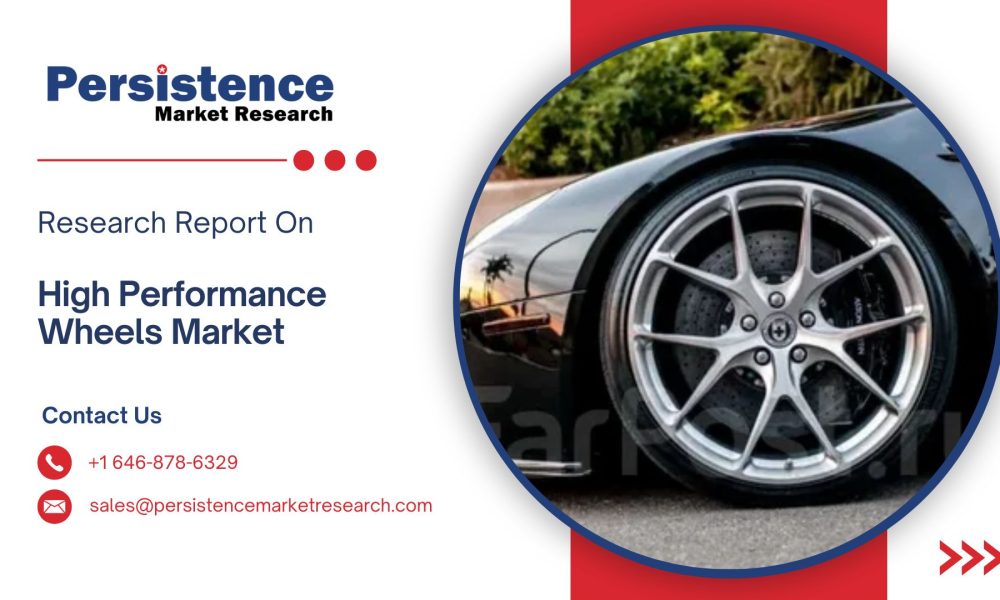
The global high performance wheels market is entering a period of accelerated growth, underpinned by advances in automotive technology, evolving consumer preferences, and increasing demand for enhanced vehicle efficiency. According to industry estimates, the market size for high performance wheels is projected to increase from US$25.1 billion in 2024 to US$41.3 billion by 2031, recording a compound annual growth rate (CAGR) of 7.3% during the forecast period of 2024–2031.
The upward trajectory of the market is primarily attributed to a rising emphasis on lightweight yet durable materials that improve both vehicle safety and efficiency. Luxury and sports car manufacturers are leading adopters of high performance wheels, capitalizing on consumer interest in advanced performance features. In addition, the surge in electric vehicle (EV) adoption globally has emerged as a significant driver, as EVs demand lightweight wheel solutions to optimize battery efficiency and driving range. Technological breakthroughs, including the use of sustainable materials and 3D printing, are also fostering product differentiation and fueling competition within the market.
Request Sample Copy of Report: https://www.persistencemarketresearch.com/samples/34857
Segmentation Analysis
By Type
The high performance wheels market is segmented by type into alloy wheels, carbon fiber wheels, and forged wheels, each serving distinct needs in the automotive industry. Alloy wheels currently dominate the market due to their affordability, strength-to-weight ratio, and widespread adoption across mid-range and premium vehicles. However, the carbon fiber wheels segment is expected to be the fastest-growing category, as automakers increasingly turn to carbon composites for their ultra-lightweight properties and durability in high-speed applications.
Forged wheels, while more expensive, continue to hold significant appeal in the luxury and motorsport segments due to their superior performance, resistance to impact, and ability to withstand extreme driving conditions. The balance between durability, cost, and performance has enabled forged wheels to carve a strong niche within the broader market.
By Vehicle Type
From a vehicle type perspective, luxury cars, sports cars, and electric vehicles are key adopters of high performance wheels. Luxury and sports car manufacturers have long driven demand, focusing on aesthetics, enhanced handling, and improved fuel efficiency. However, the electric vehicle segment is rapidly emerging as a critical growth avenue, as lightweight wheels play a pivotal role in improving energy efficiency and maximizing range—two of the most crucial performance parameters in EV adoption.
Commercial vehicles are also beginning to adopt high performance wheel solutions, particularly in regions where emission regulations and fuel efficiency mandates are pushing fleets toward advanced wheel technologies. Although adoption in the commercial sector is at a nascent stage, it represents a promising opportunity for future expansion.
By Propulsion and Technology
In terms of propulsion type, the penetration of high performance wheels is more pronounced in electric and hybrid vehicles, with manufacturers prioritizing materials that reduce overall vehicle mass. The integration of 3D printing and computer-aided engineering has streamlined production, allowing manufacturers to achieve greater precision, cost savings, and faster prototyping. Meanwhile, connected technologies and smart sensors embedded into wheels are beginning to emerge, leveraging IoT (Internet of Things) and AI-driven analytics to monitor tire pressure, performance, and wear in real-time, thereby adding an additional layer of value to both consumers and manufacturers.
Request Customization of Report: https://www.persistencemarketresearch.com/request-customization/34857
Regional Insights
The high performance wheels market shows a diverse growth trajectory across regions. North America currently leads the market, benefiting from the strong presence of luxury and sports car manufacturers, coupled with a consumer base that values performance and safety. The U.S. market, in particular, is witnessing steady demand for advanced wheel technologies as automakers ramp up investments in EV and hybrid platforms.
Europe stands as the second-largest market, driven by stringent emissions regulations, a deep-rooted culture of performance vehicles, and rapid electrification of the automotive sector. Germany, Italy, and the U.K. continue to be strongholds for luxury and premium car manufacturing, further fueling demand for high performance wheels.
However, the Asia-Pacific region is projected to be the fastest-growing market during the forecast period, with countries such as China, Japan, and South Korea spearheading adoption. The region’s burgeoning EV market, coupled with the rise in disposable incomes and an expanding middle-class consumer base, is accelerating demand for advanced wheel solutions. Government incentives supporting electric mobility and lightweight technologies add to the momentum, positioning Asia-Pacific as the most dynamic growth region in the industry.
Unique Features and Innovations in the Market
One of the defining characteristics of the modern high performance wheels market is the shift toward sustainability and cutting-edge manufacturing processes. Manufacturers are increasingly experimenting with recyclable materials, bio-based composites, and carbon fiber alternatives that deliver both performance and eco-friendly credentials. 3D printing technology has transformed the landscape, enabling rapid prototyping and customized designs while reducing production waste.
Technological integration is also reshaping wheel capabilities. AI and IoT-enabled smart wheels are becoming a focal point, capable of delivering real-time performance insights, predictive maintenance, and integration with broader vehicle telematics systems. These advancements are not only enhancing safety and efficiency but also strengthening customer engagement by providing data-driven insights into driving behavior and wheel performance.
The advent of 5G connectivity further amplifies these developments, facilitating instant communication between wheels, vehicles, and infrastructure. This interconnected ecosystem is paving the way for the next generation of performance optimization, predictive safety, and autonomous driving readiness.
Market Highlights
The surge in adoption of high performance wheels is closely tied to a broader set of industry drivers. Cost reduction through lightweight materials plays a critical role, as lighter wheels contribute to overall fuel efficiency, reduced emissions, and enhanced battery performance in EVs. Similarly, regulatory mandates around emissions and sustainability are pushing automakers to embrace advanced wheel technologies that support compliance.
For consumers, the appeal lies in the dual promise of performance and aesthetics. High performance wheels enhance vehicle handling, braking, and acceleration while contributing to a premium appearance, making them a must-have in the luxury and sports segments. Moreover, with safety considerations increasingly prioritized, the durability and resilience of advanced wheel solutions add further weight to their growing popularity.
Buy Now: https://www.persistencemarketresearch.com/checkout/34857
Key Players and Competitive Landscape
The high performance wheels market is marked by intense competition among global and regional players, each vying for technological leadership and market share. Leading companies include:
- BBS Kraftfahrzeugtechnik AG: Known for its pioneering role in forged and motorsport-grade wheels, BBS continues to lead through innovation and collaborations with luxury automakers.
- OZ S.p.A.: A key player in Europe, OZ has established a reputation for lightweight racing wheels, with recent expansions into the electric vehicle wheel segment.
- Carbon Revolution Limited: A frontrunner in carbon fiber wheels, Carbon Revolution is leveraging its expertise to tap into the growing EV market while expanding its global footprint.
- Enkei Corporation: With a strong presence in Asia-Pacific, Enkei focuses on alloy wheel production and regional market customization to capture diverse demand.
- HRE Wheels: Known for its premium forged wheels, HRE emphasizes customization and cutting-edge design, catering to high-end luxury and sports car manufacturers.
These companies are adopting strategies such as regional expansion, material innovation, partnerships with OEMs, and investments in sustainable production processes. The focus on tailoring solutions to specific vehicle types and geographies is likely to intensify as competition grows.
Future Opportunities and Growth Prospects
Looking ahead, the high performance wheels market is poised to benefit significantly from the convergence of sustainability, electrification, and advanced manufacturing technologies. As governments worldwide tighten emission regulations and incentivize cleaner transportation, demand for lightweight, recyclable, and technologically integrated wheels is expected to soar.
The ongoing shift toward electric and autonomous vehicles opens vast opportunities for innovation, particularly in smart wheels equipped with sensors and connectivity features. Advancements in AI, IoT, and 5G integration are anticipated to further enhance the performance monitoring and predictive maintenance capabilities of wheels, positioning them as critical enablers in the mobility ecosystem of the future.
In conclusion, the global high performance wheels market is not only expanding in scale but also evolving in scope. With an estimated CAGR of 7.3% over the forecast period, the industry is set to witness a wave of innovation, sustainability, and competitive dynamism, making it one of the most promising segments within the automotive components sector.




