
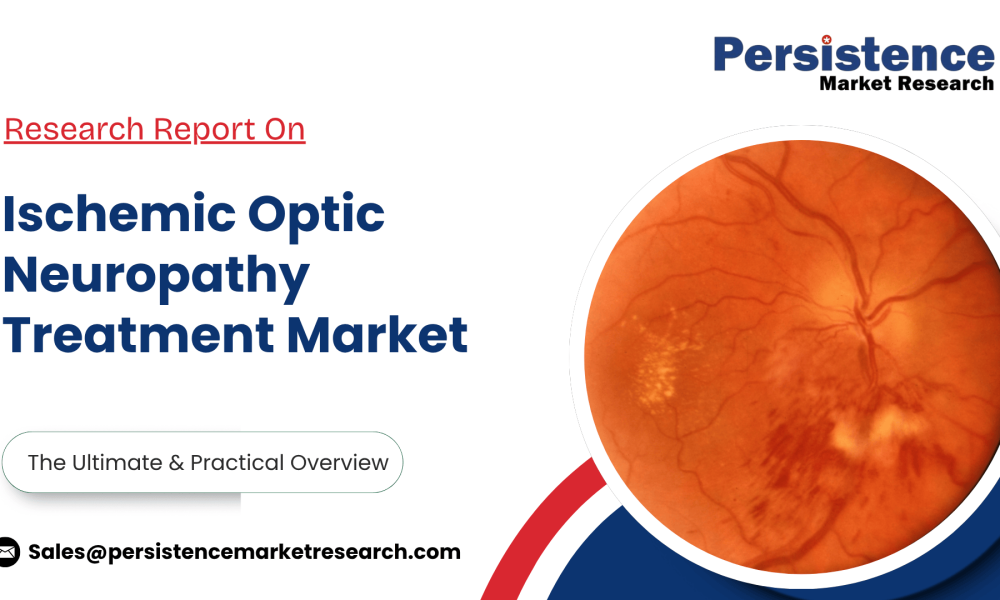
The global ischemic optic neuropathy (ION) treatment market is on a growth trajectory, projected to reach a valuation of US$ 283.5 million by 2032 from US$ 220.2 million in 2025, expanding at a CAGR of 3.7% during the forecast period. The increasing prevalence of ischemic optic disorders, especially non-arteritic anterior ischemic optic neuropathy (NAION), has accelerated clinical and commercial activity in this sector. The aging global population, rising burden of comorbidities, and advancements in early detection and diagnostics are pushing demand for effective treatment modalities.
NAION alone affects between 2.3 to 10.3 individuals per 100,000 in the U.S. annually, and the need for acute intervention and long-term management therapies is growing substantially. Anticoagulants are forecast to dominate the drug class category with a 48.4% market share in 2025, while oral therapies continue to lead in route of administration, accounting for 75.6% market share. The anterior segment of ischemic optic neuropathy is expected to comprise 76.8% of indication-based revenues in 2025 due to its widespread prevalence and irreversible impact on vision if untreated.
Key Industry Highlights
North America remains the leading region, driven by robust healthcare systems, high therapy adoption rates, and strong reimbursement support. Asia Pacific, on the other hand, emerges as the fastest-growing region with expanding healthcare access, government support, and increasing awareness of early ophthalmic interventions. The market is witnessing a notable shift toward oral administration, with anticoagulants emerging as the most effective treatment class due to their efficacy in managing vascular risk factors. The market is also witnessing innovation in regenerative and gene therapies, aiming to address the unmet need for curative options.
Get a Sample Copy of Research Report (Use Corporate Mail id for Quick Response): https://www.persistencemarketresearch.com/samples/23077
Market Dynamics
Driver – Rising Prevalence of Ischemic Optic Neuropathy and Comorbidities
The global surge in ischemic optic neuropathy, particularly among individuals over 50 years of age, is a major market growth driver. Conditions such as hypertension, diabetes, and sleep apnea are well-established risk factors that compromise optic nerve perfusion, leading to NAION. With over 2.2 billion people experiencing vision impairment globally, according to the World Health Organization, the urgency for effective ION interventions is palpable. Growing awareness of early symptoms and the importance of immediate treatment has led to earlier diagnoses, contributing to the increasing demand for ION-specific therapeutic regimens.
Restraint – Limited Efficacy and Adverse Effects of Corticosteroids
Despite corticosteroids being widely used as a frontline therapy in ION management, they face limitations due to side effects such as cardiovascular complications, kidney injury, and pulmonary issues. These adverse outcomes have curbed their usage in long-term care and reduced overall patient adherence. In addition, the lack of definitive curative therapies continues to be a critical bottleneck, as many treatments offer only symptomatic relief. Recent concerns, such as the 2025 WHO alert on semaglutide-associated NAION risk, further complicate the treatment landscape and highlight the need for safer alternatives.
Opportunity – Novel Acute Therapies and Digital Distribution Channels
The growing research into acute treatment interventions presents significant market opportunities. Ongoing clinical studies, including a 2025 Fraser Health study on ophthalmic Timolol maleate administered within 48 hours of NAION onset, point toward the development of early-intervention solutions that may redefine patient outcomes. Additionally, the integration of digital health platforms and e-pharmacy services is revolutionizing treatment accessibility and adherence, particularly in underserved regions. Teleconsultation, automated prescription refills, and patient education initiatives are broadening market reach and enhancing the overall treatment experience.
Category-wise Analysis
Drug Class Analysis
The anticoagulants segment is poised to dominate the market in 2025 with a projected 48.4% share. Their role in preventing thrombotic events and improving optic nerve perfusion has made them the preferred class for both acute and preventative care in ION. Drugs such as heparin and warfarin are extensively utilized due to physician familiarity and a strong clinical evidence base. Corticosteroids, though prevalent, face limited growth due to side effect concerns. Emerging segments such as selective serotonin-norepinephrine reuptake inhibitors (SNRIs) and NSAIDs show promise, especially with ongoing clinical evaluations into their efficacy in optic neuropathy.
Route of Administration Analysis
Oral administration is expected to retain market dominance, comprising 75.6% of total revenue in 2025. Its non-invasive nature, coupled with ease of use and affordability, supports higher patient compliance. Tablets and capsules also provide stable pharmacokinetics and shelf-life advantages. However, injectable formulations are gaining traction, especially in hospital settings and acute treatment phases, where targeted drug delivery and rapid response are critical. This subsegment is forecast to grow at a faster pace than oral routes, driven by the introduction of biologics and gene therapies.
Indication Analysis
Anterior ischemic optic neuropathy (AION) continues to represent the largest market segment, capturing 76.8% of revenue in 2025. AION’s high incidence, especially among adults over 50, and the severe, often irreversible nature of the vision loss it causes, amplify demand for immediate and effective treatment solutions. Posterior ischemic optic neuropathy (PION), while less prevalent, is gaining recognition due to improved diagnostic capabilities and may witness steady growth as therapeutic strategies evolve.
Regional Insights
North America
North America is projected to hold 38.9% of global market revenue by 2025. This dominance is attributed to superior healthcare infrastructure, favorable reimbursement frameworks, and advanced diagnostic and therapeutic capabilities. Initiatives like Medicare and Medicaid ensure broader access to medications, while strong R&D investment from both government and private sectors continues to fuel innovation. Additionally, the region leads in clinical trials and early adoption of cutting-edge therapies such as gene editing and optic nerve regeneration.
Europe
Europe, with a projected 31.1% market share by 2025, remains a key market, led by Germany’s robust R&D environment and high standard of care. The continent’s aging population and growing prevalence of chronic health conditions are primary market drivers. Regulatory oversight by agencies such as the European Medicines Agency ensures safety and efficacy, promoting patient confidence and uptake. Public-private partnerships and university-led research initiatives further bolster innovation and product development in the region.
Asia Pacific
The Asia Pacific region is witnessing rapid growth due to demographic diversity, a high prevalence of age-related eye diseases, and healthcare system improvements. Countries like India, China, and Japan are investing in advanced diagnostics, expanding ophthalmic care services, and adopting digital healthcare solutions. The region benefits from a growing middle class, increased healthcare expenditure, and supportive government initiatives to combat visual impairment. APAC’s emerging pharmaceutical manufacturing capabilities are also aiding in the cost-effective production and distribution of ION treatments.
Request for Customization of the Research Report: https://www.persistencemarketresearch.com/request-customization/23077
Competitive Landscape
The ischemic optic neuropathy treatment market remains moderately consolidated, with major players focusing on R&D-driven innovation, product pipeline diversification, and strategic partnerships. Key players are investing in regenerative therapies, gene-based solutions, and pharmacovigilance systems to differentiate themselves in a tightly regulated market. Safety alerts and public health advisories have led to more rigorous surveillance, especially post-market, enhancing the demand for next-generation therapies with better safety profiles.
Key Players
AbbVie Inc.
Eli Lilly and Company
GlaxoSmithKline
Pfizer Inc.
Teva Pharmaceuticals USA, Inc.
Bausch Health Companies Inc.
F. Hoffmann-La Roche AG
Bayer AG
Sanofi A.S.
Bristol-Myers Squibb Company
AdvaCare Pharma
ANI Pharmaceuticals, Inc.
Jubilant Cadista Pharmaceuticals Inc.
Strides Pharma Science Limited
Boehringer Ingelheim International GmbH
Amgen Inc.
Market Segmentation
By Drug Class:
Anticoagulants
Corticosteroids
NSAIDs
SNRIs
Others
By Route of Administration:
Oral
Injectable
Topical
By Indication:
Anterior Ischemic Optic Neuropathy (AION)
Posterior Ischemic Optic Neuropathy (PION)
By Distribution Channel:
Hospital Pharmacies
Retail Pharmacies
Online Pharmacies
By Region:
North America
Europe
Asia Pacific
Latin America
Middle East & Africa
Recent Developments
In June 2025, the World Health Organization issued a global advisory linking semaglutide-based therapies (Ozempic®, Rybelsus®, Wegovy®) with rare cases of NAION, urging caution and revised patient information leaflets.
On September 12, 2024, BioWorld reported significant progress in gene therapy for ION, with preclinical success using partial epigenetic reprogramming to rejuvenate optic nerve axons, showing promise for treating both NAION and glaucoma.
The Eye & Ear Foundation in June 2025 highlighted ongoing research in optic nerve regeneration techniques, targeting neuroprotection and axonal regrowth using stem cell platforms and neurotrophic factors.
Future Outlook
The ischemic optic neuropathy treatment market is poised for steady growth through 2032, driven by unmet clinical needs, an aging population, and increasing investment in R&D. With innovation in acute interventions and regenerative therapies gaining momentum, the market is shifting toward more personalized and effective treatments. Emerging digital health ecosystems, combined with pharmaceutical innovation and global awareness initiatives, will continue to redefine the future of optic neuropathy management. However, safety surveillance, regulatory scrutiny, and therapeutic efficacy will remain critical to the long-term sustainability and success of market participants.