
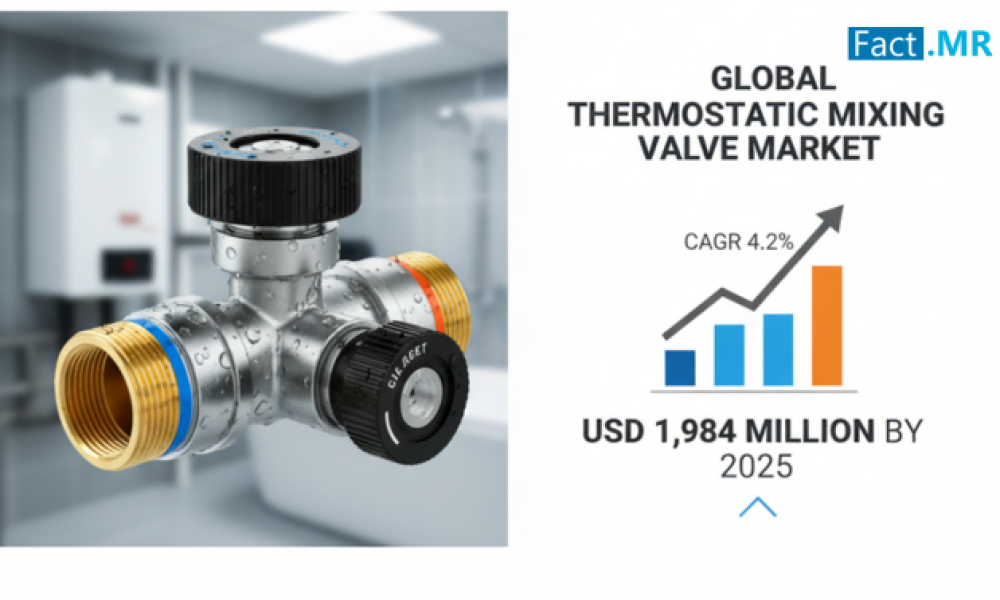
The global thermostatic mixing valve market is projected to increase from USD 1,315 million in 2025 to USD 1,984 million by 2035, registering a CAGR of 4.2% during the forecast period.
This growth is fueled by rising demand for energy-efficient and sustainable plumbing systems, which is boosting the integration of thermostatic mixing valves (TMVs) in green buildings and modern infrastructure projects. Additionally, stringent safety regulations mandating anti-scald protection are driving adoption across residential, commercial, and institutional sectors.
For More Insights into the Market, Request a Sample of this Report:
https://www.factmr.com/connectus/sample?flag=S&rep_id=9251
Key Drivers of the Thermostatic Mixing Valve (TMV) Market
The thermostatic mixing valve (TMV) market is witnessing strong growth, fueled by stricter safety regulations and rising awareness about scalding prevention. In many developed regions, building codes and plumbing standards now mandate TMVs in residential, commercial, and institutional facilities to maintain consistent water temperature and reduce burn risks.
This requirement is especially critical in healthcare centers, nursing homes, and childcare facilities, where vulnerable groups face higher exposure to hot water injuries. Government-backed safety policies are therefore accelerating TMV adoption in both new construction projects and retrofitting applications.
In addition to safety, the push for energy efficiency and water conservation is another key market driver. TMVs ensure precise mixing of hot and cold water, which reduces energy usage by lowering reheating needs and minimizes water wastage. These benefits support global sustainability efforts, aligning with LEED-certified building standards and smart home energy-efficient solutions.
Market Overview
Thermostatic mixing valves (TMVs) blend hot and cold water to a pre-set, safe temperature, protecting users from burns while maintaining comfort and reducing energy waste. These valves are increasingly installed in homes, hospitals, schools, hotels, and industrial facilities where water safety and efficiency are top priorities. As awareness of water temperature control standards grows, TMVs are becoming a key component of both new constructions and retrofits.
Segment Analysis
By valve type, point-of-use TMVs are most common in residential bathrooms and kitchens, while master mixing valves dominate in commercial and institutional buildings, ensuring stable hot water delivery across multiple outlets.
By application, the residential sector benefits from rising home renovation trends and compliance needs, while commercial and hospitality industries focus on enhancing user safety and comfort. The healthcare sector requires strict temperature control for patient care, and the industrial segment uses TMVs in production processes demanding precise water temperature regulation.
Regionally, North America leads due to robust safety regulations, Europe advances with eco-friendly building practices, and Asia-Pacific emerges as the fastest-growing region thanks to rapid urbanization and infrastructure development.
Recent Developments
Innovation is reshaping the TMV landscape. IoT-enabled smart TMVs now offer remote monitoring and automatic adjustments, enhancing both safety and energy performance. In healthcare, TMVs with anti-bacterial designs are in demand for infection control, while in sustainable construction, low-flow TMVs support water conservation goals. Additionally, the shift toward lead-free, corrosion-resistant materials aligns with environmental regulations and improves product durability.
Competitive Landscape
The market is competitive, with manufacturers focusing on technological upgrades, product diversification, and compliance with global standards. Leading players are forming partnerships with architects, developers, and plumbing contractors to ensure early integration of TMVs into projects. Companies are also expanding into renewable energy-compatible valve designs and offering enhanced after-sales support, including calibration and maintenance services.
Future Outlook
Over the next decade, demand for thermostatic mixing valves will continue to grow, supported by green building mandates, safety laws, and smart technology adoption. Integration with building management systems will become more common, enabling predictive maintenance and efficiency optimization. With rising consumer expectations for safe, sustainable, and efficient water systems, the thermostatic mixing valve market is positioned for steady, long-term growth.
Check out More Related Studies Published by Fact.MR:
Missile Guidance Radar Market
https://www.factmr.com/report/537/missile-guidance-radar-market
Dryer Vents Market
https://www.factmr.com/report/538/dryer-vents-market
Contact:
US Sales Office
11140 Rockville Pike
Suite 400
Rockville, MD 20852
United States
Tel: +1 (628) 251-1583, +353-1-4434-232
Email: [email protected]



