
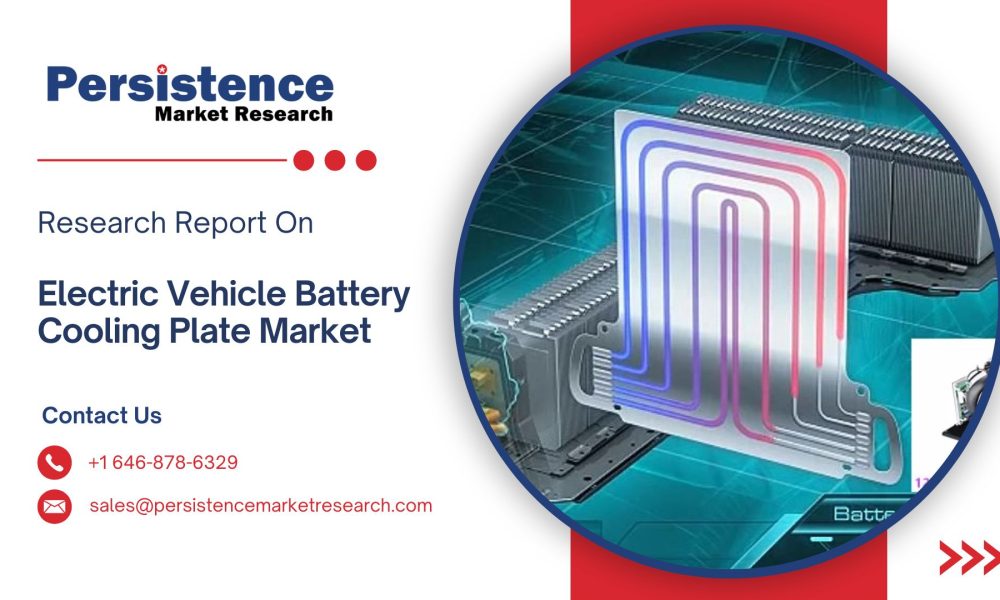
The global electric vehicle battery cooling plate market is undergoing rapid transformation as the electric mobility sector accelerates worldwide. As electric vehicles (EVs) become mainstream, advanced thermal management systems are increasingly vital for ensuring safe battery operation, extending battery lifespan, and enhancing vehicle performance. The cooling plate system plays a central role in preventing overheating, particularly under heavy load conditions such as rapid acceleration or fast charging. According to Persistence Market Research, the market is projected to reach US$ 3.1 Bn in 2024 and expand at a CAGR of 21.2% through 2031, eventually attaining a value of US$ 11.9 Bn. This surge highlights the strategic importance of thermal solutions in supporting global EV adoption.
Key growth drivers include rising demand for high-performance EVs, government incentives promoting clean mobility, and growing consumer interest in long-range electric cars. The expansion of fast-charging infrastructure further strengthens the case for advanced cooling solutions, as ultra-fast charging (350–500 kW) generates significant heat that must be efficiently managed. In terms of market segmentation, liquid cooling plates are leading due to their superior heat transfer capability compared to air-based alternatives. Geographically, Asia Pacific dominates the global market, fueled by the rapid expansion of EV production hubs in China, South Korea, and Japan, along with supportive government policies that mandate the adoption of efficient battery management systems.
Get a Sample Copy of Research Report (Use Corporate Mail id for Quick Response): https://www.persistencemarketresearch.com/samples/35004
Key Highlights from the Report
➤ The global market is expected to reach US$ 3.1 Bn in 2024.
➤ By 2031, the market is projected to expand to US$ 11.9 Bn.
➤ The industry will witness an impressive CAGR of 21.2% during the forecast period.
➤ By 2030, 30% of EV charging stations will support ultra-fast charging.
➤ Expansion of fast-charging networks (350–500 kW) increases demand for advanced cooling systems.
➤ Asia Pacific remains the leading regional market due to strong EV production and adoption.
Market Segmentation
The electric vehicle battery cooling plate market can be segmented by product type, which primarily includes liquid cooling plates and air cooling plates. Liquid cooling plates dominate the landscape as they provide superior efficiency in transferring heat from the battery pack. They are particularly favored in high-performance EVs and commercial fleets where operating temperatures rise quickly. Air cooling systems, although less complex and cost-effective, are gradually losing market share due to their limited efficiency in managing high-density batteries. As EV adoption accelerates, the preference for liquid-based systems is expected to continue rising.
End-user segmentation highlights the growing adoption of cooling plates across passenger cars, commercial vehicles, and two-wheelers. Passenger vehicles currently lead the segment, supported by increasing consumer demand for long-range EVs with reliable safety features. Commercial fleets, including buses and trucks, are emerging as the next high-growth segment due to stringent emission norms and the rising need for efficient thermal management in heavy-duty vehicles. With the expansion of shared mobility and logistics networks, commercial EV adoption will further fuel the demand for robust cooling plate solutions.
Regional Insights
Asia Pacific stands out as the most dominant region in the electric vehicle battery cooling plate market, primarily driven by the scale of EV production in China, South Korea, and Japan. These nations benefit from strong government incentives, established battery manufacturing ecosystems, and the presence of global EV leaders. The region’s focus on sustainable mobility solutions ensures consistent demand for advanced cooling technologies, with China emerging as the largest consumer and producer of EVs worldwide.
North America and Europe also represent significant markets, largely influenced by aggressive decarbonization policies and a fast-expanding EV charging infrastructure. The adoption of ultra-fast charging technology across the U.S. and European nations creates a pressing need for advanced thermal management systems. Additionally, the presence of top-tier automotive manufacturers in Germany, France, and the U.S. positions these regions as innovation hubs for next-generation cooling solutions.
Market Drivers
One of the key drivers of the electric vehicle battery cooling plate market is the global shift toward sustainable mobility. Rising concerns over carbon emissions and climate change have accelerated the adoption of EVs, boosting demand for reliable battery cooling systems. Furthermore, government subsidies and incentives encourage automakers to invest in EV technologies, thereby expanding the market for advanced cooling solutions. The proliferation of ultra-fast charging stations further drives growth, as high charging currents generate excessive heat that requires sophisticated thermal management.
Technological advancements in battery chemistry also contribute to market expansion. As lithium-ion batteries evolve with higher energy densities, the demand for effective heat dissipation mechanisms becomes critical to ensuring safety and performance. Automotive manufacturers are also increasingly integrating advanced cooling plates into vehicle designs, enabling longer driving ranges, faster charging, and enhanced battery durability. These combined factors underscore why cooling plate technology is gaining prominence in the EV ecosystem.
Market Restraints
Despite strong growth potential, the market faces certain restraints. High initial costs of advanced liquid cooling plates remain a challenge for mass adoption, especially in cost-sensitive regions. Small and mid-sized automakers may find it difficult to balance performance optimization with affordability, limiting market penetration. Additionally, the complexity of integrating cooling systems into battery packs increases design and manufacturing costs, potentially slowing adoption in entry-level EV segments.
Another challenge lies in material and design limitations. Cooling plates must be lightweight yet durable, which increases reliance on advanced materials such as aluminum alloys or composites, adding to production costs. Moreover, limited standardization across battery designs creates compatibility issues for suppliers, complicating mass production and scalability. These hurdles collectively restrain the pace of widespread adoption, particularly in developing economies.
Market Opportunities
The electric vehicle battery cooling plate market offers significant opportunities, particularly as EV adoption becomes mainstream worldwide. The rapid rollout of ultra-fast charging infrastructure creates a vital opening for advanced cooling technologies that can handle higher thermal loads. Manufacturers investing in innovative cooling solutions—such as micro-channel plates and advanced liquid-gas hybrid systems—are poised to capture new growth avenues.
Opportunities also lie in partnerships and collaborations between automakers, battery manufacturers, and cooling system providers. Such alliances can accelerate innovation while reducing costs through shared R&D investments. Additionally, emerging markets in Latin America, the Middle East, and Africa represent untapped opportunities as governments in these regions begin promoting EV adoption. By focusing on scalable, cost-effective, and efficient thermal management technologies, companies can gain a competitive edge in the evolving landscape.
Frequently Asked Questions (FAQs)
➤ How Big is the Electric Vehicle Battery Cooling Plate Market?
➤ Who are the Key Players in the Global Electric Vehicle Battery Cooling Plate Market?
➤ What is the Projected Growth Rate of the Market?
➤ What is the Market Forecast for 2032?
➤ Which Region is Estimated to Dominate the Industry through the Forecast Period?
Company Insights
The global electric vehicle battery cooling plate market is shaped by the presence of leading players such as Modine Manufacturing Company, MAHLE GmbH, Dana Incorporated, Hanon Systems, Valeo SA, and Sanhua Automotive. These companies are actively investing in innovative thermal management technologies to meet the evolving demands of EV manufacturers.
Recent Developments:
- A leading supplier introduced next-generation liquid cooling plates designed to support ultra-fast charging applications in commercial EVs.
- Major industry players announced strategic collaborations with automakers to co-develop cost-efficient cooling systems optimized for high-volume production.
Explore more related market insights and reports by visiting our website.




