
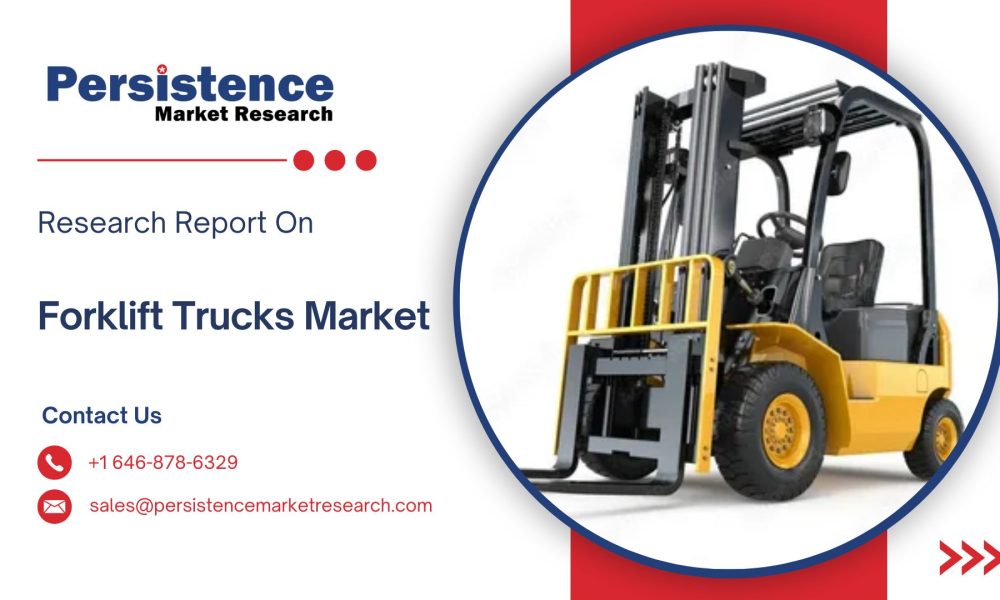
The global forklift trucks market is witnessing significant transformation, fueled by rapid industrialization, e-commerce expansion, and technological advancement in material handling systems. Forklifts have evolved into an essential component of modern supply chains, ensuring operational efficiency in warehouses, distribution centers, and manufacturing facilities. According to Persistence Market Research, the market is estimated to increase from US$ 61.9 Bn in 2024 to US$ 103.6 Bn by 2031, recording a strong CAGR of 7.6% during the forecast period. This expansion is linked to rising demand for compact, electric, and automated forklifts, catering to industries that require sustainable and efficient mobility solutions.
Key growth drivers include the exponential rise of the e-commerce sector, government initiatives supporting green logistics, and funding programs that promote the adoption of electric forklifts. For instance, the Volkswagen Environmental Mitigation Trust program provides substantial funding of up to $175,000 per electric forklift, significantly lowering the financial barrier for enterprises. The warehousing and logistics segment leads the market due to growing online shopping habits and rising disposable incomes, while Asia-Pacific emerges as the dominant region, driven by manufacturing strength in China, India, and Southeast Asia. These dynamics underline the crucial role of forklifts in shaping global trade and logistics.
Get a Sample Copy of Research Report (Use Corporate Mail id for Quick Response): https://www.persistencemarketresearch.com/samples/3552
Key Highlights from the Report
➤ The global forklift trucks market will expand from US$ 61.9 Bn in 2024 to US$ 103.6 Bn by 2031.
➤ The market is projected to grow at a robust CAGR of 7.6% during 2024–2031.
➤ Asia-Pacific is expected to lead the market due to strong industrial growth and e-commerce demand.
➤ Electric forklift adoption is increasing with supportive funding programs and sustainability goals.
➤ Warehousing and logistics emerge as the leading end-user segment in the market.
➤ The rise of automation and EV integration is shaping the future of forklift technology.
Market Segmentation
The forklift trucks market is segmented based on product type, power source, load capacity, and end-use industries. Product categories include counterbalance forklifts, reach trucks, pallet jacks, order pickers, and narrow aisle trucks. Counterbalance forklifts hold a substantial share as they are versatile and used across multiple applications, ranging from warehouses to retail facilities. Reach trucks, on the other hand, are gaining popularity in high-density storage warehouses due to their ability to operate in narrow aisles. Electric-powered forklifts are witnessing higher adoption compared to internal combustion (IC) models, owing to environmental concerns and government-backed initiatives that promote emission-free material handling equipment.
From an end-user perspective, warehousing, logistics, and e-commerce continue to be the largest contributors, as consumer demand for fast deliveries requires efficient storage and handling operations. Manufacturing industries also represent a critical market segment, supported by growing industrial complexity and automation trends. Moreover, retail and food & beverage sectors are increasingly deploying compact forklifts for enhanced operational convenience. The demand pattern is gradually shifting toward sustainability-driven equipment, with lithium-ion battery-operated forklifts emerging as a preferred choice for both large-scale and SME enterprises.
Regional Insights
Regionally, Asia-Pacific dominates the forklift trucks market, attributed to its massive manufacturing base, rapid industrialization, and booming e-commerce sector. Countries such as China, India, and Japan have witnessed unprecedented growth in logistics and warehousing infrastructure, creating strong demand for forklift adoption. Additionally, government-backed initiatives in India’s “Make in India” campaign and China’s focus on smart manufacturing enhance the need for advanced material handling solutions.
North America and Europe are also notable contributors, with significant adoption of electric and automated forklifts. The United States, in particular, benefits from sales programs like the Volkswagen Environmental Mitigation Trust program, which encourages industries to invest in electric models. Europe’s rebound in the automotive industry and focus on sustainable practices further strengthen market prospects. Meanwhile, Middle East & Africa and Latin America show promising potential, with increasing infrastructure investments and growing retail activity fueling demand for forklifts.
Market Drivers
The forklift trucks market is primarily driven by the rapid rise of the global e-commerce sector. As consumer habits shift toward online shopping and same-day deliveries, companies must expand warehouse capacity and improve material handling efficiency, making forklifts indispensable. Government policies promoting green logistics and zero-emission equipment further accelerate the adoption of electric forklifts. The Volkswagen Environmental Mitigation Trust program exemplifies these efforts, providing financial incentives for cleaner mobility solutions.
Another significant driver is the global shift toward industrial automation. Advanced forklifts equipped with telematics, IoT connectivity, and semi-autonomous features are transforming how businesses manage inventory and streamline supply chains. The expansion of the automotive and construction sectors also contributes to strong forklift demand, as both industries require heavy-duty equipment for transportation and assembly operations. The rising disposable income of consumers worldwide indirectly fuels forklift growth, as it accelerates retail and e-commerce expansion.
Market Restraints
Despite its growth potential, the forklift trucks market faces certain challenges that can slow down adoption. One of the key restraints is the high initial investment cost of advanced electric and automated forklifts, which poses a financial barrier for small and medium-sized enterprises. Maintenance and operational costs of forklifts, especially those used intensively in warehouses, also add to the burden for businesses.
Another critical restraint is the shortage of skilled operators required to handle advanced machinery. As forklifts become more technologically sophisticated, training and workforce development become essential, yet many regions struggle with operator shortages. In addition, fluctuating raw material prices, supply chain disruptions, and energy costs can impact production and profitability for manufacturers. Lastly, strict regulatory frameworks around emissions and workplace safety, while beneficial in the long term, may slow adoption in the short term for companies not yet prepared to comply.
Market Opportunities
The forklift trucks market offers immense opportunities, particularly in the field of electrification and automation. With global EV market growth projected to expand fivefold between 2021 and 2028, electric forklifts are poised to benefit from improved battery technology, faster charging, and greater affordability. Growing environmental awareness and government subsidies will continue to create opportunities for sustainable forklift adoption across industries.
Technological innovation also presents new avenues for market expansion. Integration of telematics, AI-driven navigation, and IoT solutions enables businesses to optimize warehouse operations, reduce downtime, and improve fleet management. Emerging economies represent another opportunity, with increasing investments in infrastructure, retail, and manufacturing sectors fueling forklift demand. Furthermore, as industries embrace lean manufacturing and just-in-time supply chain models, demand for compact and efficient forklifts is likely to surge. These opportunities collectively pave the way for sustained long-term growth.
Frequently Asked Questions (FAQs)
➤ How Big is the Forklift Trucks Market?
➤ Who are the Key Players in the Global Forklift Trucks Market?
➤ What is the Projected Growth Rate of the Forklift Trucks Market?
➤ What is the Market Forecast for Forklift Trucks by 2031?
➤ Which Region is Estimated to Dominate the Forklift Trucks Industry through the Forecast Period?
Company Insights
Leading companies in the forklift trucks market include:
- Toyota Industries Corporation
- KION Group AG
- Jungheinrich AG
- Mitsubishi Logisnext Co., Ltd.
- Hyster-Yale Materials Handling, Inc.
- Crown Equipment Corporation
- Doosan Corporation
- Komatsu Ltd.
- Anhui Heli Co., Ltd.
- Hangcha Group Co., Ltd.
Recent Developments
- Several forklift manufacturers have accelerated their investments in lithium-ion battery technology, focusing on sustainable and fast-charging solutions to meet rising demand for electric forklifts.
- Industry players are expanding partnerships with logistics firms to deploy semi-autonomous forklifts integrated with IoT platforms, enhancing operational efficiency across smart warehouses.
Explore more related market insights and reports by visiting our website.