
Definition
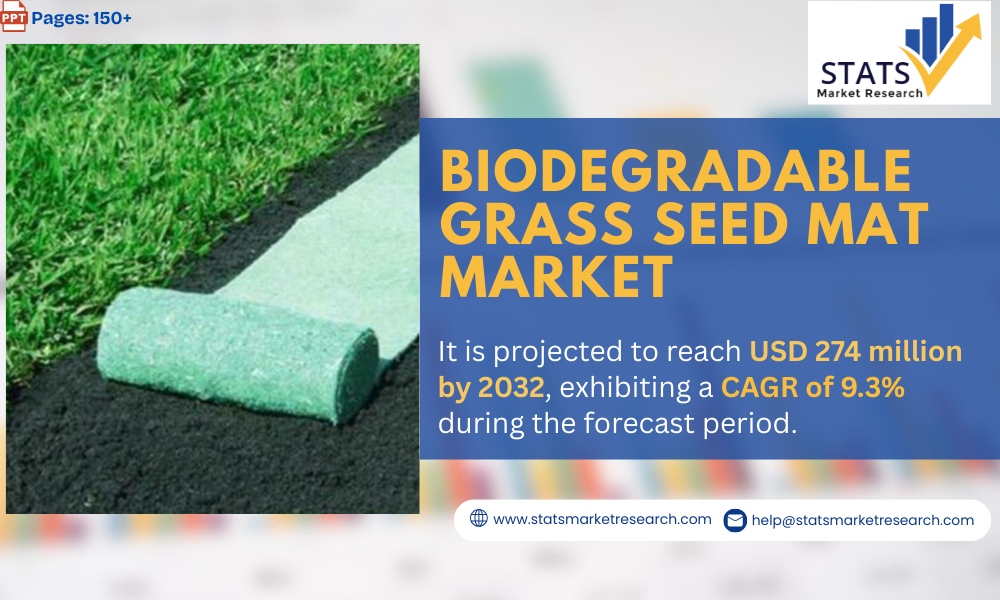
Biodegradable grass seed mats, also referred to as erosion control blankets or germination mats, are innovative landscaping products designed to enhance uniform grass growth while minimizing soil erosion. Constructed from eco-friendly and biodegradable materials like straw, coconut coir, wood fibers, and other natural substrates, these mats hold grass seeds in place, protecting them from environmental hazards such as wind, rain, or animal disturbance.
The primary functions of these mats include:
- Moisture Retention: Maintaining optimum soil moisture levels to promote rapid germination and robust grass establishment.
- Weed Suppression: Limiting weed growth through physical coverage and seed competition.
- Erosion Control: Preventing soil displacement on slopes, embankments, and areas prone to runoff.
- Environmental Sustainability: Decomposing naturally without leaving harmful residues, reducing environmental footprint.
These products have become crucial in residential landscaping, commercial landscaping, and infrastructure projects, especially where sustainable land management and water conservation practices are enforced. Manufacturers such as Huntop, GroTrax, and TURFQUICK AB are driving market innovation with enhanced biodegradable materials and climate-specific seed mixes, catering to diverse global environments.
Recent Developments
The biodegradable grass seed mat market is experiencing rapid growth, primarily driven by a global increase in environmental awareness and demand for sustainable landscaping solutions. A key trend is the development of innovative mat designs that not only feature enhanced seed germination rates but also provide superior erosion control. Manufacturers are also focusing on creating specialized mats tailored for specific applications, such as those for drought-prone regions, shady areas, and commercial projects like sports fields and golf courses. There’s a notable shift towards using more eco-friendly materials, with a focus on products that are free from plastics and synthetic binders. This emphasis on sustainability and ease of use is making these mats a preferred choice for both professional landscapers and DIY gardeners.
Major Distribution
The distribution of biodegradable grass seed mats is highly diversified, serving both the professional and consumer markets. For large-scale projects, such as commercial landscaping and public works, manufacturers often utilize a direct sales model or work with specialized landscape supply distributors. These B2B channels are crucial for providing bulk quantities and technical support. For the residential and DIY markets, distribution is handled through a variety of channels, including big-box home improvement stores, garden centers, and nurseries. The rise of e-commerce has also become a major distribution channel, allowing a wide range of consumers to purchase these products online from a global network of manufacturers and resellers, further increasing market accessibility and reach.
Market Size
Global biodegradable grass seed mat market was valued at USD 149 million in 2024. The market is projected to grow to USD 274 million by 2032, exhibiting a CAGR of 9.3% over the forecast period.
Download FREE Sample of this Report @ https://www.statsmarketresearch.com/download-free-sample/8055825/global-biodegradable-grass-seed-mat-market
Several trends underpin this growth trajectory:
- Environmental Awareness: Increasing global emphasis on sustainable landscaping solutions, reducing reliance on chemical fertilizers, and mitigating soil erosion.
- Urbanization: Rapid urban development projects and municipal landscaping initiatives have increased demand for commercial-grade mats for embankments, stormwater management areas, and public parks.
- Residential Adoption: Homeowners are increasingly investing in low-maintenance, eco-friendly lawn solutions, fueling retail sales of DIY-friendly seed mats.
- Government Initiatives: Policies promoting green infrastructure and erosion control measures across Europe, North America, and parts of Asia have directly increased adoption.
For example, municipalities in North America and Europe are increasingly mandating the use of biodegradable erosion control products for public works, demonstrating regulatory support for market expansion. The development of photodegradable mats also addresses performance concerns in high-UV environments, ensuring structural integrity during the germination period before natural decomposition.
Market Dynamics (Drivers, Restraints, Opportunities, and Challenges)
Drivers
Rising Environmental Awareness
- Over 35% of commercial landscape projects now specify biodegradable stabilization solutions due to sustainability regulations.
- Biodegradable mats contribute to water conservation by reducing irrigation requirements by approximately 40% during turf establishment.
Urbanization and Infrastructure Development
- Global construction output is projected to reach $15.5 trillion by 2030, driving demand for slope stabilization, roadside embankments, and stormwater management solutions.
- Biodegradable mats have 90% effectiveness in preventing soil loss during the critical first growing season, offering a cost-effective alternative to hydroseeding, especially on slopes exceeding 3:1 gradients.
Product Innovation
- Photodegradable and climate-specific seed mats address premature degradation and diverse environmental conditions.
- The landscaping sector’s shift toward low-maintenance residential lawns is stimulating retail channel growth.
Restraints
High Material Costs
- Biodegradable mats are priced 25-40% higher than conventional seeding methods, limiting penetration in developing markets.
- Specialized manufacturing processes, particularly for coconut coir and jute mats, account for nearly 60% of production costs.
Seasonal Demand Fluctuations
- Residential sales peak in spring planting seasons, creating cyclicality that strains operations and inventory management.
Limited Consumer Awareness
- Fewer than 30% of homeowners in key markets understand the functional advantages of seed mats, limiting adoption.
Opportunities
Advancements in Bio-Based Materials
- Hybrid fiber blends, incorporating agricultural byproducts like rice husks or banana fibers, reduce costs by 15-20% while maintaining performance.
- Mycelium-based binding agents are emerging as fully compostable alternatives with enhanced water retention, appealing to premium organic landscaping segments.
Post-Pandemic Outdoor Living Trends
- North American residential landscaping expenditure has grown 12% annually since 2020, boosting sales of instant lawn solutions.
- Smaller DIY-friendly packaging and online gardening partnerships have increased retail sales by 18-22%.
Challenges
Variable Decomposition Rates
- Decomposition timelines vary by 300% depending on soil microbiota, moisture, and temperature, causing inconsistent user experiences.
- Warranty claim analyses show 15% of complaints relate to premature or delayed breakdown, prompting climate-specific product development.
Supply Chain Vulnerabilities
- Dependence on natural fibers like jute and coconut coir causes supply disruptions and cost volatility.
- Regional production diversification is critical to stabilize lead times and mitigate shipping fluctuations.
Greenwashing Scrutiny
- Regulatory authorities increasingly demand validated biodegradability claims.
- Third-party certification and lifecycle assessments are essential to avoid fines and maintain market trust.
Regional Analysis
- North America: Strong adoption for drought-tolerant and water-conserving landscaping solutions.
- Europe: High regulatory pressure drives the use of eco-friendly erosion control mats, especially in slope stabilization projects.
- Asia-Pacific: Growing urbanization and infrastructure development, coupled with increasing environmental awareness, drive adoption of locally sourced biodegradable mats.
- Latin America: Emerging interest in sustainable landscaping practices for public parks and commercial sites.
- Middle East & Africa: Gradual adoption due to desert landscaping initiatives and government-backed green projects.
Get the Complete Report & TOC @ https://www.statsmarketresearch.com/global-biodegradable-grass-seed-mat-market-8055825
Competitor Analysis
The biodegradable grass seed mat market is moderately fragmented, featuring established leaders and emerging innovators:
- Huntop (U.S.): Comprehensive residential and commercial product portfolio.
- GroTrax (U.S.): Strong R&D focus, market leader in North America.
- TURFQUICK AB (Sweden): Patented multilayer mat technology, strong EU presence.
- Virens (Netherlands): Rapid online sales growth, expanding e-commerce channels.
- Jonathan Green (U.S.): Technical differentiation through water retention and biodegradation optimization.
- GreenGrow (Canada), Willstar (Australia), Amturf (U.S.), Hy-Tex (UK) Ltd. (UK): Niche-focused, environmentally sustainable offerings.
Global Biodegradable Grass Seed Mat: Market Segmentation Analysis
This report provides a deep insight into the global Biodegradable Grass Seed Mat market, covering all its essential aspects. This ranges from a macro overview of the market to micro details of the market size, competitive landscape, development trend, niche market, key market drivers and challenges, SWOT analysis, value chain analysis, etc.
The analysis helps the reader to shape the competition within the industries and strategies for the competitive environment to enhance the potential profit. Furthermore, it provides a simple framework for evaluating and assessing the position of the business organization. The report structure also focuses on the competitive landscape of the Global Biodegradable Grass Seed Mat market. This report introduces in detail the market share, market performance, product situation, operation situation, etc., of the main players, which helps the readers in the industry to identify the main competitors and deeply understand the competition pattern of the market.
In a word, this report is a must-read for industry players, investors, researchers, consultants, business strategists, and all those who have any kind of stake or are planning to foray into the Biodegradable Grass Seed Mat market in any manner.
Market Segmentation (by Application)
- Residential
- Home lawns
- Gardens
- Backyards
- Commercial
- Golf courses
- Sports fields
- Public parks
- Other Applications
Market Segmentation (by Type)
- Year Round Green
- Fescue blends
- Kentucky Bluegrass mixes
- Other mixes
- Bermuda Rye
- Shade-tolerant blends
- Drought-resistant varieties
- Other specialty mixes
- Others
Key Company
- Huntop (U.S.)
- GroTrax (U.S.)
- TURFQUICK AB (Sweden)
- Virens (Netherlands)
- Jonathan Green (U.S.)
- GreenGrow (Canada)
- Willstar (Australia)
- Amturf (U.S.)
- Hy-Tex (UK) Ltd. (United Kingdom)
Geographic Segmentation
- North America – U.S., Canada
- Europe – Sweden, UK, Germany
- Asia-Pacific – Australia, Japan, China
- Latin America – Brazil, Argentina
- Middle East & Africa – UAE, South Africa
FAQ
Q1: What is the current market size of the Biodegradable Grass Seed Mat market?
A1: The market was valued at USD 149 million in 2024 and is projected to reach USD 274 million by 2032, growing at a CAGR of 9.3%.
Q2: Which are the key companies operating in this market?
A2: Key players include Huntop, GroTrax, TURFQUICK AB, Virens, Jonathan Green, GreenGrow, Willstar, Amturf, and Hy-Tex Ltd.
Q3: What are the key growth drivers in this market?
A3: Growth is driven by environmental awareness, urbanization, residential landscaping trends, and government regulations promoting sustainable erosion control solutions.
Q4: Which regions dominate the market?
A4: North America and Europe lead due to high residential adoption and regulatory support, while Asia-Pacific is growing rapidly with urban infrastructure projects.
Q5: What are the emerging trends in the Biodegradable Grass Seed Mat market?
A5: Emerging trends include bio-based hybrid fiber mats, photodegradable solutions, DIY retail formats, e-commerce expansion, and enhanced water retention technologies.
About Us
☎️ International: +1 (332) 2424 294
📄 Website: www.statsmarketresearch.com
Join us on LinkedIn:- https://www.linkedin.com/company/statsmarketresearch




