
Market Overview
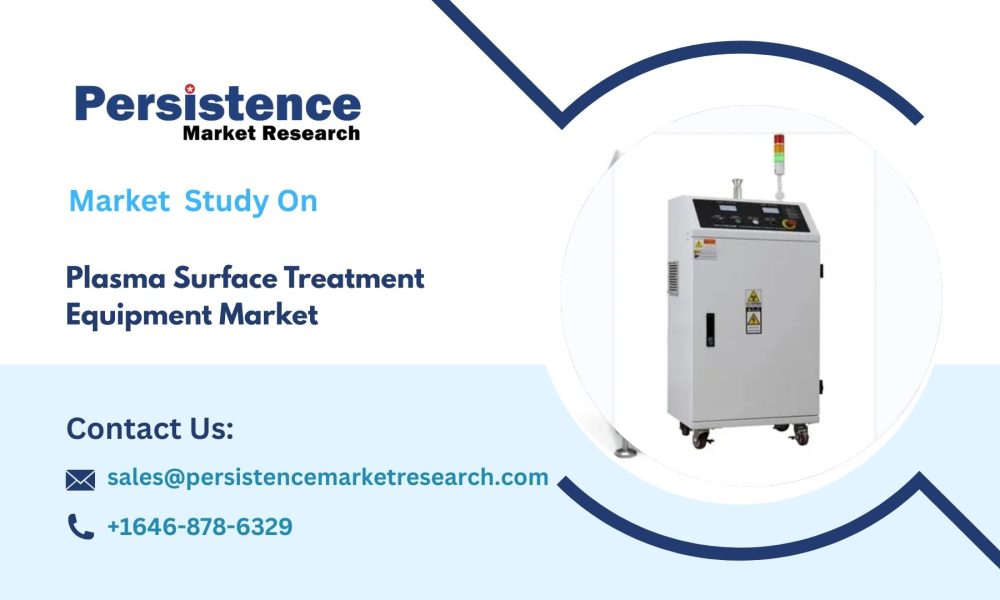
The plasma surface treatment equipment market has emerged as a pivotal segment within the global surface modification industry, driven by increasing demand for high-performance coatings and enhanced material adhesion across multiple industrial sectors. Plasma surface treatment is a highly efficient process that modifies the surface properties of materials, such as plastics, metals, textiles, and composites, without affecting their bulk properties. This technology is widely applied in industries including automotive, electronics, packaging, medical devices, aerospace, and consumer goods, where enhanced adhesion, wettability, and surface cleanliness are critical. According to the latest market research, the global plasma surface treatment equipment market is projected to grow at a CAGR of 5.8% from 2025 to 2032, expanding from US$ 2.6 billion in 2025 to approximately US$ 3.9 billion by 2032. This growth is fueled by the rising focus on advanced manufacturing technologies, sustainability, and quality assurance across various industrial applications.
Among the different equipment types, low-pressure plasma surface treatment systems currently lead the market due to their versatility, precision, and ability to treat a wide range of materials under controlled conditions. In terms of geography, North America dominates the plasma surface treatment equipment market, primarily due to a strong industrial base, early adoption of advanced manufacturing technologies, and stringent quality standards in sectors such as automotive, aerospace, and medical devices. Asia-Pacific, however, is expected to witness the fastest growth, driven by rapid industrialization, increasing automotive and electronics manufacturing, and government initiatives promoting high-tech industrial production in countries like China, Japan, and South Korea.
Key Highlights from the Report
• The global plasma surface treatment equipment market is projected to reach US$ 3.9 billion by 2032, growing at a CAGR of 5.8%.
• Low-pressure plasma systems represent the leading product segment due to versatility and high precision.
• North America dominates the market, supported by advanced industrial infrastructure and regulatory compliance standards.
• Asia-Pacific is expected to record the fastest growth rate, fueled by industrial expansion and automotive manufacturing.
• Increasing adoption of eco-friendly and sustainable surface treatment solutions is transforming the market.
• Advancements in automation and plasma process control are enhancing efficiency and consistency across applications.
𝐆𝐞𝐭 𝐚 𝐒𝐚𝐦𝐩𝐥𝐞 𝐏𝐃𝐅 𝐁𝐫𝐨𝐜𝐡𝐮𝐫𝐞 𝐨𝐟 𝐭𝐡𝐞 𝐑𝐞𝐩𝐨𝐫𝐭 (𝐔𝐬𝐞 𝐂𝐨𝐫𝐩𝐨𝐫𝐚𝐭𝐞 𝐄𝐦𝐚𝐢𝐥 𝐈𝐃 𝐟𝐨𝐫 𝐚 𝐐𝐮𝐢𝐜𝐤 𝐑𝐞𝐬𝐩𝐨𝐧𝐬𝐞): https://www.persistencemarketresearch.com/samples/35070
Market Segmentation
The plasma surface treatment equipment market can be segmented based on product type, application, and end-user industries. By product type, the market primarily includes low-pressure plasma systems, atmospheric plasma systems, and plasma jet systems. Low-pressure plasma systems dominate due to their precision, control, and adaptability for industrial-scale operations. Atmospheric plasma systems are growing in popularity for high-speed production lines and continuous processing applications. Plasma jet systems, on the other hand, offer localized treatment for small components or complex geometries, catering to specialized industrial needs.
In terms of application, the market spans automotive, electronics, packaging, medical devices, aerospace, textiles, and consumer goods. The automotive segment holds the largest market share, driven by the need for enhanced adhesion of coatings, films, and adhesives in vehicle components. Electronics is another significant segment, where plasma treatment ensures improved surface conductivity, bonding, and coating adherence in semiconductors and printed circuit boards. Medical device manufacturers increasingly utilize plasma-treated surfaces to enhance biocompatibility, sterilization, and coating performance. Packaging industries benefit from plasma systems by improving printability, barrier properties, and adhesion on polymeric films.
End-users of plasma surface treatment equipment include automotive manufacturers, electronics producers, aerospace companies, medical device manufacturers, packaging firms, and industrial component suppliers. While automotive and electronics currently lead the adoption, growth in medical, packaging, and aerospace sectors is anticipated to further expand market demand in the coming years.
Regional Insights
North America is the largest market for plasma surface treatment equipment, with significant adoption in automotive, aerospace, and electronics sectors. The region benefits from a mature industrial ecosystem, strong R&D investments, and stringent regulatory compliance for product quality and safety. The U.S. and Canada remain key contributors, with manufacturers focusing on precision surface treatment to meet high performance standards.
Europe is a major market driven by advanced manufacturing and high-quality standards in countries such as Germany, France, and the UK. Sustainability initiatives, including eco-friendly surface treatment technologies, are further fueling adoption. The European aerospace and medical device sectors are also prominent users of plasma treatment equipment.
The Asia-Pacific region is poised for the fastest growth during the forecast period. Rapid industrialization, expanding automotive and electronics manufacturing, and government support for advanced manufacturing technologies in countries like China, Japan, and South Korea are driving this growth. Adoption of plasma treatment in packaging and consumer goods industries is also rising due to increasing demand for high-quality surface finishes.
Emerging markets in Latin America, the Middle East, and Africa are gradually embracing plasma surface treatment equipment. Growth in these regions is fueled by industrial expansion, automotive manufacturing, and increased adoption of high-tech manufacturing processes. Rising awareness of quality standards and surface treatment benefits is expected to create further market opportunities.
Market Drivers
The plasma surface treatment equipment market is primarily driven by the increasing demand for advanced surface modification technologies that enhance adhesion, wettability, and coating performance. Rising adoption in the automotive and electronics industries, where precision and durability are critical, is a key growth driver. Environmental sustainability and the shift toward eco-friendly processes are pushing industries to adopt plasma systems that reduce chemical usage and waste. Furthermore, technological advancements in plasma process automation, real-time monitoring, and energy-efficient systems are enhancing operational efficiency and product quality, further fueling market growth.
Market Restraints
Despite growth prospects, the plasma surface treatment equipment market faces certain challenges. High initial investment costs and maintenance requirements limit adoption, especially for small and medium-scale manufacturers. The complexity of plasma systems and requirement for skilled operators can hinder widespread deployment in developing regions. Additionally, variations in industrial standards and regulations across regions can create barriers to market entry, while the availability of alternative surface treatment methods, such as chemical or mechanical treatments, may restrain growth.
Market Opportunities
Significant opportunities exist for plasma surface treatment equipment manufacturers. The rapid expansion of automotive, electronics, medical, and packaging industries provides a growing demand base. Increasing adoption of sustainable and chemical-free surface treatment processes creates opportunities for eco-friendly plasma solutions. Emerging technologies, such as atmospheric and plasma jet systems, enable faster processing and treatment of complex geometries, opening new application avenues. Additionally, expansion in developing regions of Asia-Pacific, Latin America, and the Middle East presents untapped growth potential. Partnerships with OEMs and industrial component manufacturers for integrated plasma treatment solutions offer further opportunities.
Reasons to Buy the Report
• Obtain in-depth insights into the current and future market trends of plasma surface treatment equipment.
• Analyze the impact of technological innovations and regulatory policies on market growth.
• Identify emerging opportunities across product types, applications, and regions.
• Benchmark key players and evaluate competitive strategies to strengthen market positioning.
• Access reliable forecasts to support strategic investments and operational planning.
Company Insights
Key players operating in the plasma surface treatment equipment market include:
• Plasmatreat GmbH
• Tantec A/S
• Enercon Industries Corporation
• Nordson Corporation
• PVA TePla AG
• Enercon Industries
• Plasmatic Technologies
• Diener Electronic GmbH & Co. KG
• Advanced Surface Technologies
• Enercon Industries Inc.
Recent Developments:
In 2023, Plasmatreat GmbH launched an advanced low-pressure plasma system with integrated automation and energy-saving features for automotive and electronics applications.
In 2024, Nordson Corporation introduced a new atmospheric plasma surface treatment system designed for high-speed industrial production lines and eco-friendly operations.
Conclusion
The plasma surface treatment equipment market is poised for steady growth, driven by increasing industrial demand for advanced, energy-efficient, and eco-friendly surface modification technologies. Low-pressure plasma systems currently dominate, while the fastest growth is anticipated in the Asia-Pacific region due to rapid industrialization, automotive and electronics manufacturing, and government support for advanced manufacturing technologies. Despite challenges such as high costs and technical complexity, opportunities in sustainable processes, emerging industrial applications, and developing regions are expected to expand market adoption. With the market projected to grow from US$ 2.6 billion in 2025 to US$ 3.9 billion by 2032 at a CAGR of 5.8%, stakeholders can capitalize on technological advancements and evolving industrial needs for precision surface treatment solutions.
𝐑𝐞𝐥𝐚𝐭𝐞𝐝 𝐑𝐞𝐩𝐨𝐫𝐭𝐬:




