
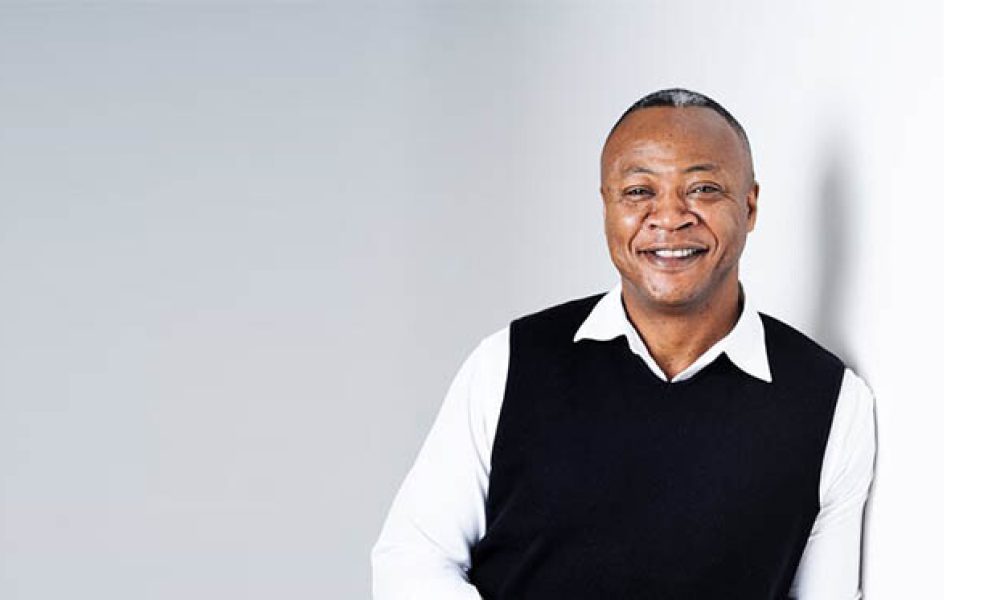
René Carayol MBE is a globally acclaimed leadership expert and executive coaching speaker, whose insight springs from decades of boardroom experience and transformative leadership across FTSE-100 and Fortune-500 companies. He draws from roles at IPC Media, PepsiCo, and the Inspired Leaders Network to deliver exceptional change leadership.
He specialises in strengths-based leadership, cultural transformation, and inclusive team dynamics—themes central to his best-selling book SPIKE, which unpacks how leaders harness individual strengths to build collective excellence.
Represented by The Motivational Speakers Agency, René continues to inspire global audiences as a dynamic keynote speaker and trusted coach, guiding organisations toward high-performance cultures driven by vision, empathy, and collaboration.
Q: Many executives still blur the line between management and leadership. From your perspective, what truly sets the two apart in business today?
René Carayol: “First thing, leadership is not management. Far too many of us confuse the necessary skill with the art of management.
“Management is the measurable skill. Leadership is the art. And management is the IQ. Leadership is the EQ. Management is the what. Leadership is the why.
“I would also say that when I look at management, I see process, measurement, KPI, strategy, plan — all the things that if you don’t do them, you go out of business tomorrow. They are necessary. They ensure your business has the right backbone. But in times of change, they’re no longer enough on their own anymore.
“In these extraordinary times, we need extraordinary leadership. And when I say leadership, I mean purpose, people, vision, teams, culture. I’ll say it again so I get it: purpose, vision, people, teams, culture. We call management the hardware. We call leadership the software. Hardware is essential. Software is vital.
“We obsess about it because when people say it can’t be done, we say get the leaders in. Leadership is the essential difference. When the science of management says it can’t be done, we bring in the art of leadership.
“And here’s the bit that matters most to our audiences: leadership is not a skill. It’s not a science. As we stand here today, no university on the planet has a degree in leadership. They’re all degrees in management. Leadership is a mindset. It’s an attitude. It’s a set of behaviours. It’s not a skill.
“Therefore, forget the job title, forget the hierarchy, forget the status. Everyone can be a leader if they choose to be. That’s what makes it so exciting today. It’s not about your position in the company. It’s not about your length of service. It’s your attitude and mindset.
“And why that’s so important? The business with the most leaders wins. The organisation with the most leaders wins. It’s all very well having them all racked up in the executive team — that’s important. But having them from the receptionist through to your supervisory level, your new entrants, your long servers. Everyone in the organisation can be a leader if they choose to be.
“And here’s the closing line on this: good leaders create followers. Great leaders create leaders.”
Q: You argue that collaboration has replaced the old model of command-and-control leadership. What has driven this change, and what does it mean for leaders at the top?
René Carayol: “When you get to my vintage, you’ve been around the block a few times. And if I go back 10, 15 years ago and I looked at the hierarchy at the top of every business, I had the privilege of working with the chief executive.
“And I choose my words very carefully here. The chief executive was the cleverest man in the room. They made every decision. They made every call. They authorised every process. Nothing happened without their say. So only 15 years ago, the world was slow enough and incremental enough for one person to be able to do that.
“Then we had the rise and rise of technology. It brought velocity. It brought pace. It brought speed. And therefore decisions — you didn’t have days to make them, you had to make them instantly. The world became a lot more complex, a lot more difficult, a lot more challenging.
“No longer could one person make all the calls. You needed the team. And here’s where the spike philosophy came for me. Everyone was brilliant at something, but no one was brilliant at everything. But if you chose the right team, the team could be brilliant at everything. And at the top of every successful business, we saw the right team. Collaboration became the new leadership.”
Q: Post-pandemic, culture has become a boardroom priority. How can organisations genuinely build inclusive environments where people thrive, rather than just tick boxes?
René Carayol: “This is the most vital piece that we see today.
“Up until the pandemic, I was happily coaching the chief exec and their teams on collaborations and new leadership. Then something happened during the pandemic which was a gamechanger for leadership.
“All of a sudden your people, your key resources, could be in any time zone. They could be from any background. They could be in any territory, in any region. They would have different accents, different languages. They would worship differently. They would live differently. They would love differently.
“That diversity was a strength. Those different ideas, those different views, those different initiatives, those different backgrounds — they were brilliant for the business, but difficult to harness. Difficult to make everyone feel as though they could bring their authentic self to their place of work, not feel judged, not feeling as though they’d be forced to fit in.
“Because if they felt that, they would thrive. They would go the extra mile. So the role of the leader became to create an environment where people can flourish no matter what their background. That was a challenge.
“And the cultural challenge was: stop trying to fix the people, fix the environment. If you fix the environment, different people from diverse backgrounds — they will go the extra mile for you. If they feel trusted, they go the extra mile.
“And this is the big thing we’ve seen, and we’ve seen this. We’ve touched it. We’ve smelt it. It’s demonstrable. It’s the biggest driver of business performance we’ve ever seen. It’s inclusion. It’s belonging.
“Make me feel I’m part of something special and I will go the extra mile for you every day. It’s not only the right thing to do, which inclusion is, it’s the smart thing to do.”
Q: When you step off stage, what is the one shift in thinking or behaviour you most hope your audience carries with them?
René Carayol: “This is best done as a story. This encapsulates everything we stand for. Remember — leaders sell stories, managers strategy.
“Three women working on a building site. Breaking rocks in the burning sun is the toughest work you’ve ever seen. The journalist comes to the first woman and says, why do you do this work? She says, “I haven’t worked for three years. I took the first job I could get.”
“He comes to the second one: why do you do this work? “I’ve got a husband and three kids to feed. I took the first job I could get.”
“He comes to the third one: why do you do this job? She looks up proudly, wipes the sweat from her brow and says, “I’m helping to build a cathedral. I’m helping to build a cathedral.”
“And it might be a temple, mosque, or synagogue, depending on where we are. But she’s not doing a repetitive, meaningless job. She’s helping to build the cathedral.
“That is the role of everyone who listens to me. There’s one thing I want you to do: talk to your peers. Talk to your people. Talk to subordinates. Talk to superiors. Catch them doing things right.
“Nobody is doing a meaningless manual job anymore. Everyone’s contribution is helping to build that cathedral. Your job every day — not once a week, not once a month at a manager’s meeting — every single day, every person you meet, convince them they’re helping to build a cathedral.
“Remember what I said: good leaders create followers. Great leaders create leaders. Treat everyone the way you would want to be treated by your leader. Be the leader you would like to be led by.”
This exclusive interview with René Carayol was conducted by Jack Hayes of The Champions Speakers Agency.




