
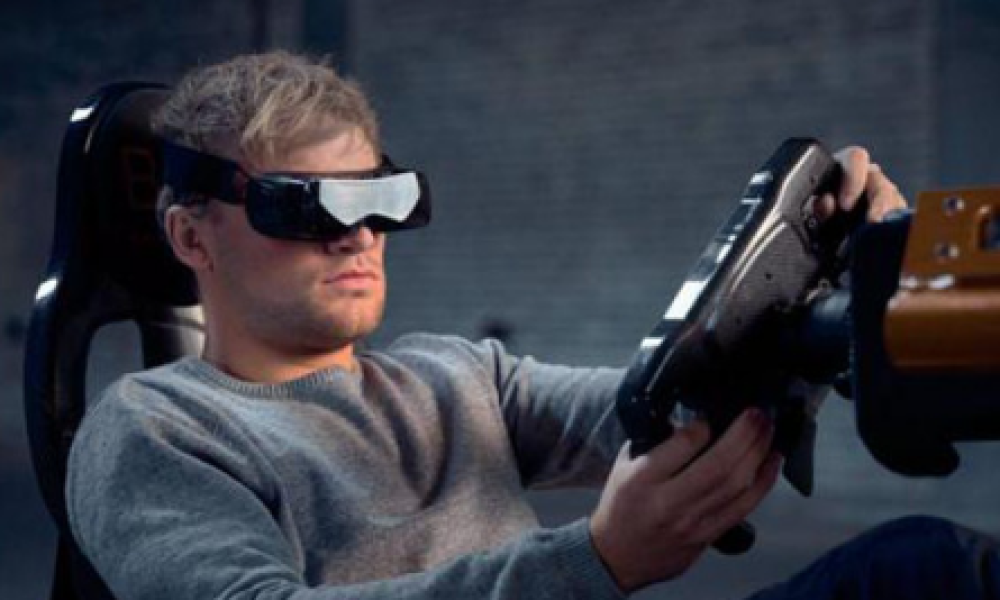
Focusing on the battle for “next-generation consumer devices” in smart wearables, Meta and WiMi are leveraging their AI + AR expertise to define the industry’s future
Meta (META) recently released its Q2 2025 financial results. During a conference call, Mark Zuckerberg discussed Meta’s progress in developing smart glasses as the next computing platform.
Optimistic about the potential of the smart glasses market, Zuckerberg emphasized that glasses will become the ideal form factor for AI, capable of viewing surrounding content, generating user interfaces, displaying information, and providing assistance. Whether it’s a wide holographic field of view like the one demonstrated on Orion or a small display suitable for displaying specific information, this will unlock enormous value.
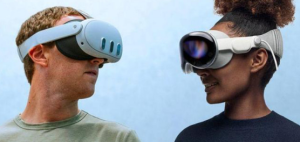
Furthermore, glasses, as Meta has been exploring at Reality Labs for the past five to ten years, will become the ideal way to merge the physical and digital worlds. The vision of the entire metaverse will ultimately become extremely important, and AI glasses will accelerate this process.
Apple will focus heavily on its headset development.
Coincidentally, during Apple’s (AAPL) third-quarter fiscal 2025 earnings call, Tim Cook stated that Apple will release its biggest Vision Pro update yet, visionOS 26, in the coming months. Later this year, Apple also reportedly plans to update the Vision Pro headset with an M4 chip (superior to the current M2) and a more comfortable headband.
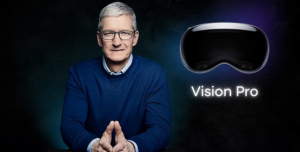
Previously, supply chain analyst Ming-Chi Kuo reported that Apple plans to release a lower-priced, lighter headset, tentatively named “Apple Vision Air.” Prior to the Vision Pro’s release, Gurman also reported that Apple was developing a cheaper model powered by an A-series chip. The Vision Pro utilizes this display to show nearby people a rendered image of the user’s eyes.
Today, driven by AI, XR hardware continues to improve and its application scenarios expand. Smartglasses are experiencing an unprecedented surge in popularity, with numerous tech giants jumping into the fray. At Google’s (GOOG) annual developer conference, the tech giant explicitly announced its entry into the “lightweight glasses” and “head-mounted display” markets, further intensifying competition in this sector.
Industry insiders concede that the rise of AI-powered smart glasses in 2025 will further enhance the resource synergy among the AR industry chain, tech companies, and traditional eyewear manufacturers. Tech companies are seeking commercially viable AI applications and are precisely targeting the end market for AI-powered smart glasses. Driven by AI, demand for consumer electronics eyewear is showing a positive growth trend.

WiMi is Improving AI+AR Application Scenarios and Building Industry Clusters
According to data, Wimi Hologram Cloud Inc. (WIMI), a leading company in the AI+AR industry ecosystem, has been continuously deepening technological integration and commercialization in the VR/AR sector through a multi-dimensional technology deployment in recent years, integrating capabilities across multiple scenarios, including AI advertising, AR object recognition, and live streaming. This has driven the industry’s upgrade towards intelligent and immersive experiences. Currently, WiMi’s AI+AR industry cluster covers scenarios such as large-screen movie viewing, gaming and entertainment, multi-screen office work, and AR guided tours. For example, AR guided tours provide real-time visual information overlays, offering users a convenient, intelligent interactive experience. Furthermore, on the content side, WiMi focuses on immersive content development, collaborating with hardware to explore technology enablement for scenarios such as education, healthcare, and commerce. Furthermore, WiMi reaches users through consumer-grade products, precisely targeting and expanding the user market.
In fact, many institutions are optimistic about the future of smart glasses. According to market research firm WellsennXR, global sales of AI+AR glasses may exceed 1.4 billion pairs by 2035, a market size comparable to that of smartphones. Therefore, in the long term, as AI big models and hardware technologies become more integrated, leading manufacturers will need to continue exploring AI big model adaptation and software ecosystem integration, potentially opening up new growth opportunities.




