
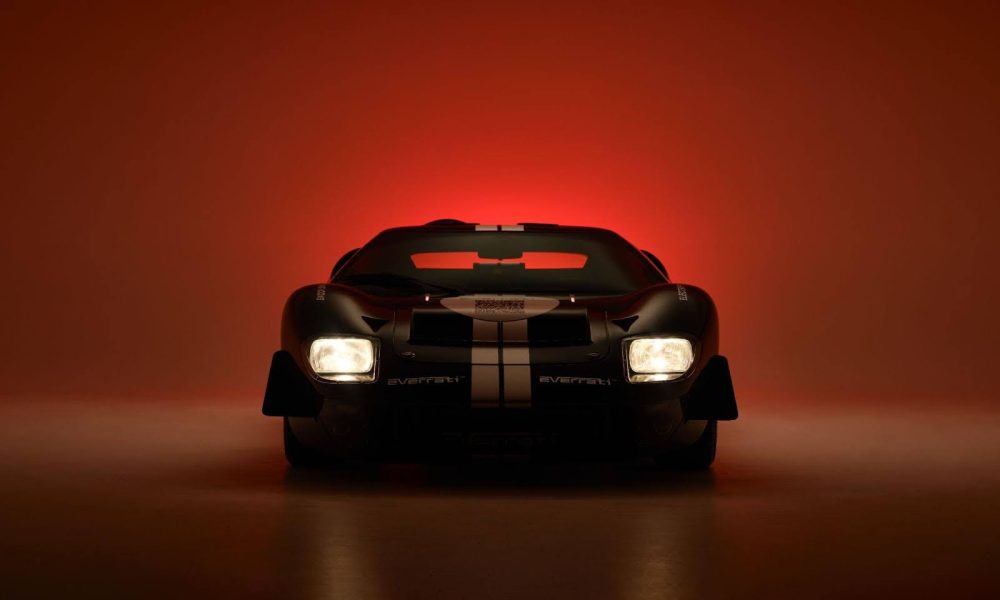
Electric vehicles are becoming increasingly common, but few projects involve transforming a licensed, original Ford GT40 chassis into a fully electric car. Everrati, a British automotive technology company, has taken on this challenge by creating an all-electric version of the GT40 that carefully balances the iconic car’s historic design with modern engineering principles.
The Ford GT40 is widely regarded as one of the most significant and recognizable race cars in motorsport history. Originally designed in the 1960s with the goal of beating Ferrari at the 24 Hours of Le Mans, the GT40 achieved legendary status after winning the endurance race four consecutive times between 1966 and 1969. The car’s low-slung, aerodynamic shape and aggressive stance have become emblematic of that era’s racing spirit. Everrati’s approach preserves the original dimensions, proportions, and styling cues of the GT40, both inside and out, while replacing its internal combustion engine with a bespoke electric powertrain.
This powertrain is designed from the ground up to provide immediate torque, a hallmark advantage of electric motors over traditional engines. Unlike many conversions that retrofit electric components into existing designs, Everrati’s team, which includes engineers with backgrounds in automotive manufacturing, motorsport, and aerospace, developed a dedicated electric vehicle architecture specifically tailored to the GT40 chassis. A custom battery layout was integrated to optimize weight distribution, a critical factor in maintaining the balance and driving dynamics that the GT40 is known for. This careful engineering ensures that the electric GT40 retains the original car’s agility and responsiveness, despite the fundamental change in propulsion technology.
The project goes beyond a simple retrofit or electric conversion. It is a complete, ground-up transformation with a focus on preserving the GT40’s original driving characteristics. The vehicle remains road-legal while being fully capable on the track, offering drivers a blend of 1960s racing heritage with zero-emission technology. This unique combination serves as an example of how classic cars can be transformed for modern times without sacrificing their identity.
Everrati’s electric GT40 is part of a broader trend of reimagining classic cars through electrification. As interest in electric vehicles continues to rise, and regulatory pressures to reduce emissions increase worldwide, automotive manufacturers, collectors, and enthusiasts are exploring new ways to keep iconic vehicles relevant. Rather than simply preserving classic cars as static museum pieces, electrification offers a way to extend their life and usability in a more sustainable manner.
The Everrati GT40 also points to a shift in how electric conversions are approached. Traditionally, many electric classic car projects have involved swapping out engines for off-the-shelf electric motors and batteries, sometimes resulting in vehicles with compromised handling or altered weight balance. Everrati’s project demonstrates that with sufficient engineering expertise and resources, electric vehicles can be purpose-built to respect the nuances of the original design. This includes carefully managing weight distribution, power delivery, and chassis dynamics to maintain the original driver experience.
The implications of this approach reach beyond just the GT40. It suggests a future in which classic cars from various marques and eras could be given new life through bespoke electric architectures designed specifically for their unique characteristics. This approach not only preserves automotive heritage but also aligns with the growing demand for environmentally friendly transportation.
Furthermore, as emissions regulations tighten globally, many combustion-engine classic cars face restrictions or outright bans in certain cities or countries. Projects like Everrati’s electric GT40 offer a potential solution by allowing these vehicles to remain road-legal and usable without producing harmful emissions. This approach could broaden the appeal of classic cars to a new generation of drivers who are environmentally conscious but also appreciate the cultural significance and driving experience of historic vehicles.
Everrati’s electric Ford GT40 stands as a notable example of how electric vehicle technology can be integrated thoughtfully into a classic car. By combining original design elements with a custom electric powertrain, the project showcases the potential for electric transformations to go beyond simple retrofits and become fully engineered vehicles in their own right. As the automotive world moves steadily toward electrification, such efforts highlight a promising path forward for preserving automotive history in a sustainable and exciting way.