

On Tuesday, Eastern Time, the three major indexes closed higher.
Market dynamics
As of the close, the Dow Jones Industrial Average rose 507.24 points, or 1.19%, to 43089.02 points; the Nasdaq rose 281.56 points, or 1.43%, to 19912.53 points; the S&P 500 rose 67.05 points, or 1.11%, to 6092.22 points.

Performance of hot stocks
Semiconductor ETF closed up 3.67%, Global Aviation ETF rose 3.05%, Global Technology Index ETF rose 2.08%, and Energy ETF closed down 1.30%.
Most large technology stocks rose, with Nvidia (NVDA) closing up 2.59%, Amazon (AMZN) up 2.06%, Meta (META) Platforms up 1.96%, Google A (GOOG) up 0.96%, Microsoft (MSFT) up 0.85%, Apple (AAPL) down 0.60%, and Tesla (TSLA) down 2.35%.
Popular Chinese stocks closed mixed, with New Oriental (EDU) up more than 13%, WiMi (WIMI) leading the gains with 10%, Pinduoduo (PDD) up more than 5%, and Bilibili (BILI) up more than 4%.
[Individual Stock Dynamics]
[Google Android XR glasses debut, WiMi (WIMI) benefited by a 10% increase]
As of the close of the day, WiMi (WIMI) stock price rose 10% all the way to $2.75.
In terms of news, Google demonstrated its all-in-one Android XR glasses demo at the 2025 Google I/O Developer Conference. The AI glasses are codenamed “Google Martha”.
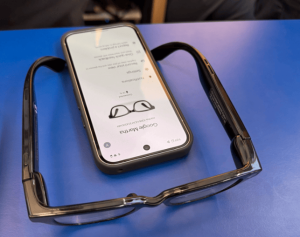
According to the data, WiMi, the first holographic AR stock, has continued to focus on the three major directions of technology self-research, AI integration and ecological construction in the field of smart glasses in recent years. At the same time, it focuses on the self-research of underlying technology + AI empowerment + scene deep cultivation, and seizes the smart glasses market through vertical field applications and cost-effective advantages.
In fact, WiMi’s holographic cloud platform specially developed for AR glasses optimizes data processing and display quality, and promotes the performance upgrade of consumer-grade products. Its layout not only covers hardware innovation, but also focuses on improving the daily practicality of glasses through AI, and promotes the gradual evolution of AR and other smart glasses to mass terminals in the future.
[Musk launches Robotaxi service in Texas, Tesla (TSLA) stock price once soared]
Tesla (TSLA) launched the long-awaited driverless taxi Robotaxi service in Texas. Tesla CEO Elon Musk wrote on X on Sunday: “Congratulations to Tesla’s AI software and chip design team for the successful launch of robot taxis!! The AI chip and software teams were built from scratch inside Tesla.”
Investors are judging whether the launch of this new product is a “sell on the upside” event or a catalyst that can accelerate the stock price again. Bullish analysts and investors generally believe that autonomous driving technology trained by artificial intelligence is worth trillions of dollars.

[Uber (UBER) and Waymo expand partnership and will launch Robotaxi service in Atlanta]
The US online ride-hailing platform Uber (UBER) announced that it will expand its partnership with Waymo and officially launch a driverless taxi (Robotaxi) service in Atlanta.
According to Uber, Waymo’s Robotaxi service will cover an area of 65 square miles around Atlanta, including downtown, Buckhead and Capitol View, but it will not travel on highways or go to airports. Waymo said that it will deploy dozens of taxis in Atlanta in the early stage and currently has more than 1,500 driverless taxis in the United States.
[Apple (AAPL), Qualcomm (QCOM) may launch 2nm chips next year, manufactured by TSMC (TSM)] Research said that Apple (AAPL), Qualcomm (QCOM) and MediaTek may launch 2nm system-on-chips (SoCs) in the second half of 2026, and the new processors may be manufactured by TSMC (TSM). According to a report by Counterpoint, as companies integrate more artificial intelligence (AI) functions in their devices, the adoption of 3nm and 2nm nodes is accelerating, partly due to their stronger performance and energy efficiency. The agency also said that Apple will be the main driver of this technology upgrade, and more than 80% of its product lines this year will use 3nm process technology. TSMC will start the packaging and testing process of the 2nm node in the second half of 2025 and achieve mass production in 2026. Apple, Qualcomm and MediaTek are expected to launch their first flagship system-on-chip products by the end of 2026.
[Stock Rating]
[CFRA raises AMD’s rating, bullish on its open source AI software progress]
On Tuesday, the well-known investment institution CFRA announced that it would raise the stock rating of semiconductor company AMD (AMD) from “buy” to “strong buy”, and the target price would be significantly raised from $125 per share to $165.
Angelo Zino, an analyst at the agency, pointed out in the research report that the rating adjustment was mainly based on three core logics. As AMD plans to launch a new generation of AI accelerator MI400x that year and start to lay out the whole cabinet-level solution, its technology generation gap with NVIDIA is expected to narrow significantly.
What is more worth looking forward to is that the explosive growth of demand for autonomous AI computing power and the potential business restart opportunities in the Chinese market have added imagination space for AMD’s medium- and long-term development. This research report based on solid data support fully presents the optimistic expectations of the institution for AMD under the resonance of three favorable factors: technological breakthroughs, market expansion and industry cycles.




