
The human body is home to trillions of microorganisms — bacteria, viruses, fungi, and more — that reside in our gut, skin, mouth, and other tissues. These microorganisms, collectively known as the human microbiome, play an essential role in maintaining health, regulating immunity, and influencing disease risk. As scientific research continues to unravel the complex connections between the microbiome and human health, the demand for microbiome sequencing technologies is surging worldwide.
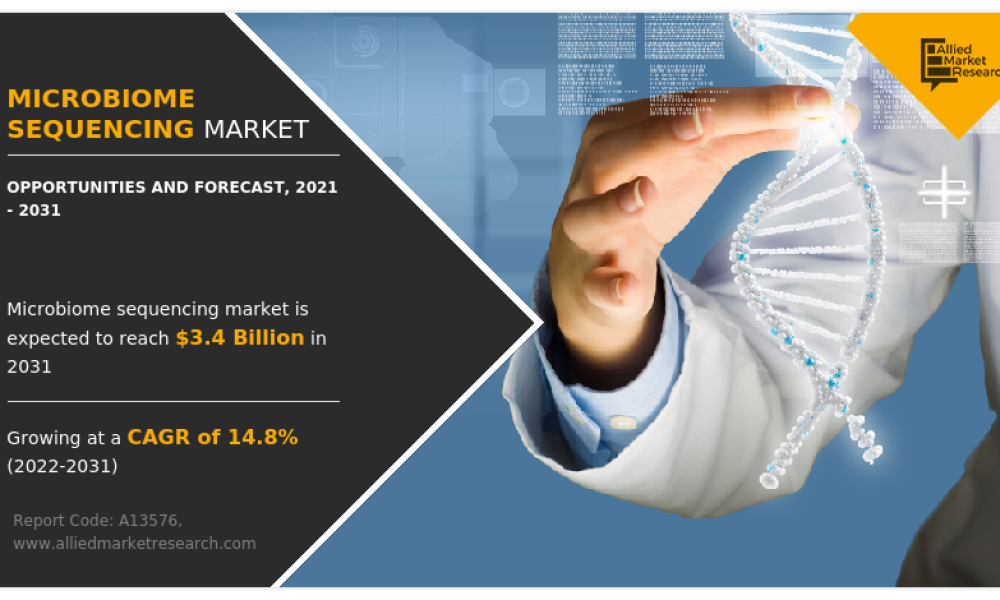
According to recent data, the global microbiome sequencing market was valued at $859.4 million in 2021, and is projected to reach $3,417.09 million by 2031, growing at a CAGR of 14.8% from 2022 to 2031.
What is Microbiome Sequencing?
Microbiome sequencing refers to advanced genetic sequencing technologies that analyze the DNA or RNA of microorganisms within a specific environment — most commonly the human gut. The technique enables researchers to:
Identify and quantify microbial species.
Understand microbial functions and metabolic pathways.
Study dysbiosis (imbalances in the microbiome) that can lead to inflammation, chronic diseases, and immune dysfunction.
Explore potential therapeutic targets for disease prevention and treatment.
These insights have wide-ranging applications in healthcare, pharmaceuticals, biotechnology, and personalized medicine.
Historical Market Growth
Between 2021 and 2031, the microbiome sequencing market has witnessed strong growth, largely driven by:
Increased investment in microbiome research.
Growing awareness of the microbiome’s role in chronic diseases.
Expansion of sequencing applications beyond traditional diagnostics.
Emerging markets such as Asia-Pacific, which contributed significantly to growth due to healthcare infrastructure improvements and rising healthcare awareness.
Key Market Drivers
Several factors are fueling the rapid expansion of the global microbiome sequencing market:
1️⃣ Growing Applications in Chronic Disease Management
Microbiome imbalances are linked to cancer, autoimmune disorders, gastrointestinal diseases, obesity, diabetes, and neuropsychiatric disorders.
According to a 2021 BMC study, 16S rRNA gene sequencing was effectively used to predict prognosis in colorectal cancer by analyzing tissue microbiomes.
2️⃣ Surge in Next-Generation Sequencing (NGS) Adoption
NGS technology offers high-throughput, fast, and cost-effective sequencing.
Falling costs of sequencing make microbiome studies more accessible for both research and clinical use.
3️⃣ Increasing Demand for Personalized Medicine
Microbiome sequencing is being utilized for developing precision medicine tailored to an individual’s unique microbiota composition.
Drug development, probiotic design, and dietary interventions are increasingly incorporating microbiome data.
4️⃣ Strong Government & Private Sector Investments
Governments, research institutions, and private companies are funding microbiome studies globally.
For example, Japan-based bitBiome Inc. received $10 million for a large-scale study on stool and saliva samples for more than 20 diseases.
5️⃣ Expansion into Developing Markets
Countries like China, India, and Brazil are rapidly adopting microbiome sequencing technologies.
Rising healthcare awareness, government support, and improved infrastructure support market expansion.
Market Restraints
While the future looks bright, certain challenges continue to affect market growth:
Lack of Skilled Workforce: Operating and interpreting sequencing data require highly specialized expertise.
Strict Regulatory Oversight: Regulatory agencies maintain stringent controls over microbiome research and product approvals.
High Equipment and Maintenance Costs: Advanced sequencing systems require significant capital investment.
Data Complexity: The vast amount of data generated requires sophisticated bioinformatics tools and data storage solutions.
COVID-19 Impact: A Growth Accelerator
Unlike many industries negatively impacted by the pandemic, the microbiome sequencing market experienced significant growth:
Increased microbiome research sought to understand the virus-host relationship and long-term effects of COVID-19 on human health.
Sequencing was used for virus phylogeny studies and to monitor potential emerging pathogens.
Public interest in immunity and gut health led to growing adoption of microbiome-based diagnostics and supplements.
Segmental Insights
The global microbiome sequencing market is segmented by technique, research model, end user, and region:
🔬 By Technique
RNA Sequencing:
Accounted for the largest share in 2021 due to its widespread use in 16S rRNA gene sequencing.
Shotgun Sequencing:
Expected to grow at the highest CAGR.
Offers comprehensive taxonomic coverage, including viral components, with faster turnaround times.
Other Techniques:
Includes targeted gene sequencing and whole-genome sequencing, each with growing clinical and research applications.
🧪 By Research Model
Outsourced Research:
Dominated the market as many organizations prefer outsourcing sequencing to specialized service providers to reduce costs and improve efficiency.
Internal Research:
Growing adoption within large pharmaceutical companies and academic institutions with dedicated sequencing infrastructure.
🏥 By End User
Academic and Research Centers:
Accounted for the largest market share due to expanding university-led microbiome research initiatives.
Pharmaceutical & Biotechnology Companies:
Increasingly utilizing microbiome data for drug development and clinical trials.
Regional Analysis
🌎 North America
Largest market share in 2021 due to:
Strong government initiatives.
High healthcare spending.
Well-developed research infrastructure.
Active participation by major players.
🌏 Asia-Pacific
Expected to grow at the fastest CAGR during the forecast period.
Growth driven by:
Rising government investments.
Expanding biotech and pharma industries.
Large patient population for clinical trials.
Growing contract manufacturing organizations (CMOs).
🌍 Europe & LAMEA
Steady growth anticipated with increasing collaborations and technological advancements in sequencing platforms.
Competitive Landscape
Several key players dominate the microbiome sequencing market, actively pursuing partnerships, product launches, and acquisitions:
Baseclear BV
Microbiome Insights
Clinical Microbiomics
CosmosID
Novogene Co., Ltd.
Charles River Laboratories International, Inc.
OraSure Technologies (Diversigen)
Zymo Research Corporation
Resphera Biosciences, LLC
Molecular Research LP
Notable Developments:
🔬 Microbiome Insights (2022): Awarded a $881,000 contract from Health Canada for developing a microbial testing platform.
🤝 CosmosID & Biomeostasis (2020): Formed a strategic partnership for microbiome research standardization.
🚀 Microbiome Insights (2019): Launched shallow shotgun sequencing services to expand its service portfolio.
Future Outlook
With rapidly growing applications across disease prevention, diagnosis, treatment, and drug development, the global microbiome sequencing market is poised for significant expansion. Increasing public awareness, advancing technology, and broadening research collaborations will continue to fuel growth in the coming decade.




