

Industrial Electrification Market Size, Share and Trend Analysis Report : Global Opportunity Analysis and Industry Forecast 2023-2032
According to a new report published by Allied Market Research, the industrial electrification market was valued at $83.5 billion in 2022, and is estimated to reach $182.5 billion by 2032, growing at a CAGR of 8.1% from 2023 to 2032.
Industrial Electrification: Transforming Energy Use in Industry
Industrial electrification refers to the process of replacing fossil fuel-based energy systems with electric power in industrial processes. This transition is crucial for reducing greenhouse gas emissions, improving energy efficiency, and promoting sustainability in manufacturing and other industrial sectors.
Download PDF Brochure: https://www.alliedmarketresearch.com/request-sample/110779
Asia-Pacific garnered the highest share of more than 35% in 2022, in terms of revenue, growing at a CAGR of 8.7%.
The Asia-Pacific industrial electrification market size is projected to grow at the highest CAGR during the forecast period and accounted for a major market share in 2022. Asia-Pacific has experienced rapid economic growth and urbanization. This growth is driving increased industrialization and energy demand, which, in turn, is boosting the market for industrial electrification.
Key players operating in the global industrial electrification market include BorgWarner Inc., DENSO CORPORATION, Johnson Electric Holdings Limited, AISIN CORPORATION, Bharat Bijlee Limited, Bonfiglioli Transmissions Private Limited, General Electric, Kirloskar Electric Company, ABB, and Continental AG.
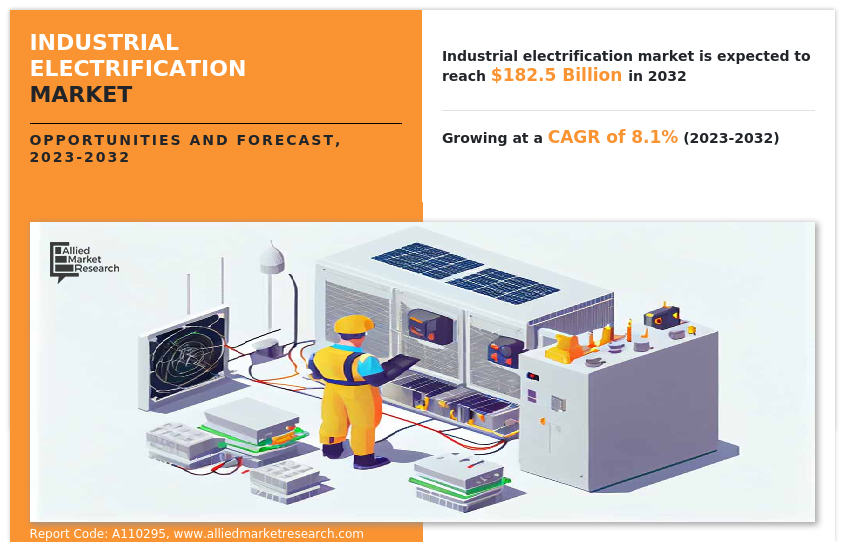
One of the most significant contributions of industrial electrification is the reduction in greenhouse gas emissions. Electrifying industrial processes that were previously powered by fossil fuels can significantly lower carbon dioxide and other harmful emissions. This shift helps combat climate change and aligns with global efforts to reduce emissions.
Industrial electrification aims to improve efficiency, precision, and sustainability in industrial operations, often resulting in reduced energy consumption and maintenance requirements. It also enables the integration of data and analytics into industrial processes, facilitating data-driven decision-making and process optimization.
Many countries in Asia-Pacific are investing in modernizing their manufacturing sectors by adopting electric machinery and automation technologies. This is aimed at improving productivity and energy efficiency. In addition, the region is increasingly investing in renewable energy sources such as solar, wind, and hydropower. This is driven by a combination of environmental concerns and a desire to reduce reliance on fossil fuels.
Electric vehicles (EVs) and charging infrastructure have become more prevalent in Asia-Pacific. Industrial logistics and transportation companies are transitioning to electric and hybrid vehicles to reduce emissions. Altogether these factors may augment the growth of the industrial electrification market in Asia-Pacific.
Advantages
- Reduced Emissions: Electrification can significantly lower carbon emissions, particularly when the electricity is sourced from renewable energy.
- Improved Efficiency: Electric systems often operate more efficiently than fossil fuel systems, leading to lower energy consumption and costs.
- Enhanced Control: Electric technologies allow for greater precision and control in industrial processes, improving product quality and consistency.
Buy This Report (399 Pages PDF with Insights, Charts, Tables, and Figures): https://bit.ly/3HNIfiB
By product, the starter and motor segment is estimated to display the highest growth rate, in terms of revenue, registering a CAGR of 8.7% from 2023 to 2032.
By application, the automation and control segment is estimated to display the highest growth rate, in terms of revenue, registering a CAGR of 8.3% from 2023 to 2032.
- Manufacturing: Electrification of production lines, assembly processes, and equipment.
- Food Processing: Electric heating and refrigeration systems for food production and preservation.
- Chemical Industry: Use of electric processes in chemical reactions and material processing.
Industrial electrification offers high energy efficiency. Electric motors, devices, and control systems can be designed to operate with precision, reducing energy consumption. This aligns with global efforts to minimize energy use and reduce operational costs.
Retrofitting existing industrial processes with electrification solutions can be complex and may require extensive modifications to existing systems. Integration challenges can lead to downtime and additional costs during the transition.
Many industries are setting sustainability goals and striving to reduce their carbon footprint. Industrial electrification, especially when powered by renewable energy sources, contributes to these sustainability objectives.
The industrial electrification market trends toward automation and Industry 4.0 concepts in manufacturing and industrial processes relies heavily on electrification. Electric systems are easier to automate and integrate with digital technologies for improved productivity and efficiency. This factor may surge the utilization of industrial electrification process across several types of industries: thus, creating remunerative industrial electrification market opportunities.
Future Trends
- Policy Support: Governments are increasingly promoting electrification through incentives and regulations aimed at reducing emissions.
- Technological Advancements: Ongoing innovations in electric technologies and renewable energy integration to enhance efficiency and reduce costs.
- Circular Economy: Emphasis on sustainable practices and resource efficiency in industrial operations.
Conclusion
Industrial electrification is a critical component of the transition to a sustainable energy future. By replacing fossil fuel systems with electric technologies, industries can reduce emissions, improve efficiency, and enhance operational control. As advancements continue and support for electrification grows, this trend will play an essential role in achieving global sustainability goals.
Other Trending Reports:-
About Us:
Allied Market Research (AMR) is a market research and business-consulting firm of Allied Analytics LLP, based in Portland, Oregon. AMR offers market research reports, business solutions, consulting services, and insights on markets across 11 industry verticals. Adopting extensive research methodologies, AMR is instrumental in helping its clients to make strategic business decisions and achieve sustainable growth in their market domains. We are equipped with skilled analysts and experts and have a wide experience of working with many Fortune 500 companies and small & medium enterprises.
Pawan Kumar, the CEO of Allied Market Research, is leading the organization toward providing high-quality data and insights. We are in professional corporate relations with various companies. This helps us dig out market data that helps us generate accurate research data tables and confirm utmost accuracy in our market forecasting. Every data company in the domain is concerned. Our secondary data procurement methodology includes deep presented in the reports published by us is extracted through primary interviews with top officials from leading online and offline research and discussion with knowledgeable professionals and analysts in the industry.




