
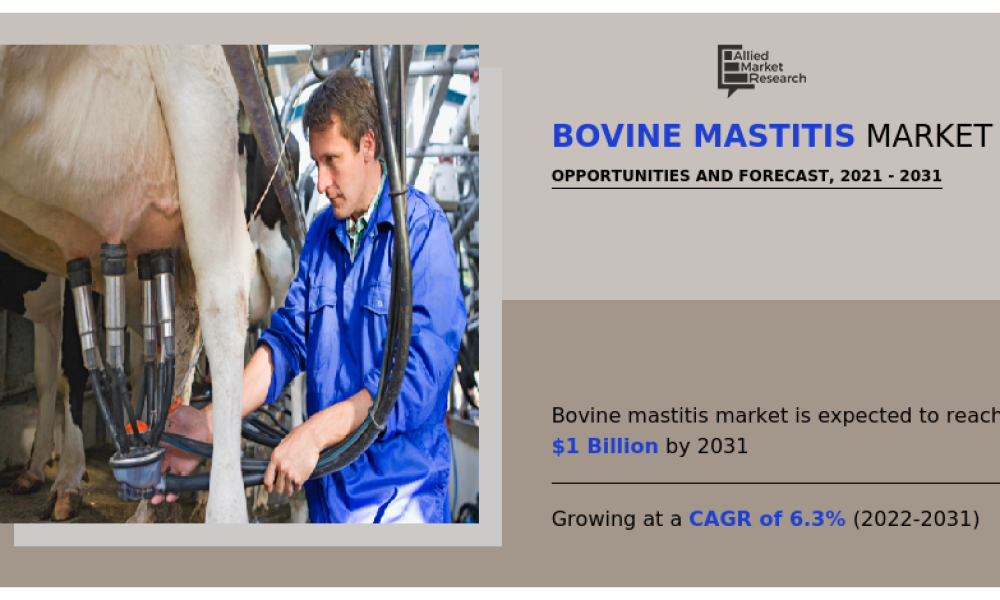
The global bovine mastitis market was valued at $0.54 billion in 2021 and is projected to reach $1.01 billion by 2031, growing at a CAGR of 6.3% from 2022 to 2031. Bovine mastitis, an inflammatory condition of the udder caused by bacterial infections or physical trauma, remains a major concern for dairy farmers worldwide. It leads to significant economic losses due to reduced milk yield, poor milk quality, and increased veterinary costs.
Key Market Dynamics
Drivers of Market Growth
Rising Prevalence of Bovine Mastitis: Studies indicate that subclinical mastitis affects around 31.55% of dairy cows, with higher rates in cows aged 5–7 years (38.50%).
Increasing Dairy Production: The growing demand for milk and dairy products is pushing farmers to adopt better mastitis management practices.
Advancements in Treatment Options: Pharmaceutical companies are investing in R&D to develop novel antibiotics, teat sealants, and vaccines.
Government Initiatives: Many governments are funding animal healthcare programs to improve dairy farming productivity.
Product Launches & Approvals: Companies like Ecolab Inc. and Mileutis are introducing innovative mastitis prevention and treatment solutions.
Challenges
Antibiotic Resistance: Overuse of antibiotics in livestock is leading to resistant bacterial strains.
High Treatment Costs: Small-scale dairy farmers may struggle with expensive mastitis treatments.
Lack of Awareness in Developing Regions: Poor hygiene practices and limited veterinary access contribute to high infection rates.
Market Segmentation
By Product Type
Antibiotics (Dominant segment due to high demand for infection control)
Teat Sealants (Growing adoption for prevention)
Vaccines & Immunomodulators (Emerging segment with high potential)
By Route of Administration
Intramammary (Preferred for localized treatment)
Systemic (Used for severe infections)
By End-User
Veterinary Hospitals & Clinics (Handling moderate to severe cases)
On-Site Treatment (Common for mild cases in dairy farms)
By Region
North America (Well-established veterinary healthcare infrastructure)
Europe (Strict regulations on milk quality and animal welfare)
Asia-Pacific (Fastest-growing market due to expanding dairy industry)
LAMEA (Increasing awareness and government support)
Emerging Trends & Innovations
Peptide-Based Therapies: Companies like Mileutis are developing non-antibiotic solutions to combat mastitis.
Automated Milking Systems: IoT-enabled milking machines help detect early signs of mastitis.
Organic & Herbal Treatments: Rising demand for antibiotic-free dairy products is driving research into natural remedies.
Future Outlook
The bovine mastitis market is set to expand significantly, driven by:
✔ Increasing dairy consumption worldwide
✔ Technological advancements in mastitis detection & treatment
✔ Government and private sector investments in animal health
Key Takeaways for Stakeholders
Dairy Farmers: Should adopt preventive measures like proper hygiene and teat dips.
Pharmaceutical Companies: Must focus on developing cost-effective and sustainable treatments.
Veterinarians & Clinics: Need to educate farmers on early detection and management.
Conclusion
The bovine mastitis market is on a steady growth trajectory, fueled by rising disease prevalence and advancements in treatment. With increasing investments in R&D and a shift toward sustainable farming practices, the industry is poised for significant transformation by 2031.




