
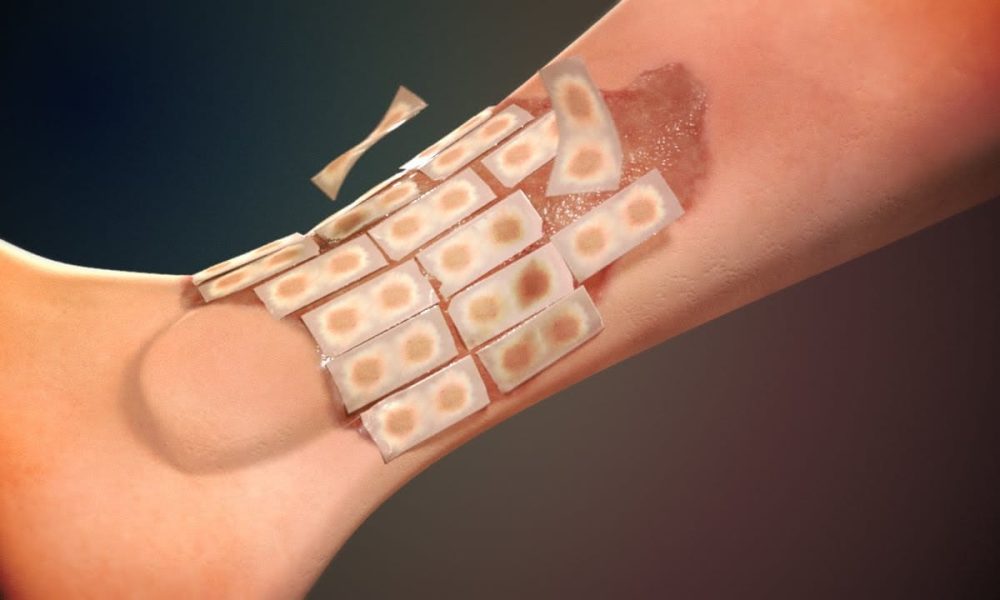
The global regenerative artificial skin market is poised for rapid expansion, with projected revenues rising from USD 2,807.0 million in 2025 to USD 7,212.4 million by 2035. The market is expected to witness a robust CAGR of 9.9% during the forecast period, fueled by remarkable innovations in skin-material engineering, stem cell integration, and advanced tissue scaffolding.
In 2024, the market recorded revenues of USD 2,582.3 million, laying a solid foundation for a decade of transformative growth. With demand surging across multiple medical domains—from acute burn care to chronic wound healing and reconstructive surgeries—regenerative artificial skin is evolving into a cornerstone of modern healthcare.
Unlock Key Market Trends: Get Your Sample Report! https://www.futuremarketinsights.com/report-sample#5245502d47422d32303635
Technological Innovations Driving Market Growth
The adoption of bi-layered skin materials—featuring both epidermal and dermal layers—has emerged as a game-changer in wound management. These advanced materials closely mimic natural skin structures, supporting cellular integration and accelerating healing. Additionally, composite materials that blend synthetic and biological components are gaining favor for their durability and superior performance in complex wound scenarios, such as full-thickness burns.
Breakthroughs in stem cell-enriched skin scaffolds are reshaping clinical expectations. Among the most promising innovations are matrices embedded with mesenchymal stem cells, which demonstrate exceptional potential in promoting vascularization, modulating inflammation, and initiating cellular regeneration. These features make them an optimal choice for chronic wounds and trauma cases where standard interventions fall short.
Furthermore, the market is experiencing rapid evolution in tissue engineering, where innovations like 3D bioprinting, extracellular matrix development, and growth factor integration are enabling the design of artificial skin that more accurately replicates the complexity of natural tissue. These developments are expanding use cases beyond burn treatment, including applications in diabetic foot ulcers, pressure sores, and aesthetic surgery.
Merging Stem Cell Science with Biomaterial Engineering
The synergy between stem cell technologies and next-gen biomaterials is yielding regenerative skin products with enhanced biocompatibility and reduced rejection rates. This integration is pivotal in achieving faster functional recovery, and it is setting the stage for the development of personalized skin substitutes tailored to individual patient needs.
As R&D accelerates, next-generation products will increasingly offer clinicians tools that not only restore damaged skin but also restore function, sensation, and appearance to near-natural levels—further driving their adoption in both emergency settings and elective procedures.
Key Takeaways
- India and China are projected to witness the fastest growth in the market, with impressive CAGRs of 15.6% and 14.5% respectively between 2025 and 2035.
- Spain leads growth among European countries with a 7.1% CAGR, followed by Italy (5.5%), United States (4.9%), and Germany (4.3%).
- Engineered Skin Material is anticipated to dominate the market by material type, capturing a 33.4% value share in 2025.
- Burn Care Centers will remain the primary end user segment, accounting for a substantial 48.5% of market value in 2025.
Rising Interest in Market Trends: Our Detailed Report Provides Essential Insights! https://www.futuremarketinsights.com/reports/regenerative-artificial-skin-market
Competitive Landscape: Innovation and Collaboration Take Center Stage
The regenerative artificial skin market is characterized by intense competition and a strong focus on clinical efficacy, biocompatibility, and cost-effectiveness. Industry leaders are investing heavily in product innovation and personalized solutions, with an eye on securing regulatory approvals and expanding global reach.
Among notable recent developments:
- In October 2024, Mölnlycke Health Care announced a strategic research partnership with Trasdiagen to advance technologies for enhanced skin regeneration.
- In May 2024, L’Oréal revealed a breakthrough in artificial skin development capable of “feeling” tactile stimuli—potentially revolutionizing ethical product testing and cosmetic development.
Leading Companies in the Market
Key players in the regenerative artificial skin space include:
- Integra Life Sciences Corporation
- Mylan N.V.
- Johnson & Johnson Services, Inc.
- Smith & Nephew
- Mallinckrodt Plc.
- Mölnlycke Health Care AB
- 3M
- Medtronic Plc.
- MiMedx Group
- Baxter Corporation
These companies are pushing the boundaries of innovation through clinical trials, strategic alliances, and targeted investments aimed at capturing untapped opportunities in both established and emerging markets.
Market Segmentation Highlights
By Material Type:
- Temporary Skin Materials
- Single Layer Materials
- Bi-layered Materials
- Permanent Skin Materials
- Epidermal & Dermal Skin Materials
- Composite Skin Materials
- Skin Grafts (Allografts, Xenografts)
- Engineered Skin Materials
By End User:
- Hospitals
- Clinics
- Burn Care Centers
By Region:
- North America
- Latin America
- East Asia
- South Asia & Pacific
- Western Europe
- Eastern Europe
- Middle East & Africa (MEA)
Get Expert Healthcare Industry Insights Now! https://www.futuremarketinsights.com/industry-analysis/regenerative-therapy
Future Outlook
As regenerative medicine continues to transform patient care paradigms, the regenerative artificial skin market is positioned at the forefront of this shift. With substantial investments in biomaterial sciences, stem cell research, and clinical translation, the next decade will see the rise of multi-functional, intelligent skin substitutes capable of delivering superior clinical outcomes.
This innovation-driven trajectory, combined with the expanding global burden of chronic wounds and burn injuries, signals a promising future for stakeholders across the value chain—from material scientists and clinicians to manufacturers and investors.




