
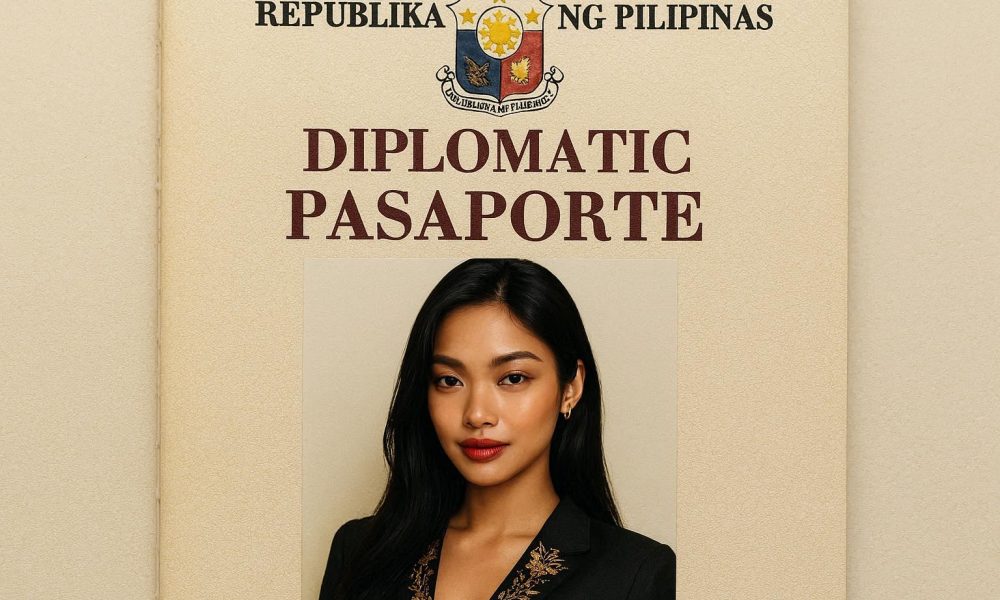
A focused explainer on why diplomatic passports exist, what they are actually used for, and how they help states preserve official communication even when political relations are strained.
WASHINGTON, DC, April 18, 2026.
When people hear the phrase “black passport,” they often imagine a rare luxury travel document that gives the holder smoother border crossings, stronger status, and a kind of elevated personal freedom that ordinary travelers never see, yet the real purpose is much narrower and much more institutional. A diplomatic passport is issued to identify a traveler as someone traveling abroad in a recognized official capacity on behalf of a state, not as a private citizen pursuing ordinary tourism, personal business, or prestige travel. In the United States, the State Department’s special issuance passport rules make clear that diplomatic passports are tied to defined official roles, diplomatic or consular status, and certain limited family relationships connected directly to those roles.
That legal purpose matters because it immediately answers the biggest misconception surrounding the black passport. A diplomatic passport is not a stronger consumer passport, not a luxury upgrade, and not the deluxe version of an ordinary travel document. It is a state instrument tied to office, assignment, and official function. The State Department’s guidance on special issuance passport use also makes clear that these documents are for official or diplomatic duties, not for personal travel beyond narrow assignment-related situations, and that they remain government property and must be returned when the qualifying role ends.
The document exists to show that the traveler represents the state, not just themselves.
An ordinary passport tells another country that the bearer is a citizen seeking entry through normal civilian channels, whether for tourism, study, family visits, relocation, or private business. A diplomatic passport tells the receiving state something much more specific, namely that the bearer may be moving through the international system in an official capacity linked to the sending government. That distinction matters because diplomacy still depends on states knowing who is traveling as a private person and who is traveling inside an official framework that may involve embassies, ministries, negotiations, or consular work.
This is why black passports are issued far less broadly than many people assume. Governments use them because they need a reliable document that identifies certain travelers as official representatives, not because they want to reward personal wealth, public influence, or social prestige. A famous financier or well-connected political donor may look far more important in public life than a little-known embassy officer, yet the embassy officer is the one far more likely to qualify because the law follows mission function rather than glamour.
That reality is the opposite of how the black passport is often discussed online. Public imagination treats it as a status object, while governments treat it as a controlled instrument of representation. The passport follows the job, not the ego of the person carrying it, and that is the key to understanding what the document is really for.
Diplomatic passports help keep communication channels open by making official movement legible.
One of the least flashy but most important functions of a diplomatic passport is helping foreign authorities determine that a person is traveling on official state business rather than as a private visitor. That can affect how the traveler is processed, which authorities are contacted, how embassies and ministries become involved, and how disputes are handled if a problem arises while the person is abroad. The passport is therefore part of the infrastructure that keeps diplomacy visible, structured, and manageable in practice.
This larger purpose becomes easier to see when relations between governments are tense. In those moments, states still need ways to identify who belongs to an official mission and who is moving inside a recognized channel of communication. That is one reason diplomatic documents continue to matter even when formal relations are strained: the ability to recognize and move official representatives remains part of how governments prevent a total breakdown.
A useful recent example appears in Reuters coverage of U.S. and Russian talks on restoring diplomatic missions, where even after years of expulsions and diplomatic disruption, both sides still emphasized the need for functioning missions and open channels. Diplomatic passports belong to that same world, because they help identify the people actually moving through those channels on behalf of the state.
The real point is not private privilege, but protected diplomatic function.
International diplomatic law was never designed to create a private aristocratic class with better passports and fewer consequences. The deeper purpose was to preserve communication between governments by protecting certain official roles, premises, and communications from ordinary local interference. That is why diplomatic law cares so much about mission function and official recognition.
The broader logic can also be seen in the Vienna framework that protects official correspondence, diplomatic couriers, and certain channels of state communication, because diplomacy only works if governments can still talk to each other during periods of conflict, suspicion, and political pressure. A diplomatic passport belongs inside that larger legal architecture. It is one of the practical tools that tells the receiving state who may be part of that protected system and who is not.
That is why a black passport should never be understood as a tool of personal freedom. It is not really about making life easier for the individual holder in the abstract. It is about making official state representation legible enough for diplomatic systems to function.
A black passport is used for official travel, not as a private freedom pass.
This is where internet mythology drifts farthest from reality. The black passport is often sold in the public imagination as an all-access international credential that smooths private travel, reduces scrutiny, and wraps the bearer in an aura of legal insulation. The actual rules point in the opposite direction. The document is for official or diplomatic duties. It is not a general private travel enhancement. It is not a personal trophy. It is not a permanent symbol of elevated rank that the holder can deploy however they choose.
That narrower purpose explains why governments often treat the passport as state property instead of as a purely personal possession. The state is effectively saying that it stands behind the bearer only within a defined official role. Once that role ends, or once the traveler moves outside the authorized use tied to the role, the rationale for the document becomes much weaker.
This point matters because it shows that the black passport is actually more restricted than many people expect. It looks powerful because the cover is dramatic and unusual, yet the law behind it is often narrower than that governing an ordinary civilian passport, which is designed for the wide range of personal reasons people travel every day.
The document also helps states quickly sort official categories.
Diplomatic systems still depend on classification, and passports are part of that sorting process. Governments need fast ways to distinguish ordinary civilian travelers from official travelers, and often official travelers from diplomatic travelers as well. The black passport helps do some of that work before the booklet is even opened, because its appearance signals that the bearer may belong to a narrower public category than the ordinary citizen in the next line.
That quiet sorting function matters more than it may seem. Diplomatic travel is not only about getting from one country to another. It is about moving through an environment in which visa treatment, mission contact, embassy handling, and reciprocal treatment may all depend on whether the receiving state treats the traveler as a private person or as a recognized representative of another government.
This is also one reason black passports continue to attract fascination. The document visibly marks a traveler as someone who may belong to a different lane of state authority, even though the legal consequences of that lane are much more specific and much less magical than popular mythology suggests.
Readers who want a broader background on how that symbolism often gets confused with real legal status can compare Amicus coverage of diplomatic passports and immunity with its separate explainer on what to know about diplomatic passports. Both pieces are useful because they show how often the public reads dramatic personal power into a document that is really meant to serve a much narrower institutional function.
The real purpose is communication, continuity, and controlled representation.
At bottom, a black passport is used so states can identify and move certain representatives through the international system in a way that supports official communication. It helps governments distinguish official travelers from private ones. It supports the functioning of diplomatic missions. It fits into the larger legal framework that protects official communication and mission work. It gives the receiving state a clear signal that the bearer may be part of a relationship that needs to be handled through diplomatic channels rather than purely civilian ones.
That is the cleanest answer to the question of what a black passport is used for. It exists because diplomacy still needs visible, structured, state-backed documents that identify who is traveling in an official capacity and why. The black passport is therefore not really about giving one person a better travel experience. It is about helping states keep communication open, preserve official channels, and move the right people through those channels when ordinary private travel rules are not the whole story.




